The sorrows of empire

Ted Grimsrud—November 7, 2025

The realities of the American Empire were hidden right before my eyes when I grew up in the 1950s and 1960s. Much of the violence we perpetrated on the world was not hidden, it just was not part of the story we told about America. Now that I know more, I am shocked that I could have been so positive about my country. I attribute my failure to see to the power of the embedded theology of uncritical nationalism. Like most Americans, I was invested in believing the best and filtered out everything that would challenge that belief. In this post, I will give a quick overview of what I did not see with my rose-colored glasses.

The Truman Doctrine established the template for US intervention “everywhere in the world” shortly after World War II. It remains in effect down to the present. I sketch here the history of American interventions of varying severity. These engagements have been truly global, as even this quick survey will illustrate. In future posts, we will look in a little more detail at two momentous sets of interventions, America’s post-Cold War continuation of the adversarial relationship with Russia and America’s support for Israel.

The first intervention of many

Soon after World War II, American leaders justified military engagement in Greece to resist Soviet “expansionism.” As it turned out, the Soviets did not join the conflict that emerged over struggles over Greece’s political future. They kept the agreement of the Yalta Conference regarding the postwar world. Central and eastern Europe were in the Soviet “sphere of influence” (where the Soviets intervened); the Soviets recognized Greece as part of the British sphere.

In Greece, indigenous leftists fought with a right-wing monarchy that the British wanted to restore to power. By embracing military aid to the monarchists, the US affirmed the military action taken by the British beginning in 1944. The British action predated any of the military actions that the Soviets took likewise to assert their “sphere of influence” over noncooperative Soviet bloc nations. The first use of violence to resist self-determination came not from the Soviets but from the British. When postwar British leaders determined that Britain would need greatly to curtail its engagement in sustaining its empire, they encouraged the Americans to “pick up the reigns.” In Greece the Americans intervened on behalf of anti-democratic interests. The Greek civil war resulted in a victory for the right-wing forces. The victors installed a military dictatorship that oversaw an unjust political system that lasted for many years.

Continue reading “The sorrows of empire”

The quest for a unipolar world order

Ted Grimsrud—November 4, 2025

The several years following World War II emphatically stamped the United States as an imperial power, not one that would seek to further the ideals of Franklin Roosevelt’s Four Freedoms speech of 1941 (such as self-determination and freedom from war everywhere on earth). As articulated in Harry Truman’s 1947 “Truman Doctrine” speech, instead the US would commit itself to be ready to intervene militarily everywhere on earth in order to defeat its enemies. Though the practices of the American Empire in the quarter century after World War II contradicted the ideals of the Four Freedoms, most Americans embraced an uncritical nationalism that prevented them from a clear-eyed view of their country’s actual way of being in the world.

From the colonial era through World War II, the North American colonies and the US pursued a domination agenda. From the start, the colonies utilized the superior firepower of European weapons to displace indigenous peoples and created an economic system that required coerced unpaid enslaved labor. While the American Empire could have made choices that moved in more humane directions, the odds for such humane choices always remained small. At the end of World War II, American leaders faced perhaps the greatest (and last?) opportunity to choose for the more humane. The US could have actually committed to the ideals of the World War II purpose statements that reflected the long-stated democratic hopes in the American tradition.

A choice of paths

American leaders in late 1945 faced two basic options. One, the US could have pursued a multipolar world order. Such had been hoped for (but not achieved) with the League of Nations after World War I. Then, during World War II, many leaders expressed the hope that this time the great powers might do it right. They hoped for structures that would allow for many different power locations that would find ways to cooperate. These hopes led to the creation of the United Nations. This time, unlike with the League of Nations, the United States embraced its role as a world leader. In fact, this time the world leadership organization would be located in the US.

Or, in contrast, the world order could be based on the dominant power of a single nation and its close allies. World opinion at the end of the War did not allow for an open affirmation of such an approach. The two powers (Germany and Japan) whose open quest for world domination had been so devastating lost the War. No other power would dare advocate such an approach. However, the War ended with a single nation having achieved a dominant global stature that had never before existed. The US could seek dominance without openly claiming to.  

The US found option two to be irresistible and embarked on a 50-year effort to establish and sustain a unipolar world order. However, the US “victory” in the Cold War did not result in American “full spectrum dominance,” an achieved unipolar world order. Rather, the years since the end of the Cold War have seen a steady diminishment of American power. Can the American Empire give up its quest for dominance and affirm the emerging multipolarity?

Continue reading “The quest for a unipolar world order”

The tragic American Empire story in light of the gospel

Ted Grimsrud—October 24, 2025

I recognize my upbringing as a proud citizen in the world’s most powerful empire to be part of my identity. As I described previously, I experienced an eventful meeting between two world-defining stories—the American Empire met Jesus’s gospel of peace. American Christians tend to see faith and nation as fully compatible, even mutually reinforcing. In contrast, for me their meeting was a collision that forced me to make a choice. It had to be one story or the other.

I chose the Jesus story to be my defining story—and chose against the American Empire. That choice led me to affirm Christian pacifism and turn from the uncritical nationalism central the Empire story. I started to interpret the story of the American Empire without blinders. At the same time, I found the Bible to be a key source for a peace-oriented, anti-empire defining story. My fundamentalist Christian teachers had asserted a high view of the Bible as direct revelation from God. However, such an assertion had not protected them from uncritical nationalism. Rather than rejecting the Bible when I rejected fundamentalism, I started reading the Bible in a different way. I no longer ignored Jesus’s peace teaching as I had been taught; I made it central.

The basis for stepping away from uncritical nationalism

When I began to read the Bible for peace, I noticed its critique of uncritical nationalism. I noticed the Bible did not teach the submit-to-the-government message as Americans assumed. If the Bible be central, I would choose Jesus’s gospel of peace instead of uncritical nationalism. The Old Testament provides a template, in Torah, that critiques all human territorial kingdoms. Torah pointed to a new kind of kingdom committed to justice and the wellbeing of all its people. The Old Testament kingdom, though, in practice evolved ever more toward injustice, militarism, economic stratification, and corruption. The brokenness grew to a point where the prophets saw the kingdom’s leaders not as agents of God but as enemies of the original vision of a just society.

Eventually, those who retained a commitment to Torah made sustaining those convictions more important than remaining loyal to any kind of territorial kingdom. The story continues with Jesus’s ministry. He announced the presence of God’s kingdom as a non-territorial communal expression of the ways of Torah. Echoing Genesis 12, Jesus’s kingdom message meant to bless all the families of the earth. This blessing would not come through a close connection with territorial kingdoms (or nation-states). Rather, the blessing would come through the witness of countercultural communities that put convictions about the ways of Torah at the center.

Does this story have relevance for our contemporary world? Let me identify four biblical themes that speak to life amidst the world’s empires. (1) The practice of justice should define the aspirations of societies that seek to be healthy. This justice will center on care for the vulnerable of the community since a society cannot be healthy without the good health of those most easily exploited and discarded. (2) People in power should always be treated with skepticism. Power tends to corrupt. People in power tend to be deluded by their commitments to sustain that power at all costs. Such people should be pushed to guide the society toward justice with an expectation that they will likely tend toward serving their own interests and not those of the vulnerable in society. (3) The “horses and chariots” problem tends to define territorial kingdoms and leads to the proclivity to prepare for and engage in warfare (warism). The accumulation of weapons of war favors society’s wealthy and powerful and leads to devastating conflicts. (4) Throughout human history (and in the Bible’s stories), territorial kingdoms and nation-states have provided some of the central rivals to God as the objects of human trust. This type of idolatry, as Israel’s prophets show, leads directly to injustice.

Continue reading “The tragic American Empire story in light of the gospel”

Fundamentalism and warism

Ted Grimsrud—September 19, 2025

The connection between American Christianity and the preparing for and fighting wars has been long-standing. In this post, I will recount my own somewhat unusual path in navigating this connection. Growing up in the late 1950s and 1960s, I knew little of the wider world. The social and political currents I described in earlier posts certainly shaped the general sensibility of the world I grew up with. However, the impact on me was at most indirect. A key factor for me, in time, proved to be religious faith. Surprisingly, because my family had little religious involvement and my home community would have been considered largely irreligious. Yet….

On the margins of Christianity

I grew up on the margins of Christianity. In my small hometown, Elkton, Oregon, my family attended a tiny Methodist congregation until I was eight years old, when the congregation closed its doors. Our town hosted only one other congregation at that time, a community church. After our Methodist church closed, we would go to Sunday School at that church most weeks.

As a child, I was on my own in terms of faith convictions. I had a lot of curiosity and talked about religion with friends though I do not know why I was so interested. I don’t remember anything from my experience of going to church that ever piqued my interest. I didn’t get challenged by my parents to think about such things. I suspect I had a natural curiosity about the meaning of life and the religious dimension. My interest in God and the big issues intensified as I got older. I had a self-conscious perspective when I entered my teen years inclined to conclude that God did not exist. But it was an open question that I had a keen interest in.

The first move for me came during the Spring of my sophomore year in high school. A friend of mine died of cancer when he was in his twenties. His death left the community grief-stricken. During his funeral, I felt for the first time a strong sense of the presence of God. From then on, I no longer thought of myself as an atheist. About a year later, I started spending time with a somewhat older friend who had became active in a Baptist congregation that had recently started in town. My friend gently engaged me in conversations about faith. He mainly conveyed a general message of God’s love and a simple process to gain salvation. That process mainly involved the seeker praying to God a prayer of repentance for one’s sinfulness and of a desire to trust in Jesus Christ as the savior whose death on the cross opened the path to God’s forgiveness. Finally, one evening in June 1971, I offered the prayer my friend had described to me. I experienced this as a moment of genuine change.

Continue reading “Fundamentalism and warism”

American warism

Ted Grimsrud—September 12, 2025

One main characteristic of the US during my lifetime has been the centrality of “warism” to the nation’s sense of itself. By “warism” I mean war as central for the nation’s identity. Signs of the US as a warist society may be seen in all the money that the nation spends on preparing for war and the war-related priorities in the operation of our government. American warism may also be seen in the bipartisan consensus on miliary spending, one area where Democrats and Republicans always agree. Most of our government spending goes for war and war preparation. And the US spends way more on military-related items than anyone else in the rest of the world.

The myth of redemptive violence

What I will call the “myth of redemptive violence” grounds American warism. This myth is the quasi-religious belief that we gain “salvation” (that is, a sense of security and of meaning and purpose) through violence. People throughout history have put tremendous faith in using violence for such “salvation.” The amount of trust people put in such instruments may perhaps be seen most clearly in the amount of resources they devote to the preparation for war.

Theologian Walter Wink described how this myth works. His book Engaging the Powers asserts “violence is the ethos of our times. It is the spirituality of the modern world. It has been accorded the status of a religion, demanding from its devotees an absolute obedience to death.” This myth remains invisible as a myth. We assume violence to be simply part of the nature of things. We accept violence as factual, not based on belief. Thus, we remain unaware of the faith-dimension in accepting violence. We think we know as a fact that violence works, is necessary and inevitable. We do not realize we operate in the realm of belief in accepting violence.

This myth operates on many levels. Americans assume the need for violent state power to sustain order. We willingly subordinate ourselves with few questions to this power and regularly encounter the myth on the level of popular culture. The books we read, the movies and TV we watch reiterate the story of creation as grounded in violence and chaos. Thus, we need military and police violence to subdue chaos and dominate enemies. We must subordinate ourselves to people in authority who exercise this necessary and redemptive violence. We join in the exercise of violence against our nation’s enemies when called upon. We accept one of the world’s most powerful police systems and one of the world’s largest prison systems.

Continue reading “American warism”

On being a proud American

Ted Grimsrud—September 9, 2025

An essential part of the expected disposition that characterizes citizens of the United States, it seems to me, is pride in being an American. This sense of pride characterizes Americans going back to the origins of the country. Perhaps such a sensibility reached its highest peak in the years of my youth in the afterglow of the victory in World War II and prior to the major stressors of the 1960s Civil Rights conflicts, war in Vietnam, and other challenges to the nation’s self-satisfaction. Though the prideful sensibility faced disruptions in the 1960s and ever since, it remains a significant element of many people’s senses of identity: “I am proud to be an American.” Certainly, that feeling of pride shaped my sense of identity during the 1950s, 1960s, and early 1970s. However, I came to see such pride as problematic when I learned more about the actual character of the American Empire.

Pride in America as a factor in warism: The impact of World War II

This sense of pride, I suggest, has fostered a kind of false consciousness among many Americans. We assume (our embedded theology tells us) that we should be proud to be Americans, an assumption that can lead us to believe that we have something to be proud of. That is, we seek to justify the feelings of pride rather than considering that perhaps we should not be so proud. A big part of the hostility that greeted the social change movements of the 1960s surely stemmed from perceiving those movements as threats to the sense of pride.

Along with the push toward false consciousness, the pridefulness also makes people susceptible to being manipulated to support war. One of the main justifications for pride in America, especially for those raised in the afterglow of World War II as I was, is the perceived American record of fighting in just wars and winning them. As a child, I found it important to believe that the US had never lost a war—and never been involved in an unjust war. In a kind of vicious cycle, many Americans uncritically believe that we show our country’s worth by going to war. We tend to recognize the wars by definition as just simply because our country fights in them.

Continue reading “On being a proud American”

A Christian political agenda? The Bible’s radical politics (part four)

Ted Grimsrud—June 16, 2025

In the first three parts of this series on the Bible’s radical politics (part 1; part 2; part 3), I have sought to show the continuity between the Old Testament and the story of Jesus. Throughout the Bible we see a critique of the great powers and the presentation of an alternative to the politics of domination and exploitation. The Bible presents the way of peace and restorative justice as a genuine alternative that it expects the people of the promise to embody.

In this series-concluding post, I offer some brief reflections on how to apply these teachings from the Bible to contemporary American political life. I started this series motivated by a sense of my country—and the wider world—being caught in a spiraling series of social crises. This spiral gets worse as our political system displays an increasing inability to respond to the problems with creative and transformative solutions. Can the Bible help?

The Bible approaches politics in the context of life within empire

From Genesis through Revelation, the Bible reports the people’s efforts to navigate a world dominated by ruthless great empires. These empires offer two distinct challenges to the people—(1) the constant threat of violence and oppression and (2) the constant temptation for the communities of the promise to absorb and embody the ideology of empire.

From the enslavement of the Hebrews in Egypt through the conquering violence of Assyria and Babylon and down to the Romans who executed Jesus as a rebel and destroyed the Jerusalem Temple, the Bible presents empires as God’s enemies, intrinsically hostile toward Torah-guided social justice. Yet empires are also seductive and alluring—either in the sense of seeking to be honored and even worshiped by those within their boundaries (see the book of Revelation) or in the sense of providing the template for the unjust ordering of life within independent kingdoms (as in the Old Testament’s Israel and Judah).

In the contemporary United States, people of faith face a strong pull from our great power to give it our ultimate loyalty. Probably nothing reflects this call to loyalty as much as demands for support for American wars and preparation for wars. Americans, with little dissent, devote their nation’s best energies and almost unlimited resources to this warism.

Continue reading “A Christian political agenda? The Bible’s radical politics (part four)”

Where is American Warism Headed?

Ted Grimsrud—October 22, 2024

We live in a time of great uncertainty. I find it difficult not to be quite discouraged about the direction the world seems to be going. What kind of future do we have? The presidential election in the United States that we are in the middle of (I mailed in my ballot the other day) is considered by many to be one of the most important we have ever faced.

No matter the outcome, warism will win the election

One of the outcomes of this election, though, that does seem fairly certain is that the American military and American militarism in general will remain engaged and expansive regardless of who is elected. We all know that Trump is all for militarism even if his (empty) rhetoric at times may seem to claim otherwise. Likewise, the Harris campaign has made it clear that she will be committed to continue on the warist path followed by the Biden administration in both Ukraine and Western Asia. So, with regard to what I believe is the most important issue facing our country—our involvement in global wars and preparations for war—this election will change nothing no matter how it turns out.

The two big wars we currently are fighting—in Ukraine and in Israel/Palestine—have not been going all that well for our side. In both cases, we see that American might seems to count for much less than what has been assumed. Simply the fact that both continue to be unresolved in itself tells us a great deal about the ineffectiveness of our weapons and leadership. Could it be that we are nearing the end of the post-World War II era of American military domination? Has the US quest for global dominance finally failed? If so, what will be the consequences?

Is American dominance coming to an end?

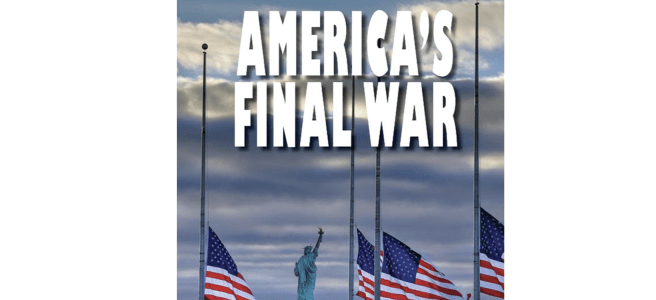
I recently read a challenging and surprising book that argues that indeed the end of an era is at hand. America’s Final War by Andrei Martynov (Clarity Press, 2024) argues that the US military is facing a failure in Ukraine that signals a profound shift in the balance of power and a certain descent into loss of power and influence by the American Empire. I thought that the failure to achieve quick victory in these two wars might indicate that American dominance is no longer what it once was. Martyanov goes further—the end is actually at hand. Is this possible?

Continue reading “Where is American Warism Headed?”

On voting for warmongers—or not [American Politics #11]

Ted Grimsrud—September 26, 2024

I still haven’t figured out what to do with my ballot for the 2024 presidential election. Our mail-in ballots arrived the other day and are sitting on our dining room table. There are some things I am certain about—I won’t simply throw the ballot away. I will vote (though not enthusiastically) for the Democratic Party candidates for the House and the Senate. I will not vote for Donald Trump.

However, I don’t know if I will vote for Kamala Harris. Unlike in the past, I will probably not vote for a third-party candidate. But I might leave that line blank. Or, a slight possibility, I might decide at the last minute to go ahead and vote for Cornel West (kind of for old times’ sake, I have greatly appreciated his speeches and writings over the years).

Almost exactly twelve years ago, I wrote a blog post: “Should a pacifist vote for a warmonger?” (plus, two follow-ups: “More thoughts about voting [or not] for a warmonger” and “Faith and politics [including voting]”). My answer, in relation to the re-election campaign of Barack Obama, was a carefully reasoned “yes.” That assertion elicited a truly enjoyable and lengthy conversation in the comments section of my post from a diversity of friends and other readers. Some agreed with me, and some did not. Those who disagreed were generally of a mind that not voting for president was a valid principled stance for Christian pacifists. Some who agreed with my decision to vote for Obama did not agree with my characterization of him as a “warmonger,” but were happy I was not sitting the election out.

What’s different compared to 2012?

Now, though, I am saying that I’m not yet persuaded to vote for Harris. What is different this time around? That is a challenging question for me. Before I looked at my 2012 post, I was not thinking about what I had decided back then. Now I realize that I am changing my argument. Why? Do I think I was wrong back then?

Continue reading “On voting for warmongers—or not [American Politics #11]”

The most important election? [American Politics #10]

Ted Grimsrud—September 16, 2024

I have always been interested in American politics and presidential elections. One of my oldest political memories is a dinner time conversation with my best friend’s family sixty years ago when we were lamenting that it looked like Barry Goldwater was going to win the Republican nomination over our more moderate favorites Nelson Rockefeller or William Scranton. I was ten years old. That was only the first of many disappointments for me about presidential politics.

Still, I feel like this current election is the worst in my lifetime. On the one hand, we have Donald Trump. Even with a long list of morally corrupt and warist predecessors, Trump seems to me to stand clearly as the worst person and worst leader ever to be president of this country. Yet, on the other hand we who cannot support Trump are given the major party alternative of a candidate who is up to her elbows in the administration of an overt and on-going genocide in Gaza and a US-initiated proxy war in Ukraine that is edging ever closer to a nuclear End Game.

The terrible irony for a peace-oriented citizen is that while we are being taught by the media that we live in a hyper-partisan age with extreme polarities between blue and red politics, on the issues that matter the most we face an implacable wall of bipartisan agreement. We don’t have the option of voting for peace. Both sides are all war, all the time. Probably the most disillusioning element of the consequences of Joe Biden’s 2020 victory over Trump has been the almost utter silencing of any kind of anti-war sentiment in the Democratic Party—certainly in relation to the proxy war in Ukraine and also largely in relation to the genocide in Gaza. The Democrats couldn’t even bring themselves to allow a short, innocuous, fully vetted speech from a pro-Palestinian speaker at their recent nominating convention.

Continue reading “The most important election? [American Politics #10]”