Ancient Israel among the great powers. The Bible’s radical politics (part one)

Ted Grimsrud—June 10, 2025

I recently led a three-part adult Sunday School class on “The Bible’s radical politics.” This post is an expanded version of the first session. I will follow with the other two parts and then add a fourth post that reflects on lessons from these posts for politics today.

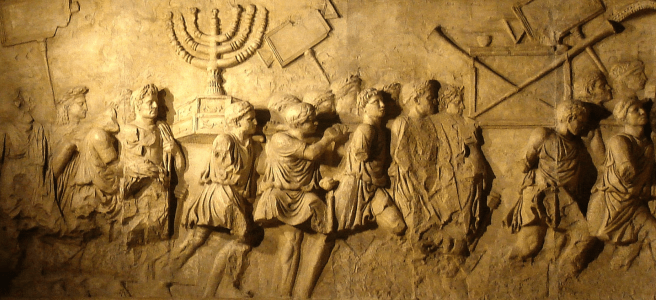
This first post will discuss ancient Israel among the great powers of the ancient near east. Israel’s entire existence in the Bible took place in the shadow of one great power or another, from Egypt on down to Rome. So, the politics of the Bible has a lot to do with navigating life in that shadow—resistance, subjection, imitation, alternative.

Then, the second post will zero in on Israel’s own attempt to be a territorial kingdom, a power in its own right. I call this, ancient Israel as a failed state—and will consider what follows after the failure. Israel’s time as a nation-state in the “promised land” was complicated, but ultimately ended in disaster—yet the peoplehood continued. What lessons came out of that experience that empowered the peoplehood to continue?

Third, I will turn to the New Testament and the story of Jesus, and his politics as told in the gospels with a glimpse at the book of Revelation. I call this “Jesus’s upside-down empire.” I will suggest that Jesus’s radical politics are best understood in terms of his continuity with the Old Testament.

I will conclude with a fourth post—not part of the original Sunday school class—that reflects on a Christian political agenda in light of the Bible’s radical politics. Most politically engaged people in the United States today recognize that we are facing crises of extraordinary difficulty and diversity. How might the Bible’s Big Story give us some perspective on navigating these crises?

Continue reading “Ancient Israel among the great powers. The Bible’s radical politics (part one)”

It is hard to imagine the United States finding healing

Ted Grimsrud—April 28, 2025

In the fifty plus years that I have been paying attention, I have felt that most Americans have been shielded from much of the brokenness of our society. Domestically, the people who suffer the most have generally been separated from the general population and shunted to unnoticed pockets of poverty and imprisonment. And throughout my lifetime, few Americans have been much aware of the brokenness we have visited on foreign lands through our wars and other interventions.

Now it seems that our political system has been degraded enough that the nation has put into power an administration that does not actually care that much to keep the brokenness hidden. And the future looks troubling for as far ahead as one can imagine. One could say that in light of our long history of causing harm around the world, we have a kind of grim justice being visited upon an ever-wider swath of Americans. However, you can be sure that the people at the top of our social pyramid (the ones most responsible for the suffering of the vulnerable at home and abroad) will themselves manage okay until the entire system collapses.

American delusions of goodness

I read something the other day that underscored my perception of the trouble we are in. David Brooks is a well-known columnist for the New York Times and author of numerous bestselling books on politics and social trends. He wrote an article in the May 2025 issue of The Atlantic called “I should have seen it coming” that various of my Facebook friends have linked to. Brooks is a kind of never-Trump Republican, so it is not surprising that his article focuses on how disastrous the second Trump presidency is for the US. He makes some good points, in criticizing Trump, but it was a different aspect of the article that troubled me more (not that I am not also troubled about Trump).

Continue reading “It is hard to imagine the United States finding healing”

Pacifism in a time of war and chaos [American Politics #16]

Ted Grimsrud—March 10, 2025

I am deeply troubled by the wars and rumors of war, the social chaos, and the strong sense of pessimism that seem to be so much a part of our current situation. I also feel confused, uncertain, and relatively powerless. At such a moment, reflection on my core convictions is one way to steady my nerves, if nothing else. Almost exactly three years, a couple of weeks after Russia’s intensifying the conflict with Ukraine with their “special military operation,” I published a blog post on my Thinking Pacifism site that came out of such reflection, “Thinking as an American pacifist about the Russian invasion.” In this post, I want to update the thoughts I shared then.

“Pacifism” as a core conviction

It is challenging to be a pacifist in an environment with a strong cultural consensus in favor of military action. The United States has been deeply involved in the war that has been going on in Ukraine since 2014. When that conflict greatly intensified three years ago, the US prowar consensus also intensified, with both strong support for accelerated military aid for Ukraine and strong condemnation of Russia, usually couched as condemnation of Russian leader Vladimir Putin. It has been virtually impossible to find dissent from the insistence on support for war in the American mainstream media, among Democratic Party politicians, and in my social media circles. But this support for war is at odds with my pacifist convictions.

I do believe that being a minority, even a small minority, due to one’s convictions is not a good reason to weaken one’s convictions. We should, of course, always be open to testing the validity of our convictions in face of challenges. However, it is actually to be expected that pacifist convictions will not widely be shared when the cultural zeitgeist favors war. Rather than doubt the validity of my pacifist convictions, I want to ask how these convictions speak to my warist context.

I use “pacifism” here to refer to a fairly general belief. I use it as roughly equivalent to, say, being a humane person, a person who supports social and political self-determination for all people, a person who affirms the United Nations Universal Declaration of Human Rights. Pacifism affirms that to support war is antithetical to humane values, to the practice of self-determination, and to an affirmation of universal human rights. In what follows, when I use “we” I mean those of us who affirm these pacifist convictions (even if one may not like to use the term “pacifism” itself—I use this term as a convenient rubric for this set of convictions, but I care about the convictions more than the term itself).

Continue reading “Pacifism in a time of war and chaos [American Politics #16]”

Finding peace in the Old Testament [Peace and the Bible #19]

Ted Grimsrud—September 23, 2024

One of the first things that came up for me back nearly fifty years ago when I first thought of myself as a Christian pacifist was the question of the Old Testament. How can we reconcile all the violence of the Old Testament with the idea that Jesus calls us to be peacemakers? The first step for me at the time, and I think the first step for many, is to acknowledge that this is a problem but to emphasize the clarity of Jesus’s message for me. I’m not sure what the OT says, but I do know what Jesus says. The effect of this step, though, can easily be simply to set the Old Testament aside as being mainly a problem and not a good guide. I always felt uneasy about such a move.

So, one of my interests has been to work at reading the Old Testament as a positive resource for my peace convictions. I have done some recent thinking that has provided a sense of clarity about one particular angle that I want to outline in this post. I have long believed, and still do, that my pacifism does not depend on the Old Testament. However, I think pacifism is compatible with the Old Testament—and even benefits greatly from taking the Old Testament seriously.

Benefits from losing the promised land?

Lately I have read several helpful books about the Old Testament and Christian theology. At one point, I paused and thought about something I had read over and over. That was that it was such a terrible thing when the ancient Hebrews were driven from their territorial kingdom, having their temple destroyed and king dethroned. The entire story, it seems, revolves around that loss and an accompanying, long-lasting desire to restore this territorial kingdom and get their king back.

I was struck, though, with a sense that these assumptions might not be the best way to read the story. One of the books I read noted that the faith of the ancient Hebrews was established in a normative way before the people entered the promised land and established a territorial kingdom. The core elements of the faith—as found in the creation story, the exodus story, and the gift of Torah—existed independently of the territorial kingdom. As the story continues, the people enter the promised land, seek to embody Torah, establish a territorial kingdom, and, in time, lose that kingdom. Yet the peoplehood continued, based on that earlier foundation. And in the thousands of years since, the peoplehood has continued without (until very recently) a territorial kingdom. So, was losing that kingdom actually such a bad thing? In fact, might it be part of the story that territorial kingdoms are inherently problematic? Maybe the peace message of the Bible has a lot to do with precisely the point that faithful living is best pursued apart from taking responsibility for territorial kingdoms or nation-states.

Continue reading “Finding peace in the Old Testament [Peace and the Bible #19]”

The book of Revelation and peace, part I: The peace of the Lamb [Peace and the Bible #18]

Ted Grimsrud—March 28, 2024

The book of Revelation has a pretty bad reputation among many people—not least because it is easily interpreted as portraying quite a bloodthirsty God. And many Christians have affirmed that interpretation. I first decided to study Revelation after hearing a teacher argue against pacifism by claiming that Revelation teaches that divinely initiated violence is part of Revelation’s End-Times scenario. This teacher coupled Revelation’s violence with the violence of the Old Testament stories such as Joshua to argue that sometimes God does want war.

I knew in my heart (though not yet my mind) that the Bible should not be read in such a pro-violence way. So, I decided to look closely at Revelation for myself. I discovered that indeed Revelation may be read in a very pro-peace way. My recent book, To Follow the Lamb: A Peaceable Reading of the Book of Revelation (Cascade Books, 2022), articulates my latest understandings about Revelation’s peace message. In this post and one to follow I will share some of the key ideas in that peaceable reading.

The key step for me was my starting point in reading Revelation. I took very seriously the opening words of the book, “the revelation of Jesus Christ” and read the book expecting it to complement the story of Jesus in the gospels. I was open to be proven wrong about Revelation’s Jesus-linked orientation, but I first wanted to see if indeed Revelation did further Jesus’s own message. That is, I read Revelation asking, “What (if anything) does Revelation teach us about peace?” rather than “What does Revelation teach us about the future?” or “What does Revelation teach us about a violent, pro-war God?” Along with the opening words that refer to Jesus, I also quickly recognized that the key image (in a book full of images, symbols, and metaphors) in the entire book was the image of the Lamb. Clearly, this Lamb image was meant to evoke Jesus and, as I came to recognize, to keep the various visions and imagery anchored in Jesus’s message.

I will develop two aspects of the Lamb image in what follows. In this post I will discuss “the peace of the Lamb.” With the Lamb’s peaceable orientation in mind, I will then turn to “the war of the Lamb” in the next post and show that Revelation’s “war” is actually a struggle for peace on earth that uses thoroughly peaceable methods.

Continue reading “The book of Revelation and peace, part I: The peace of the Lamb [Peace and the Bible #18]”

The politics of Paul and the way of Jesus as seen in Romans 13 [Peace and the Bible #17]

Ted Grimsrud—March 25, 2024

The Apostle Paul was a follower of Jesus. And his social views actually complement Jesus’s rather than contradict them, contrary to what many Christians have believed. In this post I offer a detailed look at the infamous passage in Paul’s letter to the Romans that, one could say, has launched many ships and other weapons of war. Romans 13:1-7 often serves as a counter-testimony in Christianity to the idea that Paul may have taught a principled nonviolence in agreement with Jesus. As well, Romans 13 is often seen to go against the idea that Paul understood Jesus’s peaceable way as normative for Christian social ethics.In reading a number of writings where Christian thinkers argue against pacifism, I discovered that in every single case—across a wide spectrum of theological positions—those who reject pacifism cite Romans 13:1-7 as a major reason. I will show why this text should not be read as counter to pacifism.

Setting the context for Romans 13:1-7

Our interpretation of Romans 13:1-7 should begin with reading these verses in light of their broader biblical context. Our passage is not the only place in the Bible where the political Powers are addressed. From Egypt in Genesis and Exodus, then Assyria, Babylon, Persia, and down to Rome in the book of Revelation, the Bible shows empires rebelling against God and hindering the healing vocation of God’s people. The entire Bible could appropriately be read as a manual on how people who follow Torah in seeking to love God and neighbor negotiate the dynamics of hostility, domination, idolatry, and violence that almost without exception characterize the world’s empires.

Romans 13:1-7 stands within this broader biblical context of antipathy toward the empires. If we take this context seriously, we will turn to these Romans verses and assume that their concern is something like this: given the fallenness of Rome, how might we live within this empire as people committed uncompromisingly to love of neighbor? Paul has no illusions about Rome being in a positive sense a direct servant of God. Paul, of course, was well aware that the Roman Empire had unjustly executed Jesus himself (and, according to tradition, in time executed Paul as well). As evil as these Powers might be, though, we know from biblical stories that God nonetheless can and does use the corrupt nations for God’s purposes—nations that at the same time remain under God’s judgment.

In his letter to the Romans, Paul surely had this biblical sensibility in mind as he addresses Jesus’s followers in the capital city of the world’s great superpower—the entity that had executed Jesus. Paul begins with a focus on the perennial problem related to empires—idolatry (see my previous post, “Paul’s critique of idolatry”). He discusses two major strains of idolatry in chapters 1–3: (1) the Empire and its injustices that demand the highest loyalty and (religious) devotion and (2) a legalistic approach to Torah that leads to its own kind of violence (witness Paul’s own death-dealing zealotry).

Continue reading “The politics of Paul and the way of Jesus as seen in Romans 13 [Peace and the Bible #17]”

Paul’s critique of idolatry [Peace and the Bible #16]

Ted Grimsrud—March 22, 2024

The Apostle Paul has often been interpreted as a major influence in moving Christianity away from the peaceable message of Jesus. I want to counter that interpretation, though, by noticing key peace themes that are present in Paul’s thought and by challenging one key text interpreted to support the idea that Paul accepted violence. So, I will focus on Paul’s critique of idolatry in order to show how central to Paul’s theology the way of peace is. Then, in my next post I will offer an interpretation of the infamous Romans 13 passage that shows that those verses actually offer a peaceable message.

The idolatrous roots of violence and injustice

The biblical story portrays violence and injustice having roots in idolatry. If we use violence as our criterion, we could say that whenever human beings justify violence against other human beings, they give ultimate loyalty to some entity (or “idol”) other than the God of Jesus—loyalty that demands violence, always contrary to God’s will as expressed by Jesus. Paul joins other biblical prophets in rejecting any kind of loyalty that would justify violence.

I will consider Paul’s critique of idolatry and focus on the first three chapters of his letter to the Romans. He takes on two types of idolatry. He criticizes the idol of the Roman Empire (which is manifested as what I will call the idol of “lust”). Second, he critiques those (like Paul himself before he met Jesus) who believed that loyalty to Torah requires judgmental violence in defense of the covenant community (what I will call the idol of “judging”).

Continue reading “Paul’s critique of idolatry [Peace and the Bible #16]”

How the story of Jesus’s resurrection points toward peace [Peace and the Bible #15]

Ted Grimsrud—March 18, 2024

Christianity, it seems, owes its existence to on-going presence of Jesus among his followers after he was executed by the Romans. Against all expectations including their own, Jesus’s disciples within a few days of his death proclaimed that God had raised Jesus from the dead. Ever since, Jesus’s resurrection has been a rallying cry for Christian faith. It was quite a turnaround, because in the immediate aftermath of Jesus’s arrest and execution, it appeared that his movement had met its end.

The shock for Jesus’s followers

Jesus’s arrest and crucifixion were a devastating blow to his followers’ hopes. They “had hoped he was the one to redeem Israel” (Luke 24:21); in the days that followed the shattering of those hopes they scattered and wandered around Judea. Jesus’s most prominent disciple, Peter, led the desertion by Jesus’s followers. They concluded that God had abandoned their leader—in line with Deuteronomy 21:23: “For a hanged man is accursed by God.” Jesus’s mission seemed to have ended up for naught. His message about God’s mercy, it appeared, proved to be no match for the forces of powers-that-be in their society. Whatever the disciples may have thought about the possibility of resurrection from the dead at the end of time, they clearly seemed not to have imagined that it would apply to Jesus in the immediate aftermath of his death.

A few of Jesus’s followers did remain close to him—Mary Magdalene, Jesus’s mother, a couple of others. They seem to have remained simply out of love for him and as an expression of solidarity in their grief, not that they expected his resurrection. Though the story tells that Jesus alluded to resurrection as he spoke of his likely death, it seems that no one actually understood him to mean his personal resurrection prior to the general resurrection at the end of time. The events of Easter Sunday took everyone by surprise.

Continue reading “How the story of Jesus’s resurrection points toward peace [Peace and the Bible #15]”

The death of Jesus and the weakness of God [Peace and the Bible #14]

Ted Grimsrud—March 15, 2024

Christianity has focused a great deal of its theology on the death of Jesus and its purported cosmic significance. This emphasis has not had an altogether positive result. To mention just one of the problematic outcomes, viewing Jesus’s death as the necessary sacrifice that somehow enables God to offer salvation to sinful human beings has placed an act of terrible violence at the heart of Christian faith—thereby greatly weakening the peaceable impact of Jesus’s life and teaching. When some sort of punitive “justice” that needs to be “satisfied” by Jesus’s violent death is seen to be part of the essence of God’s character, it greatly increases the likelihood that Christians will also see themselves and their institutions as agents of such “justice”—that is, as agents of divinely approved violence. The long legacy in the “Christian” West of the state as the wielder of such violence in warfare and in criminal justice bears witness to the dark legacy of theological interpretations of Jesus’s death.

I suspect that part of the appeal for seeing Jesus’s death as salvific for Christian theology has been a large emotional investment in the notion of God being victorious and in control. If Jesus is God Incarnate and the Savior, how can it make sense that he would die such an ignominious death? How can it make sense that God would face such a defeat? How can it be that God’s control could be breached by such a horrendous and blasphemous act as executing the Christ? One way to understand traditional Christian atonement theology that makes Jesus’s death into such an efficacious act is to recognize it as a way to turn defeat into victory, to turn weakness into overwhelming power. But what if such a move actually has led to many problematic consequences—turning a peaceable story on its head and making it into a story that has underwritten a great deal of violence? And what if such a move actually misconstrues the story of Jesus’s death itself—and in doing so misses the main points of that story that would indeed have major peacemaking consequences? Perhaps it is no surprise that the truly peaceable and transformative message we find in Jesus’s life and teaching has been so seldom evident in the long history of Christianity these past 2,000 years.

Continue reading “The death of Jesus and the weakness of God [Peace and the Bible #14]”

What did Jesus mean by the “Kingdom of God”? [Peace and the Bible #13]

Ted Grimsrud—February 5, 2024

I believe that one important indicator that Jesus had a “political” agenda (as I have discussed in my previous two blog posts, “Peaceable politics and the story of Jesus” and “Did Jesus have a political philosophy?”) is simply his prominent use of the term “kingdom of God” (or its equivalent in Matthew’s gospel, “kingdom of heaven”). This seems actually to be a complicated metaphor—it’s not obvious exactly what Jesus meant. But that “kingdom” has political connotations cannot be questioned. As a simple definition of “kingdom,” we may say it is a stable community of people that is led by a queen- or king-like ruler. In whatever sense Jesus had in mind of “community” and “ruler,” he did have in mind some sort of political entity.

I have long been ambivalent about our using the “kingdom of God” metaphor today. It seems hopelessly archaic, not to mention patriarchal. It breathes of a world of domination and hierarchies. Yet, Jesus—as I understand him—opposes patriarchy, domination and hierarchies. Is there a better way to understand his metaphor, then? I think so, though I am still not fully comfortable making the term a regular part of the faith language. But rather than simply dismissing the metaphor, I think we would be well served to try to figure out what Jesus himself meant by it. What was he trying to convey? May we affirm his intent even if we seek to find more contemporary language to articulate it? To work at answering these questions, let’s look at the biblical history of the notion of the “kingdom of God.”

The failed territorial kingdom of the Old Testament

The initial picture of the kingdom of God in the Old Testament is of Abraham’s descendants, a community of freed slaves who God led out of Egypt. After the exodus from slavery, God provides the people with a set of laws (Torah) that calls for a social order that in many ways would be an alternative type of politics in contrast to the domination-style politics of the Egyptian empire. The liberation was led by Moses, whose role was to be a kind of extemporaneous prophet, not a permanent king-like leader and not a military leader sitting atop a permanent war-making machine. God is presented as the true king of the people; that is what makes the community an expression of the “kingdom of God.”

Continue reading “What did Jesus mean by the “Kingdom of God”? [Peace and the Bible #13]”