Christianity’s accommodation to empire

Ted Grimsrud—October 21, 2025

Amidst its diversity, we may discern in the Bible a specific political sensibility. God has called into being a community to know God’s love and to embody that love so as to bless all the families of the earth. Torah provides a social framework for this blessing that includes mutual aid, welcome to the vulnerable, justice for all in the community, no social stratification, and a recognition that God’s blessings can be resisted and will be revoked when the community turns from the core teachings of Torah. Jesus then reinforces this Torah-based framework.

So, what happened to Christianity? My Christianity in the early 1970s little resembled the ideals of the Bible. Christians have tended more to be complicit with empire than oppose it. How did this happen that Christianity accommodated to empire? We have two reasons to repudiate such accommodation. First, to make it easier to recover the truths of the biblical story. Second, to help us find ways to break uncritical nationalism and American warism. We need self-awareness about the problematic of Christianity and empire in order to discern a new healing path.

Struggles with Rome

Early Christians did to some extent embody the way of Jesus, but always with difficulty. The picture presented in the seven messages to congregations in Asia in Revelation 2–3 applies to the first several generations of the Christian movement. In Revelation we meet a few churches that adhered closely to Jesus’s teaching and example and faced persecution. These tended to be small and poor. Others found more prosperity and comfort—but too easily collaborated with the surrounding culture. They risked losing their connection with Jesus and his message.

The Bible does not tell of a golden age when the community got everything right but of an ongoing struggle that continues to characterize Christianity. Those who embody Torah’s and Jesus’s message will always be at odds with their wider culture and tempted to compromise that message. The earliest Christians come from the margins of society. In time, the communities attract more people of higher social status and their antipathy toward the Empire lessens. Persecution of Christians continued as empire elites found that to scapegoat this fringe religious minority helped strengthen their hold on power. By the end of the third century CE, however, many in the churches looked for more accommodation with the Empire.
Continue reading “Christianity’s accommodation to empire”

Jesus the Lamb challenges empire

Ted Grimsrud—October 17, 2025

The Bible has a reputation of being pretty pro-violence. Some Christians want the Bible to approve of violence—that helps them justify the violence they currently support. I decided back when I first embraced pacifism that I wanted to try to read the Bible as pro-peace as much as I could. I still do. An early test for me came with trying to understand the book of Revelation. Is it truly about visions of future God-approved warfare and violent judgment?

I had heard because God wants wars in Revelation, God may also want wars in our time. I decided to study Revelation to see what it actually says. I soon discerned Revelation may be read as a book of peace. I also realized that Revelation is not about predicting the future; it is about applying Jesus’s message of peace and healing in our present. A key concern in Revelation has to do with following Jesus while living in the idolatrous Roman Empire. Thus, Revelation becomes for us an essential text for reflection of the relation between Christian faith and empire.

Revelation as part of Jesus’s peace agenda

For Jesus, to resist the Empire means: Love our neighbors, say no to idolatry, give our loyalty to the God of mercy, and recognize the empire as the enemy of God, not God’s servant. Early Christians faced constant temptation to conform to Rome. It could be costly to resist. Many also found the imperial claims to be seductive. This struggle with conformity to the empire had a tragic ending for Christianity; we will see in our next post that it became an empire religion. In the early years, though, the struggle led to a sharp critique of the Empire—see Revelation.

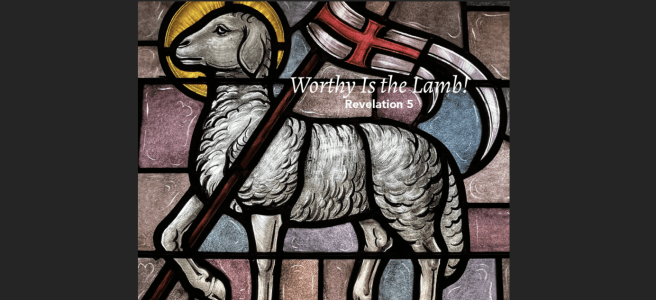
Revelation does not collect predictions about “End Times” but describes the dynamics of imperial seduction. It describes the deep conflict between the ways of empire and the ways of the gospel. This “war of the Lamb” can only be successfully waged in one way. Wage this war with what the New Testament letter to the Ephesians described as the “whole armor of God”: The belt of truth, the breastplate of justice, the gospel of peace, the shield of faith, the helmet of salvation, and sword of the Spirit (which is the word of God) (Eph 6:13-17).

Continue reading “Jesus the Lamb challenges empire”

The Bible’s suspicion of the empires

Ted Grimsrud—October 7, 2025

In the years from 1987 through 1996, I preached several hundred sermons. Almost all had to do with biblical bases for peace theology. Then I began college teaching and most of my classes were relevant for how Christian pacifist convictions could inform living in the American Empire. In what follows, I will present the message of the Bible that relates to peace theology. This message provides the grounding for an unblinkered look at the American Empire from the perspective of Christian pacifism—something I offer in the series’ final posts. The story I have told in my previous posts describes how I got to my commitment to peace theology. Now, I will turn to the story of where that commitment has led me, first theologically and then politically.

Holding the Bible loosely, but with respect

I view the Bible as a conversation partner. The big picture that comes from all its stories read together gives me a perspective from which to engage the world. To me, it is not a source of normative, explicit commands nor a miraculously accurate source of information about the past of God’s people. Yet, it is not simply ancient writings from a distant time. I see it as a fascinating collection of various kinds of literature. It reflects various human perspectives that hang together, loosely, to guide and inspire. The authors’ moral commitments give the Bible its coherence.

When read in light of Jesus’s message that centers on the call to love neighbors, the Bible serves that call. It presents a worldview shaped by love. Jesus does not originate this worldview but echoes and reinforces the Old Testament message of Torah and the prophets. The Bible tells a “Big Story” where all its parts hang together and convey a vision for life shaped by God’s love.

I discovered the Bible’s Big Story through my struggle with American warism. I found a way out of my embedded warist view of the world through an encounter with the story of Jesus. That encounter shaped how I have read the Bible ever since. In asking questions of the Bible about war, justice, and social transformation, I discovered that the Bible truly cares about politics and social transformation. It provides a powerful framework for interpreting the world.

Continue reading “The Bible’s suspicion of the empires”

A Christian political agenda? The Bible’s radical politics (part four)

Ted Grimsrud—June 16, 2025

In the first three parts of this series on the Bible’s radical politics (part 1; part 2; part 3), I have sought to show the continuity between the Old Testament and the story of Jesus. Throughout the Bible we see a critique of the great powers and the presentation of an alternative to the politics of domination and exploitation. The Bible presents the way of peace and restorative justice as a genuine alternative that it expects the people of the promise to embody.

In this series-concluding post, I offer some brief reflections on how to apply these teachings from the Bible to contemporary American political life. I started this series motivated by a sense of my country—and the wider world—being caught in a spiraling series of social crises. This spiral gets worse as our political system displays an increasing inability to respond to the problems with creative and transformative solutions. Can the Bible help?

The Bible approaches politics in the context of life within empire

From Genesis through Revelation, the Bible reports the people’s efforts to navigate a world dominated by ruthless great empires. These empires offer two distinct challenges to the people—(1) the constant threat of violence and oppression and (2) the constant temptation for the communities of the promise to absorb and embody the ideology of empire.

From the enslavement of the Hebrews in Egypt through the conquering violence of Assyria and Babylon and down to the Romans who executed Jesus as a rebel and destroyed the Jerusalem Temple, the Bible presents empires as God’s enemies, intrinsically hostile toward Torah-guided social justice. Yet empires are also seductive and alluring—either in the sense of seeking to be honored and even worshiped by those within their boundaries (see the book of Revelation) or in the sense of providing the template for the unjust ordering of life within independent kingdoms (as in the Old Testament’s Israel and Judah).

In the contemporary United States, people of faith face a strong pull from our great power to give it our ultimate loyalty. Probably nothing reflects this call to loyalty as much as demands for support for American wars and preparation for wars. Americans, with little dissent, devote their nation’s best energies and almost unlimited resources to this warism.

Continue reading “A Christian political agenda? The Bible’s radical politics (part four)”

Why did Christianity move so far away from the message of Jesus? [Questioning faith #7]

Ted Grimsrud—November 21, 2022

From the time I made a commitment to Christian pacifism in the mid-1970s, I have believed that Jesus and the Bible as a whole support that commitment. In the years since, I have learned a lot more about how this “support” is complicated and at time ambiguous. However, I still believe that the general message of the Bible and more clearly the message of Jesus obviously point toward peace, compassion, care for the vulnerable, and what we now refer to as restorative justice—even if some may quibble about whether it explicitly teaches pacifism.

A few years after my turn toward peaceable Christianity, my wife Kathleen and I spent a year at the Anabaptist Mennonite Biblical Seminary. We gained a terrific foundation there of biblical peace theology, especially from Old Testament professor Millard Lind and New Testament professor Willard Swartley. I have preached through much of the Bible in the 40 years since attending AMBS, each year during my 20-year teaching career at Eastern Mennonite University I taught a class called “Biblical Theology of Peace and Justice,” and I have written several books on peace based on the Bible. I feel quite established in my sense that the Bible (especially, but not only, Jesus) gives us a strong message of peace.

The difference between the Bible and Christian practice

So, that leads to the obvious question. What happened to Christianity? The history of Christianity is a history full of wars and militarism, conquest and domination, crusades and the embrace of empire. One statistical piece of evidence comes from the United States. In 1940, after several years of intense lobbying by peace advocates, the legislation passed to begin a military draft included allowance for pacifists to be exempt from joining the military. So, this proved to be kind of a test case.

From my analysis, I would estimate that about one out of 1,000 American Christians chose the conscientious objector route. For the vast majority of the young men who were drafted, the option to be a CO—and the sense that Jesus would support such a stance—seemingly never even entered the realm of possibility. Not only have Christians around the world almost always supported their nations’ wars, even when they would be fighting other Christians, it actually seems to be the case at least in the United States that Christians are more likely than non-Christians to support wars and preparation for wars. It doesn’t seem farfetched to call Christianity a pro-war religion—the opposite of Jesus’s message.

So, again, the question: Why the transformation? This is a question that has interested me for a long time, but I have never devoted serious attention to it. I have come up with a preliminary list, though, of what seem to be key elements of the evolution away from Jesus’s teaching.

Continue reading “Why did Christianity move so far away from the message of Jesus? [Questioning faith #7]”