Blank check nationalism?

Ted Grimsrud—September 5, 2025

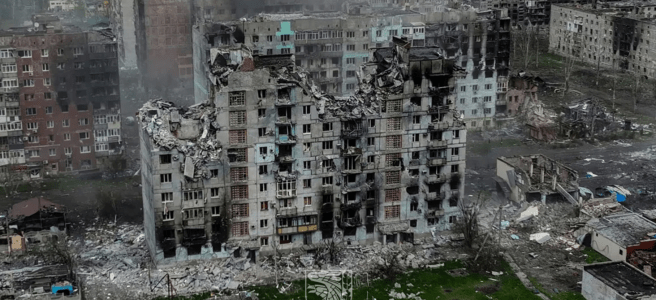
How is it that Americans so easily devote so many resources for war? We spend almost as much on war as the rest of the world combined each year. This does not make the US military particularly effective. Since 1945, few US military interventions achieved their objectives (for example, Korea in the 1950s, Vietnam in the 1960s and 1970s, Afghanistan and Iraq in the early 2000s, and Ukraine in our present moment). Yet failed interventions have not much hindered the growth of military spending or the continued willingness of the American Empire to intervene.

My own experience growing up in this country may offer a clue about such seeming contradictions. I had a pleasant youth. Yet, when I turned 18 I without thought registered for the draft and expected to end up in Vietnam killing our “enemies.” I expected to act in ways contrary to the pleasantness of the first 18 years of my life. Though the Vietnam War violated what I believed about the goodness of the US and about how I should live my life, I would have gone.

Though I lived with moral seriousness and cultivated living justly and peaceably, I unquestioningly accepted the state’s right to take me from such a life and train me to kill on command. I accepted the state’s right to demand that I contradict my morality. I would take this path to unjustly deny the rights of people our leaders call “enemies” mainly.

Central to this big contradiction are the ways we are shaped from early on in life. Our environments condition us to accept certain values, obligations and orienting principles about life. The beliefs and practices of our families and the interests and pressures that come from the various institutions and cultural assumptions that surround us shape us toward warism.

Continue reading “Blank check nationalism?”

Is pacifism relevant in the American Empire?

Ted Grimsrud—September 2, 2025

For the past fifty years, it seems, I have lived in increasing despair as an idealistic citizen of the United States. I have tried to think my way through what seems to be an irresolvable and terminal problem. As a child, I accepted that the US was a model society, guided by God to be a force for freedom and democracy in the world. This message formed a core part of my identity. Increased knowledge disabused my idealistic view of the US. I reached adulthood at the same time our military withdrew from Vietnam amidst many revelations of extraordinary injustices.

However, my idealism about freedom and democracy did not diminish. I turned my focus from the American nation to Christian communities. As I turned from blank-check nationalism (the willingness unquestioningly to let the state turn us toward war—what I call “warism”), I turned toward a strand of Christianity that understood the message of Jesus to be central for our social ethics. In the nearly half-century since those two decisive turns, I have struggled endlessly with a central dilemma. How do I live as an American citizen in the context of learning evermore of the injustices and idolatrous violence of the American Empire? I have developed a strong critique of this Empire based on Christian theology and a pacifist reading of the Bible. However, such work has placed me in the midst of another wrenching dilemma. I draw heavily on the convictions of a religion that is itself deeply implicated in the dynamics of the Empire.

I do not write in hopes of actually resolving these dilemmas. In offering a progress report, I mainly want to continue the struggle. I hope for more conversation on the issues I raise. I will present the case for Christian pacifism as a lens through which to view the Empire and the Christian faith. How does that make sense?

Continue reading “Is pacifism relevant in the American Empire?”

Peace in Ukraine? [American Politics #17]

Ted Grimsrud—August 20, 2025

I found what seems to me to be to be a good, short analysis of the current status of the war in Ukraine, an article “The Peace Delusion,” by a political analyst named Thomas Fazi, who writes regularly for the web-based magazine UnHerd. In a nutshell, Fazi suggests that the core issue in the struggle is the question of whether the United States will remain the single global hegemon or if we will transition to what many are calling a multipolar world order, where there will be several great powers that can manage to co-exist in relative peace.

Peace in Ukraine will require Ukraine and its US/NATO backers to acquiesce to Russia’s demands. It’s not simply recognizing Russia’s control over the various parts of eastern Ukraine that they have or will soon have taken over. “It’s about addressing the ‘primary roots of the conflict,’ as Putin repeated in Anchorage: that Ukraine will never join NATO, that the West will not transform it into a de facto military outpost on Russia’s border, and that a broader ‘balance of security in Europe’ be restored.”

Were those demands to be met, Fazi argues, the result would be “a wholesale reconfiguration of the global security order—one that would reduce NATO’s role, end US supremacy, and acknowledge a multipolar world in which other powers can rise without Western interference.” These demands have been stated clearly and consistently by the Russians since before the February 2022 invasion of Ukraine. The reason why peace remains impossible in Ukraine is that such demands (and the resultant “reconfiguration of the global security order”) is simply something that “Trump—and more fundamentally the US imperial establishment, which operates largely independent of whoever occupies the White House—cannot concede to.”

Continue reading “Peace in Ukraine? [American Politics #17]”

It is hard to imagine the United States finding healing

Ted Grimsrud—April 28, 2025

In the fifty plus years that I have been paying attention, I have felt that most Americans have been shielded from much of the brokenness of our society. Domestically, the people who suffer the most have generally been separated from the general population and shunted to unnoticed pockets of poverty and imprisonment. And throughout my lifetime, few Americans have been much aware of the brokenness we have visited on foreign lands through our wars and other interventions.

Now it seems that our political system has been degraded enough that the nation has put into power an administration that does not actually care that much to keep the brokenness hidden. And the future looks troubling for as far ahead as one can imagine. One could say that in light of our long history of causing harm around the world, we have a kind of grim justice being visited upon an ever-wider swath of Americans. However, you can be sure that the people at the top of our social pyramid (the ones most responsible for the suffering of the vulnerable at home and abroad) will themselves manage okay until the entire system collapses.

American delusions of goodness

I read something the other day that underscored my perception of the trouble we are in. David Brooks is a well-known columnist for the New York Times and author of numerous bestselling books on politics and social trends. He wrote an article in the May 2025 issue of The Atlantic called “I should have seen it coming” that various of my Facebook friends have linked to. Brooks is a kind of never-Trump Republican, so it is not surprising that his article focuses on how disastrous the second Trump presidency is for the US. He makes some good points, in criticizing Trump, but it was a different aspect of the article that troubled me more (not that I am not also troubled about Trump).

Continue reading “It is hard to imagine the United States finding healing”

Theater of the absurd [American Politics #15]

Ted Grimsrud—March 3, 2025

As I try to pay attention to the wider world spinning out of control and heading toward who knows what kind of fresh hell, I keep trying to reflect on my peace-oriented core convictions and to learn more about history. My core convictions remind me that the US seems bent on world domination and thus, by definition as long as this is the case, seems unable actually to contribute to world peace. Americans who do care about peace need to question the idea that there is some way in our current world for the US to play a constructive role in peacemaking. It has rarely happened in the past eighty years, and it doesn’t seem likely to be happening any time in the foreseeable future.

Two fantasies

From the questionable idea of the US role as an agent for peace comes the fantasy that the Biden/US/NATO policies in Ukraine were about something other than trying to take down Russia and seeking to further enrich US-based war profiteers through the proxy war. Many liberal pundits and corporate media reporters continue to push the idea that the war is a stalemate that can be turned in Ukraine’s favor rather than recognizing that Russia pretty much controls the situation and will heretofore call the shots with Ukraine on the brink of collapse.

Or, we have the fantasy that Trump is a genuine peacemaker who has a plan in mind that will lead to an end to the war. This second fantasy attractively serves as an alternative to the first. I am not as confident in my critique of it. However, because Trump also seeks US world domination and because he also seems to want to somehow squash China (hence, the motive to leave the Ukraine war to the Europeans and focus US energy on China), I actually see little hope that he genuinely seeks peace. We should also note that at the same time that Trump lectures Zelensky about peace he also approves an “emergency” allotment of $3 billion of weaponry to Israel in apparent support for the Israeli refusal to negotiate in the second phase of the agreed-upon ceasefire with Hamas and instead to plan for more violence.

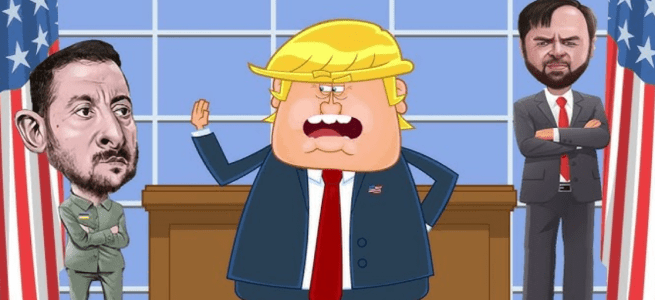
The amazing dustup between Trump (with his faithful sidekick J.D. Vance) and Ukrainian president Zelensky on Friday was shocking theater. As never before we saw a US president being intensely argued with in public—and arguing back. I have no idea what was and is going on in the background and what the fallout will be from this angry display. Reactions I have read seem to show more about the various observers’ predispositions concerning these people than any particular insights about what was actually going on.

Continue reading “Theater of the absurd [American Politics #15]”

Despairing political confusion [American politics #14]

Ted Grimsrud—February 24, 2025

I have believed for a long time that the world will be better off when the American Empire falls from its stature as the most powerful superpower. For a long time, I hoped against hope that this fall would be voluntary, that somehow the US would choose to let go of its drive to dominate the world as the top dog and find ways to be collaborative in a multipolar world.

Is the American Empire falling our only hope for peace?

I now simply cannot imagine that a voluntary giving up of domination will happen. It seems likely that only the American Empire falling apart and involuntarily losing its hold of the world’s reins of power will save the world. And it seems like we are headed toward that outcome perhaps more rapidly than ever. This may be good for the world—though not if the US fights so hard against its demise that it takes the rest of the world down with it.

I don’t understand very well the details of what is going on right now. Obviously, we see a shocking assault on the federal government by the newly installed Trump administration, an assault that seems ill-considered, ill-planned, vicious and destructive for viciousness’s and destructiveness’s sake. At the same time, I do not trust or respect most of the critiques of Trump, et al, that come from Democrats and the mainstream corporate media.

It seems like an extremely important sensibility for me—though I see little evidence of this in most of the discourse on our current situation—to see that both sides in our current political alignment in this country can be, in fundamental ways, wrong. Trump’s (and his acolytes’) horrifically misguided visiting what may be irreversible damage on our country does not negate the Democrats’ own misguided politics.

Continue reading “Despairing political confusion [American politics #14]”

Where is American Warism Headed?

Ted Grimsrud—October 22, 2024

We live in a time of great uncertainty. I find it difficult not to be quite discouraged about the direction the world seems to be going. What kind of future do we have? The presidential election in the United States that we are in the middle of (I mailed in my ballot the other day) is considered by many to be one of the most important we have ever faced.

No matter the outcome, warism will win the election

One of the outcomes of this election, though, that does seem fairly certain is that the American military and American militarism in general will remain engaged and expansive regardless of who is elected. We all know that Trump is all for militarism even if his (empty) rhetoric at times may seem to claim otherwise. Likewise, the Harris campaign has made it clear that she will be committed to continue on the warist path followed by the Biden administration in both Ukraine and Western Asia. So, with regard to what I believe is the most important issue facing our country—our involvement in global wars and preparations for war—this election will change nothing no matter how it turns out.

The two big wars we currently are fighting—in Ukraine and in Israel/Palestine—have not been going all that well for our side. In both cases, we see that American might seems to count for much less than what has been assumed. Simply the fact that both continue to be unresolved in itself tells us a great deal about the ineffectiveness of our weapons and leadership. Could it be that we are nearing the end of the post-World War II era of American military domination? Has the US quest for global dominance finally failed? If so, what will be the consequences?

Is American dominance coming to an end?

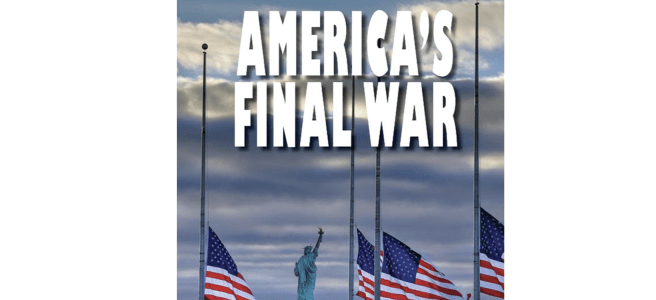
I recently read a challenging and surprising book that argues that indeed the end of an era is at hand. America’s Final War by Andrei Martynov (Clarity Press, 2024) argues that the US military is facing a failure in Ukraine that signals a profound shift in the balance of power and a certain descent into loss of power and influence by the American Empire. I thought that the failure to achieve quick victory in these two wars might indicate that American dominance is no longer what it once was. Martyanov goes further—the end is actually at hand. Is this possible?

Continue reading “Where is American Warism Headed?”

Twilight of the American Empire: A Time for Despair? [American politics #8]

Ted Grimsrud—March 12, 2024

The more I learn about the history of the United States, the more I question whether this country has ever had an actually functioning democracy. In the mid-19th century, abolitionist leaders Frederick Douglass and William Lloyd Garrison argued with each other about whether the problems with the then oppressive American slavery-embracing nation-state were due to roots found in the Constitution or more in spite of the Constitution. About 100 years later, a similar debate emerged between Martin Luther King, Jr., and Malcolm X. I find myself inching in the direction of Garrison and Malcolm and their views that the Constitution is a much bigger part of the problem than the solution.

Regardless of what we think about the original intentions of the Constitution, though, the facts seem to be that it has failed to prevent the emergence and growing reality of an American oligopoly characterized by the rule of a wealthy (and ruthless) elite at the expense of the wellbeing of the mass of the nation’s population—in defiance of the actual will of the people. I suspect that the US has always by and large been an oligopoly and that the myth of popular self-rule has always been mostly untrue. Nonetheless, things seem to be getting worse, and we currently face an extraordinary crisis with no hint of a creative way out of it.

Continue reading “Twilight of the American Empire: A Time for Despair? [American politics #8]”

A Christian pacifist in the American Empire, part 3: The American Empire without blinders

Ted Grimsrud—September 15, 2023

In the first post in this three-part Theological Memoir, “Embedded Theology,” I gave an account of my first two decades of life with a focus on how my “embedded theology” led me to accept the “blank check” regarding my loyalty to the American Empire, even to the point of being (reluctantly) willing to go to war if called. This acceptance of the blank check was, if anything, strengthened when I became a Christian and was taught that the “gospel” included an embrace of American patriotism.

The second post, “Jesus’s gospel of peace,” describes the circumstances around the transformation of my perspective due my encounter with Jesus—an embrace of Christian pacifism and a rejection of the blank check that involved a deeply critical disposition toward the American Empire. I also briefly sketch the Bible-oriented theology that undergirds that critical disposition.

My encounter with the gospel of peace has defined the rest of my life. Right away in 1976, I sought to bring together the two main elements of this new exciting vision for life and faith: First, an embrace of Jesus’s gracious and humane call that love of God and neighbor are the core meaning of life. Second, an ever-widening analysis in our social and political context of the vicious, expansionist, profoundly violent American Empire. From the very start, for me, these were two sides of a single coin. The call to love illuminated the realities of the Empire and the realities of the Empire continually challenged me to understand the practical and embodied character of the call to love. The more I studied the Bible, the more convinced I became of the radical nature of this story of God’s call of a people to bless all the families of the earth with their message of shalom. In this post I will outline my critique of the American Empire.

Continue reading “A Christian pacifist in the American Empire, part 3: The American Empire without blinders”

And they call it democracy…. Critical thoughts on America’s proxy war

Ted Grimsrud—August 24, 2023

[Early in 2022, after Russia greatly accelerated its military engagement with Ukraine, I wrote several blog posts and then some shorter posts on Facebook with my reflections. After all these months, I decided to re-engage these issues as the war continues unabated. Here are several recent Facebook posts.]

War, what is it good for? Absolutely nothing! (August 3, 2023)

War almost always ends up way worse than those who initiate it expect. Classic examples are the American Civil War and World War I, in both cases famously entered into by all sides with the expectation the war would be quick and victorious. What followed were the two worst bloodbaths in human history up to the time with indecisive results. American history in the past 75 years is full of case after case of this dynamic (e.g., Korea, Vietnam, Iraq, Afghanistan).

Almost certainly, Russia expected its direct military intervention in the Ukrainian civil war to end quickly back a year and a half ago. There is a chance it might have had the negotiations of the Spring of 2022 managed to reach a conclusion. However, Ukraine pulled back, and the current devastating war of attrition accelerated with no happy ending in sight.

More controversially, some observers are suggesting that the US/NATO side of this conflict was also a miscalculation that is leading to profoundly negative unanticipated consequences for that side. One of these observers is the American political scientist John Mearsheimer, a professor at the University of Chicago. Mearsheimer is often categorized as a “realist” who, it could be said, believes in the American Empire but believes many of the past and current actions of the empire are ill-considered and self-defeating.

In a recent interview, he reemphasizes his perception that the Ukrainian counteroffensive against Russian forces in eastern Ukraine right now is essentially a hopeless operation and has been from the start. The West pushed Ukraine into this operation, but to Mearsheimer, it was “like encouraging them to launch a suicidal offensive that is completely counterproductive.” Why the push? “The West is very fearful that time is running out, that if the Ukrainians don’t show some significant success on the battlefield in the year 2023, public support for the war will dry up and the Ukrainians will lose—and the West will lose.”

Continue reading “And they call it democracy…. Critical thoughts on America’s proxy war”