Will Mennonite Church USA survive? Reflecting on three decades of struggle (part 1)

Ted Grimsrud

The denomination I have been part of since 1981, the Mennonite Church, is going through a bit of a rough patch right now. The longer-term trend for some time has been shrinking membership totals and an aging demographic.

Downward trends

The college where I teach, Eastern Mennonite University, was founded and has existed with the purpose (not always directly stated) of keeping Mennonite young people in the Mennonite community. When I began teaching here in 1996, the student body was a bit more than 60% Mennonite. Now, with the enrollment being roughly the same, the percentage of Mennonite students in our first-year class is about half of what it was 17 years ago. Not a good sign.

Another factor that has led to MC USA shrinking, besides smaller families and the younger generation losing its loyalty to the denomination, has been a steady stream of conservative congregations leaving the denomination—and numerous others continuing to threaten to leave. (It is an interesting phenomenon that it is only conservative congregations that are voluntarily leaving—the couple of progressive congregations that left MC USA since its current structure was established in 2001 with the merger of the Mennonite Church and the General Conference Church were kicked out.)

In recent weeks I have heard dispirited speculation from several denominational leaders better informed and much closer to the centers of power than I am that MC USA may not be long for the world. I have no idea how realistic such speculation actually is. I do find it difficult to imagine that the denomination itself would die, but I suppose it is reasonable to imagine a significantly diminished institution.

I perceive that it would be pretty difficult to describe accurately all the factors that are contributing to these troubles. Most of those who talk about these things (including me) may have ideological axes to grind in our analyses. Our understanding of the why of the problem is often shaped by our ideals about what we want the denomination to do.

What I want to reflect on in this post is not so much a wide-ranging diagnosis of the factors that are troubling MC USA as taking one particular factor and thinking about how it might have contributing something to our current situation. This is my thesis: The soul of MC USA has been damaged by a tendency for church leaders and others to allow those who are opposed to efforts to make the denomination more gay-friendly to exercise influence by use of threats to leave the denomination. Our current crises follow—at least in part—from this tendency. Continue reading “Will Mennonite Church USA survive? Reflecting on three decades of struggle (part 1)”

Does the Bible have a coherent peace message?

Ted Grimsrud

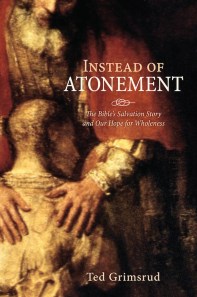
I wrote my book, Instead of Atonement: The Bible’s Salvation Story and Our Hope for Wholeness, out of a conviction that the Bible does contain a coherent peace message (or, I could say, a coherent healing message or a coherent mercy message). Surprisingly to me, I wonder now whether this conviction is shared by all Mennonite academics.

While I would have preferred a more sympathetic reviewer, I appreciate the issues raised by Mennonite Old Testament scholar Derek Suderman’s review of Instead of Atonement in the January 2014 Mennonite Quarterly Review. I want to reflect on several of those issues, not mainly to argue with Suderman but more to take the opportunity offered by his review to address some key elements of how we wrestle with the Bible in face of our call to be agents of healing in the world today.

There will be five issues that I will write about: (1) Is the best way to approach “biblical concepts” through focusing on the big picture or on analyses of specific words? (2) How do we understand God’s judgment in relation to God’s mercy? (3) How seriously should we take the Bible’s own way of summarizing its salvation story? (4) Is suggesting that the Bible has a coherent message actually making an inappropriate “universalized claim”? (5) What kind of assumptions should we have as we approach the Bible? Continue reading “Does the Bible have a coherent peace message?”

Salvation and the way of peace—(6) Is There an Atonement Model in This Story?

[This is the sixth in a series of six posts that will summarize the argument of my recent book, Instead of Atonement: The Bible’s Salvation Story and Our Hope for Wholeness (Cascade Books, 2013). Here is a link to the first five posts in the series.]

CASCADE_Template

The Basic Argument: Old Testament Salvation

For many Christians, the “biblical view” of salvation centers on Jesus’s death as a necessary sacrifice required to make salvation possible. This is the doctrine of the atonement, commonly defined as “how Christ accomplished our justification through his sacrifice on the cross.” However, the Bible’s portrayal of salvation actually does not focus on Jesus’s death as the basis for reconciliation of humanity with God.

The Old Testament emphasizes a few key moments at the heart of salvation: (1) the calling of Abraham and Sarah to parent descendants who would form a people to bless all the families of the earth; (2) the liberation of these descendants from slavery in Egypt; (3) the coalescing of these liberated slaves into a coherent peoplehood shaped by Torah; (4) the establishment of this community in the promised land; and (5) the sustenance of this community even after the destruction by the Babylonians through the prophets and Torah.

The story portrays each of these five “moments” as expressions of God’s unilateral mercy. In none of these cases was God constrained by holiness or the need to balance the scales of justice before the gift is given. In some cases, violence may be seen as an element of the story. Human beings do reap consequences for their injustice. However, the violence is peripheral. The gift does not require that there be pre-payment of appeasement or punishment. It is unearned; the violence is not inherent in its bestowal.

The centrality of the gift may be seen in the role the law and sacrifices play in salvation. Both are second steps, responses to the gift. God acts directly to give life to Abraham and Sarah; then they offer sacrifices. God acts directly to liberate the Hebrew slaves from Egypt; then God gives the law to shape the people’s responsive living. Salvation is not the consequence of obedience to the law or the offering of sacrifices. To the contrary, obedience to the law and the offering of sacrifices are consequences of salvation.

This view of salvation is reinforced by Israel’s prophets even amidst their sharp critiques. They proclaim that salvation is a gift; it simply requires trust, while its fruit is faithful living. Reject the gift and you will face consequences—but even then God awaits your return should you choose to do so. Continue reading “Salvation and the way of peace—(6) Is There an Atonement Model in This Story?”

Salvation and the way of peace—(5) Romans and Revelation

Ted Grimsrud

[This is the fifth in a series of six posts that will summarize the argument of my recent book, Instead of Atonement: The Bible’s Salvation Story and Our Hope for Wholeness (Cascade Books, 2013). Here is a link to the first four posts in the series.]

CASCADE_Template

Paul on the need for salvation

The interpreter of the story of Jesus’s life, death, and resurrection who has shaped the generations since most powerfully has been the Apostle Paul. Christian salvation theology has, for better and for worse, tended to be Pauline salvation theology. After examining key elements of Paul’s thought, I conclude that Paul understands salvation in ways fully compatible with the Old Testament and the story of Jesus.

Like his predecessors, Paul understands salvation in terms of God’s merciful intention to bring healing to a broken world. Paul does not present salvation in terms of retributive justice or a mechanistic view of God’s holiness and honor. Salvation, for Paul, is a gift of a relational God who seeks to free humanity from its self-destructive bondage to the powers of sin and death.

Romans 1–3 provides one important opportunity for Paul to spell out his understanding of Jesus as savior. At the heart of the sin problem for Paul is the dynamic of idolatry, people giving ultimate loyalty to entities other than God—with the consequence that instead of experience God’s healing justice, idolators experience “wrath.”

As Paul will make clear in Romans 5:1-11 and 11:32, God’s intentions toward humanity are about salvation. Hence, we make a mistake if we interpret “wrath” as God’s punitive anger directly aimed at people God has rejected. We should understand “wrath” in relation to the gospel. “Wrath” refers to how God works in indirect ways to hold human beings accountable, “giving them up” to the consequences of their giving their loyalty to realities other than life and the giver of life.

The true law exposes the sins of us all. It helps us see when we exchange love for neighbors with trust in idols. At such times, instead of practicing justice we instead practice injustice and violate God’s will for our lives. This problem characterizes Jews and Greeks alike. This is the problem: the universality of the domination of the “power of sin” (Rom 3:9) over all groups of people. Being a member of the empire does not save one—nor does being a member of the religious institutions that had emerged around Torah. In fact, when such membership fosters injustice it has become a curse, a ticket to alienation and idolatry. Continue reading “Salvation and the way of peace—(5) Romans and Revelation”

Salvation and the way of peace—(4) Jesus’s death and resurrection

Ted Grimsrud

[This is the fourth in a series of six posts that will summarize the argument of my recent book, Instead of Atonement: The Bible’s Salvation Story and Our Hope for Wholeness (Cascade Books, 2013). Here is a link to the first three posts in the series.]

CASCADE_Template

The story of Jesus’s death helps us understand the violent dynamics of our world and helps us answer the question of how to respond to violence without adding to the violence. This story helps us understand why the simple message of God’s love has not been readily embraced in our world. And this story helps us understand how God works to overcome these problems.

Using the logic of retribution (and its application in atonement theology) as the basis for understanding the meaning of Jesus’s death and our salvation actually leads to the opposite conclusion from what the story conveys. The story tells us that the logic of retribution was an instrument of the fallen Powers, not God—and that Jesus’s followers should see in the story a direct refutation of that logic.

In what sense does Jesus bring salvation from the dominance of the fallen Powers? The Powers rely on belief. As long as we believe in their ultimacy, trusting in them for security and meaning, the Powers rule. Jesus challenges human beings to change our allegiance. He asks us to trust in God’s love and not the sense of superiority over others that legalistic belief in the law provides. He asks us to end our trust in the assured access to God that sacred rituals (at a price) provide. He asks us to end our trust in the sense of power over others that being on good terms with the empire provides. In these ways, trust in Jesus breaks the hold of the Powers.

Jesus’s death links with salvation in that: (1) it exposes the fallacy of the logic of retribution; (2) it exposes the direct link between this murderous logic and the institutions that exploit it; (3) it shows that the spiral of violence that is set loose and ever-deepened by this logic may be broken only by non-retaliation and mercy in the way Jesus embodied them; and (4) it sets the stage for God’s act that vindicates how Jesus exposed the Powers and embodied domination-free life when God raises Jesus from the dead. Continue reading “Salvation and the way of peace—(4) Jesus’s death and resurrection”

“Mennonite Systematic Theology”: An opportunity whose time has passed?

Ted Grimsrud

David Cramer’s recent interesting Conrad Grebel Review article, “Mennonite Systematic Theology in Retrospect and Prospect” (31.3 [Fall 2013], 255-73) has stimulated my thinking quite a bit. He surveys the past thirty years, discussing the rise of interest in doctrinal theology among Mennonites and suggesting that while it has been good for Mennonite theologians to engage the broader Christian tradition it is still necessary for Mennonites to develop “more radically particularistic, integral Mennonite Systematic Theologies” (p. 257).

Though I have quite a bit of sympathy with Cramer’s suggestion (and I hope to say a bit more about a “particularistic” approach to Mennonite theology at the end of this post), his discussion triggered some thoughts that leave me feeling a bit discouraged. One response I have to this essay is to wonder if it might actually be too late for Cramer’s proposal. I hope not….

A theological attraction to Mennonites

Not long before Cramer was born (he cites his year of birth, 1983, as coincidentally the moment when it seems Mennonite academics made a self-conscious turn toward doctrinal theology), I had first encountered the Mennonite tradition. Drawn to Mennonites’ pacifism as mediated through the writing of John Howard Yoder, I made the move from being a generic evangelical to joining the Mennonite church in 1981. This step of formal membership followed a year of residence at Anabaptist Mennonite Biblical Seminary in Elkhart, Indiana.

From the start, my attraction to the Mennonite tradition had everything to do with Mennonite theology. Like many evangelicals at the time and since (I think this may be true of David Cramer himself, at least to some degree), I read Yoder’s The Politics of Jesus and felt a strong attraction to the tradition that had generated such a profound perspective on the gospel. I was fortunate soon to discover a generous-spirited small Mennonite congregation in my home town that sought, with significant success, to embody that peaceable message.

The people, the relationships, the social ethics, the service work, the tradition and practices of “nonresistance” and conscientious objection, all attracted me powerfully. However, I was also passionate about the ideas, the intellectual grounding, the theology of peace that I discovered among Mennonites. It wasn’t just Yoder. I avidly read Norman Kraus’s writings along with the 1976 festschrift for Guy Hershberger, Kingdom, Cross, and Community, that contained any number of rich essays. My wife Kathleen and I went to hear Myron Augsberger preach when we visited her family in Phoenix in March 1977. We were beside ourselves in excitement that evening. Here was a perspective that promised to make sense of what it means to think as Christians in our violent world. Continue reading ““Mennonite Systematic Theology”: An opportunity whose time has passed?”

Salvation and the way of peace—(3) Jesus’s life and teaching

Ted Grimsrud 

[This is the third in a series of six posts that will summarize the argument of my recent book, Instead of Atonement: The Bible’s Salvation Story and Our Hope for Wholeness (Cascade Books, 2013).]

CASCADE_Template

The story told in the gospels places itself in the heart of the traditions of Israel. Jesus presents himself in this story as embodying the promises of Yahweh to his forebears. For Jesus the Old Testament’s salvation story remains fully valid. He does not tell a different story, but proclaims the truth of the old story.

Jesus and Old Testament salvation theology

In the stories of Jesus’s birth, we learn that indeed something new is at hand, a “new thing” in full harmony with the Old Testament portrayal of salvation. There is no hint that something has to happen to God to make restoration possible. God initiates the reconciliation. God unilaterally declares that salvation has come and is especially available to vulnerable and marginalized people.

The birth of Jesus is not linked with the logic of retribution. The birth stories’ announcement of salvation’s presence contains no sense of a new approach to satisfy God’s aggrieved holiness or violated honor or to balance the scales of justice with ultimate innocent sacrifice. The stories point only to God’s initiating mercy and forgiveness.

As Jesus begins his public ministry, he expresses his own sense of continuity with the Old Testament salvation story. In his resistance to Satan’s temptations in the wilderness, Jesus quotes Israel’s scriptures. In his opening message to his home synagogue in Nazareth, he links himself with Israel’s hopes and Yahweh’s promises from the book of Isaiah. Throughout his teaching as presented in the gospels, Jesus quotes and alludes to and paraphrases the Old Testament. He never hints that he might understand his teaching as anything but in full continuity with Israel’s scriptures.

Jesus drew on Torah to transform how people viewed God’s participation among the people. People in power used debt to enhance their power and wealth at the expense of the less powerful. Jesus saw debt differently. Drawing on Torah, Jesus’s believed debt provided an opportunity for forgiveness. God does not demand repayment for every ounce of indebtedness. Rather, God offers abundant mercy. The debts would be forgiven without any kind of payment. Jesus’s God was not a God who maintained debt records for the purpose of foreclosing on the poor, but a God who canceled debt and restored life. Continue reading “Salvation and the way of peace—(3) Jesus’s life and teaching”

Salvation and the way of peace—(2) The Old Testament

Ted Grimsrud

[This is the second in a series of six posts that will summarize the argument of my recent book, Instead of Atonement: The Bible’s Salvation Story and Our Hope for Wholeness (Cascade Books, 2013).]

CASCADE_Template

read the Old Testament as a Christian, through the lens of Jesus. Reading the Old Testament in this way simply means allowing Jesus’s values to guide how I sort through the various witnesses. What follows are some ideas about how the Old Testament presents salvation in ways that point ahead to the life and teaching of Jesus.

Salvation as wholeness

Salvation has to do with wholeness. To gain salvation leads to harmony with God, other human beings, and with the rest of creation. We need salvation when we live with disharmony, when we experience brokenness instead of wholeness. The Bible presents salvation on three levels: (1) salvation as liberation from the Powers of brokenness, (2) salvation as restoration of harmony with God, and (3) salvation as restoration of harmonious human relationships. The Old Testament story places priority on salvation in the first sense (liberation). The other two follow from and depend upon the first. Because God acts to deliver, people are then freed to respond to God and restore harmony in their relationships with God and to live at harmony with one another.

In presenting salvation the way it does, via concrete events communicated in stories, the Old Testament locates this salvation in history and not in a cosmic, transcendent context. Salvation in the Old Testament is not about some transaction in the heart of God or some sort of weighing of the cosmic scale of justice. Rather, salvation has to do with flesh and blood actions.

We see in the Old Testament salvation story two distinct themes. First, God calls Abraham and Sarah and promises salvation: a gift of newness in the context of barrenness. God plans to use the community of faith to bring newness to all the families of the earth. This call begins a long process where God’s persevering love bring salvation. Second, God intervenes in the exodus to bring salvation to God’s people. God is a God who liberates the oppressed. God’s salvation does not come through human power politics. God’s salvation leads to a rejection of the values of empires such as ancient Egypt.

Behind God’s gifts and God’s demands lay God’s mercy. Salvation comes from God’s infinite store of mercy that leads to God’s persevering and patient love finding expression in Israel’s history. Salvation arises as God’s initiative and God’s unilateral intervention to heal. The salvation story tells us: (1) God, in love, commits to a long healing process with humankind and (2) God’s healing work involves at its core a counter-cultural sensibility that exalts the oppressed and vulnerable and defies power politics. Continue reading “Salvation and the way of peace—(2) The Old Testament”

Salvation and the way of peace—(1) The problem

Ted Grimsrud

[This is the first in a series of six posts that will summarize the argument of my recent book, Instead of Atonement: The Bible’s Salvation Story and Our Hope for Wholeness (Cascade Books, 2013).]

CASCADE_Template

In our present time in the United States, being a self-identified Christian makes a person more likely than a non-Christian to support warfare, punitive criminal justice practices including the death penalty, and corporal punishment of children. It seems likely that one reason American Christians are more pro-violence is because of their acceptance of a theology that understands salvation in terms of God’s retributive justice.

The logic of retribution

This salvation theology is based on a certain view of the “atonement”: The atonement is seen to  be how Christ accomplished our justification (i.e., being found righteous before God) through his sacrifice on the cross. Implied in this understanding of atonement is that God’s ability to provide salvation is constrained pending the offering of an appropriate sacrifice. It seems inevitable that violence play a role in satisfying the demands of God’s character—and that violence is part of God’s response when the satisfaction is not forthcoming.

As a rule, to act violently toward, especially to kill, other human beings is serious business, undertaken because some other value or commitment overrides our normal tendency not to be violent. Most socially accepted uses of violence (such as war, capital punishment, and corporal punishment) follow a fairly self-conscious logic. At the core of this logic usually rests a commitment to the necessity of retribution; using violence is justified as the appropriate response to wrongdoing. When the moral order is violated by wrongdoing, “justice” requires retribution (usually defined as repayment of wrongdoing with violent punishment, pain for pain).

We may call this the “logic of retribution.” In this logic, people understand God in terms of impersonal, inflexible holiness. They see God’s law as the unchanging standard by which sin is measured, and believe God responds to violation of God’s law with justifiable violence. Most violence is justified as being in some sense an expression of this deserved punishment. Continue reading “Salvation and the way of peace—(1) The problem”

What does the book of Revelation say? (part 18)

Ted Grimsrud

18. Why We (Should) Read Revelation

[This is the eighteenth (and last!) in a series of posts summarizing the message of the book of Revelation.  I have been writing on Revelation off and on for a long time. My intent with this project is to write a new book applying Revelation’s message to our modern world.]

Back in 1982 I preached my first sermons on Revelation. There is definitely some overlap between what I did those many years ago and what I have to say now. But there is always new light to be shed on a fascinating and complicated text such as Revelation.

Two types of arguments against pacifism

I was reminded recently why Revelation is worth reading. I encountered two different kinds of arguments against pacifism—one from the “right,” we could say, and one from the “left.”

I gave several lectures at the University of Pikeville on the Bible and peace. Not surprisingly, I heard a standard objection to pacifism. You would just stand by while someone is attacked? You would just stand by while our country is invaded? Behind these questions are assumptions that the only way to resist wrongdoing is with violence. The only way to have national security is with an all-powerful military. Pacifism is passive and helpless against injustice. Trust in the sword is necessary for national survival. We must be ready to fight.

The second kind of argument against pacifism came from a book called The Failure of Nonviolence by Peter Gelderloos, a “combative anarchist.” He sees pacifism or nonviolence, as too passive, too constrained, not really willing to take on evil and evil-doers. The big problem with nonviolence that Gelderloos focuses on is how nonviolent approaches tend to take the starch out of resistance movements. The book states: “Nonviolent campaigns around the world have helped oppressive regimes change their masks, and have helped police to limit the growth of rebellious social movements.”

I see some things both perspectives that share. It’s true that the people they want to use violence against are on opposite sides—law-breakers on the one hand and the enforcers of the law on the other hand. However, both assume that the only way to make sure the “good side” comes out on top is through use of “necessary” violence. Because this is true,  energy must be devoted to preparing for violence. Once you make violence a necessity, it can never be a last resort, something you avoid unless you absolutely have to use it. Rather, you must prepare for it, build up your firepower, shape your strategy by how you can position yourself to be successful in the violent actions.

It is at this point of understanding what it means to be victorious and what are the bases for true security that I have found Revelation especially meaningful. It  is  about victory and finding security. But it presents a radically different view of the how than those held by the anti-pacifist people. Continue reading “What does the book of Revelation say? (part 18)”