Conclusion: A Christian pacifist in the American Empire [part 2]

Ted Grimsrud—November 21, 2025

I have found Christian pacifism, properly understood, to be a most helpful framework as I try to understand the world I live in. In this series of 24 blogposts, I explain how I came to affirm pacifism and what it means for me. I have also showed how my pacifism shapes the questions I raise and criticisms I offer in relation to the American Empire. In this final post, I offer reflections on moving forward to live in the Empire in light of pacifist convictions.

Rethinking power

Christian pacifism posits two central affirmations— (1) We are called to resist and to seek to overcome evils in the world (“evil” most simply understood as that that harms life) and (2) We must work against evils in ways that do not add to the evil. The practice of pacifism helps us hold these two affirmations together. Committed to overcome evils, we engage the American Empire, the source of so many evils in our world. Committed not to add to the evil, we seek to find consistently nonviolent means as we strategize and act. One of the main ways human beings have tended to add to evil is to resist the wrong through the use of violence and coercion.

The American Empire cannot realistically be transformed in any immediate way. To try too hard to transform the Empire may lead us to take moral shortcuts that change us in ways that result to our actually adding to the evils that the Empire is doing. Violent resistance uses evil means to seek what might be good ends and may transform the effort into something that adds to the evil. On the other hand, many people try to reform the Empire through efforts that all too often actually result in compromise with the Empire on key issues and little genuinely changes.

We should recognize, then, the problematic character of conventional, top-down politics. Let’s use the term “Constantinianism” for politics that both tries to control history by making it turn out right and uses top-down power that is coercive and dominating. The embrace of such methods ensures that our efforts will add to evil, not overcome it. Pacifism understands power in a different way. It recognizes that we are not in control and that the only way to overcome evil is always to act consistently with love. One of the great insights of Gandhi and King was to recognize that ends and means must go together. We only achieve genuine healing when we act in healing ways. Violent and coercive means cannot achieve healing ends.

Continue reading “Conclusion: A Christian pacifist in the American Empire [part 2]”
The fatal alliance: The US and Israel

Ted Grimsrud—November 14, 2025

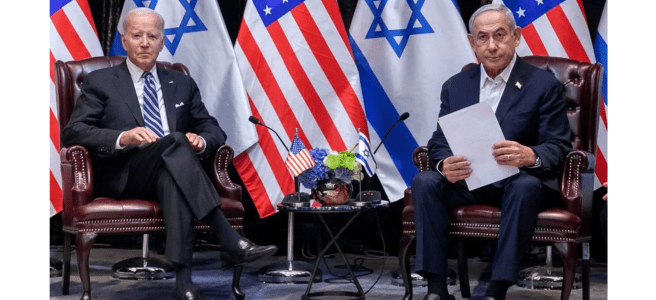
Along with the various pillars of the US national security state that were established during the 1940s (such as the building of the Pentagon, establishing the nuclear weapons program, and creating the CIA and the National Security Council), another key element of the American Empire that dates back to the 1940s is America’s close alliance with Israel. The “special relationship” of the US with Israel has been the 21st century’s definitive expression of the American Empire. No other nation has as regularly backed American foreign policies. Israel’s failure to resolve its persistent conflicts with the people it has shared Palestine with throughout its existence has had huge ramifications for the US and its moral standing in the world. The US actually played only a secondary role in Israel’s foundation and early history. It was after the Six Day War of 1967 that the alliance become close and nearly unconditional.

The emergence of Zionism

The Zionist movement originated in Eastern Europe in the 19th century. These early Zionists imagined ancient Israel’s territory as a Jewish homeland. Early in the 20th century, the Ottoman Empire dominated Palestine. European Zionists began to move to Palestine and hoped eventually to gain political control of the area. The Arab population largely tolerated those initial Zionist settlements. In time as it became clearer that the new settlers did not seek harmonious coexistence and in fact wanted to displace the original inhabitants, tensions inevitably followed.

The European Zionists sought a major power to align with. Eventually, the British became that power. The Zionist cause was helped by the presence in Britain of Christian Zionists in positions of power. The British wanted a foothold in Western Asia near the newly constructed Suez Canal. The Balfour Declaration of 1917 set British policy for the following decades. It affirmed British support for the creation of a “Jewish homeland” in Palestine. The Declaration alluded to respect for the rights of the native Arab population—but only in a general sense with no support for a state for Palestinians. In fact, the Palestinians remained nameless.

Britain gained direct control over territories in the region after World War I in hopes mainly to strengthen control over the newly established oil production sites. The new League of Nations gave the British a Mandate to govern Palestine, directing the British to prepare the territory for self-governance. Palestinian Arabs increasingly recognized the Zionist settlements’ threat to their interests. However, they found it difficult to unify politically. The British overseers encouraged the tensions among the various Palestinian factions.

Continue reading “The fatal alliance: The US and Israel”

Cold War redux and the Empire’s demise

Ted Grimsrud—November 11, 2025

At the end of World War II, the leaders of the United States faced one of the most fateful crossroads in the history of the nation. What kind of relationship with the Soviet Union would they pursue? Since the Russian Revolution in 1917, the relationship had been adversarial. When Hitler declared war on the US following Japan’s attack on Pearl Harbor in December 1941, new possibilities and necessities opened up for US/USSR relations. Shouldn’t our enemy’s enemy be our friend? “Friend” would be too strong of a term for what followed, but over the next several years the Soviets and Americans formed a successful alliance that defeated the Germans.

The Cold War

As the War wound down, US leaders envisioned a new adversarial dynamic. The Soviet Union had a long history of being threatened, even invaded as in the Napoleonic wars, efforts by the West to abort the Russian Revolution, and the invasion from the Nazis. As the Soviets looked to the postwar era, the need for security would define their disposition toward the world. On the other hand, the US had hardly been under serious threat during the War and emerged with an expansive sensibility oriented toward establishing the nation as the single world leader.

The US could have gone in two different directions. One would be to respect and seek to find ways to accommodate Soviet security needs. The other would be to see the Soviets as an intractable adversary. The Americans chose the second. The alliance of World War II became a “Cold War.” The US sought, most of all, to enhance its military superiority. Between 1945 and the end of the Soviet Union, the US initiated virtually every step of intensification of the conflict. The Soviets could never match America’s lead in military capability, but they could establish a rough sense of “mutually assured destruction.” This dance deepened both blocs’ warism. Eventually, the Soviets could not keep up. Their empire imploded.

The Cold War victory left the US at another fateful crossroads. A question similar to 1945 posed itself to American leaders: Would they seek to establish a collegial and mutually respectful relationship with the new Russia? Would they recognize the major shift from the ideology of the Soviet Union? Or would they see the demise of the Communist empire as an opportunity to enhance the global power of the US as the world’s single superpower?

Continue reading “Cold War redux and the Empire’s demise”

The sorrows of empire

Ted Grimsrud—November 7, 2025

The realities of the American Empire were hidden right before my eyes when I grew up in the 1950s and 1960s. Much of the violence we perpetrated on the world was not hidden, it just was not part of the story we told about America. Now that I know more, I am shocked that I could have been so positive about my country. I attribute my failure to see to the power of the embedded theology of uncritical nationalism. Like most Americans, I was invested in believing the best and filtered out everything that would challenge that belief. In this post, I will give a quick overview of what I did not see with my rose-colored glasses.

The Truman Doctrine established the template for US intervention “everywhere in the world” shortly after World War II. It remains in effect down to the present. I sketch here the history of American interventions of varying severity. These engagements have been truly global, as even this quick survey will illustrate. In future posts, we will look in a little more detail at two momentous sets of interventions, America’s post-Cold War continuation of the adversarial relationship with Russia and America’s support for Israel.

The first intervention of many

Soon after World War II, American leaders justified military engagement in Greece to resist Soviet “expansionism.” As it turned out, the Soviets did not join the conflict that emerged over struggles over Greece’s political future. They kept the agreement of the Yalta Conference regarding the postwar world. Central and eastern Europe were in the Soviet “sphere of influence” (where the Soviets intervened); the Soviets recognized Greece as part of the British sphere.

In Greece, indigenous leftists fought with a right-wing monarchy that the British wanted to restore to power. By embracing military aid to the monarchists, the US affirmed the military action taken by the British beginning in 1944. The British action predated any of the military actions that the Soviets took likewise to assert their “sphere of influence” over noncooperative Soviet bloc nations. The first use of violence to resist self-determination came not from the Soviets but from the British. When postwar British leaders determined that Britain would need greatly to curtail its engagement in sustaining its empire, they encouraged the Americans to “pick up the reigns.” In Greece the Americans intervened on behalf of anti-democratic interests. The Greek civil war resulted in a victory for the right-wing forces. The victors installed a military dictatorship that oversaw an unjust political system that lasted for many years.

Continue reading “The sorrows of empire”

The quest for a unipolar world order

Ted Grimsrud—November 4, 2025

The several years following World War II emphatically stamped the United States as an imperial power, not one that would seek to further the ideals of Franklin Roosevelt’s Four Freedoms speech of 1941 (such as self-determination and freedom from war everywhere on earth). As articulated in Harry Truman’s 1947 “Truman Doctrine” speech, instead the US would commit itself to be ready to intervene militarily everywhere on earth in order to defeat its enemies. Though the practices of the American Empire in the quarter century after World War II contradicted the ideals of the Four Freedoms, most Americans embraced an uncritical nationalism that prevented them from a clear-eyed view of their country’s actual way of being in the world.

From the colonial era through World War II, the North American colonies and the US pursued a domination agenda. From the start, the colonies utilized the superior firepower of European weapons to displace indigenous peoples and created an economic system that required coerced unpaid enslaved labor. While the American Empire could have made choices that moved in more humane directions, the odds for such humane choices always remained small. At the end of World War II, American leaders faced perhaps the greatest (and last?) opportunity to choose for the more humane. The US could have actually committed to the ideals of the World War II purpose statements that reflected the long-stated democratic hopes in the American tradition.

A choice of paths

American leaders in late 1945 faced two basic options. One, the US could have pursued a multipolar world order. Such had been hoped for (but not achieved) with the League of Nations after World War I. Then, during World War II, many leaders expressed the hope that this time the great powers might do it right. They hoped for structures that would allow for many different power locations that would find ways to cooperate. These hopes led to the creation of the United Nations. This time, unlike with the League of Nations, the United States embraced its role as a world leader. In fact, this time the world leadership organization would be located in the US.

Or, in contrast, the world order could be based on the dominant power of a single nation and its close allies. World opinion at the end of the War did not allow for an open affirmation of such an approach. The two powers (Germany and Japan) whose open quest for world domination had been so devastating lost the War. No other power would dare advocate such an approach. However, the War ended with a single nation having achieved a dominant global stature that had never before existed. The US could seek dominance without openly claiming to.  

The US found option two to be irresistible and embarked on a 50-year effort to establish and sustain a unipolar world order. However, the US “victory” in the Cold War did not result in American “full spectrum dominance,” an achieved unipolar world order. Rather, the years since the end of the Cold War have seen a steady diminishment of American power. Can the American Empire give up its quest for dominance and affirm the emerging multipolarity?

Continue reading “The quest for a unipolar world order”

Empire as a way of life: The colonial era to World War II

Ted Grimsrud—October 28, 2025

In the posts that remain in this series, I want briefly to flesh out what we see when we describe without blinders the American Empire as it has emerged and functioned over the past 500 years. I consider this story with a critical perspective shaped by the biblical politics I have summarized above. I am especially concerned with how this Empire has embodied oppressive and violent sensibilities typically characteristic of the great empires of the world. A clear-eyed look at the American Empire may well lead one to recognize that it is not worthy of the kind of blank check loyalty it asks for.

The reasons that Europeans first moved to settle in North America varied greatly. Their impact, though, was to extend the newly emerging European empires with powerfully devasting effects on the inhabitants of the “new world.” Some Europeans stayed only temporarily, mainly having interest in profiting from their time away from home before they would return from the adventures and resettle in Europe. Many, though, intended the trip from the start to be one-way. Those who meant to stay in North America may be called “settler colonists.” Since they intended to stay, they needed to displace those already living on the land. Settler colonialism depended on violence. It reflected the basic assumptions of empire: The people not part of the core colonial community will be seen as “Others” who may be exploited, displaced, even eradicated.

Settler colonialism and Manifest Destiny

Imperialistic ideology had been central in the settling of North America and remained central to the identity of the newly established United States. The new nation continually expanded West, dominating and displacing the indigenous nations without pause. The land taken from the natives came to be worked by massive numbers of forcibly imported enslaved Africans.

The term “Manifest Destiny” was not coined until 1845. However, its basic meaning that God willed the expansion of the US to the Pacific Ocean characterizes the intentions of the new settlers from early on. Throughout the colonial era and beyond, Americans simply assumed that God had called their nation into existence, a sense of divine calling that lent an air of inevitability to the expansionist efforts. God supported displacing the “heathen” indigenous populations and exploiting the “heathen” enslaved Africans. Once the drive to expand the US Empire across the continent took hold, it would not stop when the “frontier ended” in North America by the end of the 19th century. At that point, the empire was only getting started.

Continue reading “Empire as a way of life: The colonial era to World War II”

American warism

Ted Grimsrud—September 12, 2025

One main characteristic of the US during my lifetime has been the centrality of “warism” to the nation’s sense of itself. By “warism” I mean war as central for the nation’s identity. Signs of the US as a warist society may be seen in all the money that the nation spends on preparing for war and the war-related priorities in the operation of our government. American warism may also be seen in the bipartisan consensus on miliary spending, one area where Democrats and Republicans always agree. Most of our government spending goes for war and war preparation. And the US spends way more on military-related items than anyone else in the rest of the world.

The myth of redemptive violence

What I will call the “myth of redemptive violence” grounds American warism. This myth is the quasi-religious belief that we gain “salvation” (that is, a sense of security and of meaning and purpose) through violence. People throughout history have put tremendous faith in using violence for such “salvation.” The amount of trust people put in such instruments may perhaps be seen most clearly in the amount of resources they devote to the preparation for war.

Theologian Walter Wink described how this myth works. His book Engaging the Powers asserts “violence is the ethos of our times. It is the spirituality of the modern world. It has been accorded the status of a religion, demanding from its devotees an absolute obedience to death.” This myth remains invisible as a myth. We assume violence to be simply part of the nature of things. We accept violence as factual, not based on belief. Thus, we remain unaware of the faith-dimension in accepting violence. We think we know as a fact that violence works, is necessary and inevitable. We do not realize we operate in the realm of belief in accepting violence.

This myth operates on many levels. Americans assume the need for violent state power to sustain order. We willingly subordinate ourselves with few questions to this power and regularly encounter the myth on the level of popular culture. The books we read, the movies and TV we watch reiterate the story of creation as grounded in violence and chaos. Thus, we need military and police violence to subdue chaos and dominate enemies. We must subordinate ourselves to people in authority who exercise this necessary and redemptive violence. We join in the exercise of violence against our nation’s enemies when called upon. We accept one of the world’s most powerful police systems and one of the world’s largest prison systems.

Continue reading “American warism”

Peace in Ukraine? [American Politics #17]

Ted Grimsrud—August 20, 2025

I found what seems to me to be to be a good, short analysis of the current status of the war in Ukraine, an article “The Peace Delusion,” by a political analyst named Thomas Fazi, who writes regularly for the web-based magazine UnHerd. In a nutshell, Fazi suggests that the core issue in the struggle is the question of whether the United States will remain the single global hegemon or if we will transition to what many are calling a multipolar world order, where there will be several great powers that can manage to co-exist in relative peace.

Peace in Ukraine will require Ukraine and its US/NATO backers to acquiesce to Russia’s demands. It’s not simply recognizing Russia’s control over the various parts of eastern Ukraine that they have or will soon have taken over. “It’s about addressing the ‘primary roots of the conflict,’ as Putin repeated in Anchorage: that Ukraine will never join NATO, that the West will not transform it into a de facto military outpost on Russia’s border, and that a broader ‘balance of security in Europe’ be restored.”

Were those demands to be met, Fazi argues, the result would be “a wholesale reconfiguration of the global security order—one that would reduce NATO’s role, end US supremacy, and acknowledge a multipolar world in which other powers can rise without Western interference.” These demands have been stated clearly and consistently by the Russians since before the February 2022 invasion of Ukraine. The reason why peace remains impossible in Ukraine is that such demands (and the resultant “reconfiguration of the global security order”) is simply something that “Trump—and more fundamentally the US imperial establishment, which operates largely independent of whoever occupies the White House—cannot concede to.”

Continue reading “Peace in Ukraine? [American Politics #17]”

It is hard to imagine the United States finding healing

Ted Grimsrud—April 28, 2025

In the fifty plus years that I have been paying attention, I have felt that most Americans have been shielded from much of the brokenness of our society. Domestically, the people who suffer the most have generally been separated from the general population and shunted to unnoticed pockets of poverty and imprisonment. And throughout my lifetime, few Americans have been much aware of the brokenness we have visited on foreign lands through our wars and other interventions.

Now it seems that our political system has been degraded enough that the nation has put into power an administration that does not actually care that much to keep the brokenness hidden. And the future looks troubling for as far ahead as one can imagine. One could say that in light of our long history of causing harm around the world, we have a kind of grim justice being visited upon an ever-wider swath of Americans. However, you can be sure that the people at the top of our social pyramid (the ones most responsible for the suffering of the vulnerable at home and abroad) will themselves manage okay until the entire system collapses.

American delusions of goodness

I read something the other day that underscored my perception of the trouble we are in. David Brooks is a well-known columnist for the New York Times and author of numerous bestselling books on politics and social trends. He wrote an article in the May 2025 issue of The Atlantic called “I should have seen it coming” that various of my Facebook friends have linked to. Brooks is a kind of never-Trump Republican, so it is not surprising that his article focuses on how disastrous the second Trump presidency is for the US. He makes some good points, in criticizing Trump, but it was a different aspect of the article that troubled me more (not that I am not also troubled about Trump).

Continue reading “It is hard to imagine the United States finding healing”

Pacifism in a time of war and chaos [American Politics #16]

Ted Grimsrud—March 10, 2025

I am deeply troubled by the wars and rumors of war, the social chaos, and the strong sense of pessimism that seem to be so much a part of our current situation. I also feel confused, uncertain, and relatively powerless. At such a moment, reflection on my core convictions is one way to steady my nerves, if nothing else. Almost exactly three years, a couple of weeks after Russia’s intensifying the conflict with Ukraine with their “special military operation,” I published a blog post on my Thinking Pacifism site that came out of such reflection, “Thinking as an American pacifist about the Russian invasion.” In this post, I want to update the thoughts I shared then.

“Pacifism” as a core conviction

It is challenging to be a pacifist in an environment with a strong cultural consensus in favor of military action. The United States has been deeply involved in the war that has been going on in Ukraine since 2014. When that conflict greatly intensified three years ago, the US prowar consensus also intensified, with both strong support for accelerated military aid for Ukraine and strong condemnation of Russia, usually couched as condemnation of Russian leader Vladimir Putin. It has been virtually impossible to find dissent from the insistence on support for war in the American mainstream media, among Democratic Party politicians, and in my social media circles. But this support for war is at odds with my pacifist convictions.

I do believe that being a minority, even a small minority, due to one’s convictions is not a good reason to weaken one’s convictions. We should, of course, always be open to testing the validity of our convictions in face of challenges. However, it is actually to be expected that pacifist convictions will not widely be shared when the cultural zeitgeist favors war. Rather than doubt the validity of my pacifist convictions, I want to ask how these convictions speak to my warist context.

I use “pacifism” here to refer to a fairly general belief. I use it as roughly equivalent to, say, being a humane person, a person who supports social and political self-determination for all people, a person who affirms the United Nations Universal Declaration of Human Rights. Pacifism affirms that to support war is antithetical to humane values, to the practice of self-determination, and to an affirmation of universal human rights. In what follows, when I use “we” I mean those of us who affirm these pacifist convictions (even if one may not like to use the term “pacifism” itself—I use this term as a convenient rubric for this set of convictions, but I care about the convictions more than the term itself).

Continue reading “Pacifism in a time of war and chaos [American Politics #16]”