Why is the typical Christian understanding of “God” such a problem? [Questioning Faith #2]

Ted Grimsrud—November 3, 2022

In my early teen years, I often engaged in conversations with my friends about God. As none of us were churchgoers, we didn’t simply repeat orthodoxies. We were all trying to figure things out for ourselves. We were pretty naïve, as near as I recall. I wish I could remember more about what we talked about. I do remember that at one point I decided I was an atheist—which of course meant that I was pretty preoccupied with the “God” I didn’t believe in. I would say now that I was only an atheist in relation to my conscious ideas about God, which were uninformed and basically had to do with some big, all-powerful person in the sky. It took me awhile to figure out that there was a different kind of God that I did believe in.

When I was 15, I attended my first funeral. It was an extra sad one, a popular guy in the community who died of cancer in his late 20s. During a prayer time during the service, I felt God’s presence and decided at that point that I did believe in God. I had little sense of what that meant, but I was eager to figure it out. I had a close friend who had recently joined the local Baptist church. In a careful, thoughtful way, he guided me in a process that culminated about two years later in my decision to accept Jesus as my personal savior. I then began a journey among the fundamentalists (defined as people who affirm that label for themselves).

A desire to believe in God

I think ever since, I have always sincerely wanted to believe in God and to live truthfully. At first that meant affirming the understandings of God that I received from the Baptists. Those were standard beliefs—God is a (male) person who is all-powerful, in control, and a jealous God. This God is just, angry at those who disobey him, and forced by the demands of justice to punish the disobedient. Accepting Jesus as your savior means that you will get to go to heaven to spend eternity with God. Jesus can save us and turn God’s anger to mercy because he died on the cross and took our place as the recipient of God’s punitive anger. God wants us to turn to him in prayer throughout each day, to read the Bible regularly, to share the gospel with others, and to worship with God’s people in church at every opportunity.


Continue reading Why is the typical Christian understanding of “God” such a problem? [Questioning Faith #2]

Questioning faith: Blogging through key convictions [Questioning faith #1]

Ted Grimsrud—November 2, 2022

I will be posting a series of short essays where I will reflect on some of the main questions I have had about the world I live in and Christian faith’s relationship to it. These questions indeed are concerned with “the faith”—that is, the Christianity I have been immersed in for my entire adult life. They reflect a great deal of the doubt and critical stance I now have toward my received Christianity. So, they are about “questioning the faith.” Ultimately, though, my reflections will be more affirmative than simply challenging things. These questions, and my reflections on them, my attempts to answer them, are expressions of a faith that sees questioning as a core component. That is, I will present the fruit of living with a “questioning faith.” The reflections are from a standpoint of a person with faith. Going back to when I was 17 years old, I have never actually questioned whether to have faith or not; it is always about the shape of that faith.  

Somehow, for my entire life I have always loved to ask questions, to try to understand. My initial attraction to Christianity arose out a desire to understand life, to try to find the truth. I have come to think of “understanding” and “truth” quite differently than I did when I was a teen-ager. Still, that quest I embarked on over 50 years ago remains at the center of my life. I expect my forthcoming blog posts to be elements of the ongoing journey.

Liberated by Francis Schaeffer

A turning point in my faith—and my life—came when I was 21 years old. At that moment (Summer 1975), I started attending a new church. I still accepted most of what I had been taught in the theologically very conservative Baptist church I had joined after my conversion four years earlier. In my new church, I almost immediately joined a book study group engaging Francis Schaeffer, an American living in Europe who was becoming known as “the evangelist for intellectuals.” Like many others, I found Schaeffer to be a formative influence in moving away from fundamentalism.

In my case, I rather quickly moved past Schaeffer and have never really stopped moving. As I learned later, Schaffer had been deeply immersed in the world of fundamentalism during the heyday of the famous fundamentalist/modernist conflicts that were probably their most bitter and consequential in Schaeffer’s own Presbyterian tradition. He ultimately became a victim of the battle himself and moved to Europe in part to separate himself from the faith-traumatizing struggles. But he never actually moved much in his own theology and ended his life as a key player in the emergence of the politically focused Christian Right in the United States in the late 1970s and early 1980s.

Continue reading Questioning faith: Blogging through key convictions [Questioning faith #1]

The war of the lamb: A response to Jason Porterfield’s Fight Like Jesus

Ted Grimsrud—June 14, 2022

Jesus has gotten sidelined in many ways, which is one of the main reasons why the record of Christianity is so poor when it comes to witnessing to the world in a healing manner. One kind of sidelining goes back to the several centuries after Jesus when church doctrine evolved to exclude the life and teaching of Jesus from core creeds and confessions, moving from Jesus’s miraculous birth to his death and resurrection with scarcely a glance at what Jesus said and did. Another kind of sidelining has been what we could call the sentimentalizing and devotionalizing of the events of Jesus’s life in a way that minimize their social and political elements.

Jason Porterfield’s new book, Fight Like Jesus: How Jesus Waged Peace throughout Holy Week (Herald Press, 2022) initially may give the impression of fitting in this second category as a devotional treatment of the last week of Jesus’s life. Happily, though, Fight Like Jesus ends up being a challenging account of ways that the events of Jesus’s final days actually have powerful socially transformative significance. As such, its relevance extends much further than simply a spiritually uplifting set of meditations that would mainly be of interest just during the Easter season. Indeed, this book would be a valuable resource for any Christians seeking to understand better the practical relevance of Jesus’s life and teaching for all peacemaking work the year around.

Giving a close reading to the stories from Jesus’s final week, Porterfield shows how those several days serve as a kind of microcosm that help us better understand Jesus’s overall peacemaking agenda. The book is both practical and theologically perceptive. The Jesus that is presented here was creative, courageous, confrontive, and constructive in his response to the deadly resistance he faced due to his activist peaceable ministry.

Continue reading “The war of the lamb: A response to Jason Porterfield’s Fight Like Jesus

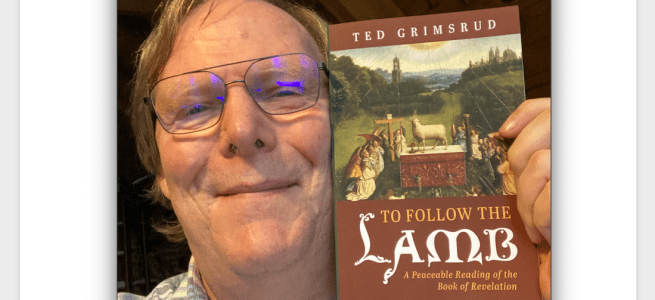
New Book—To Follow the Lamb: A Peaceable Reading of the Book of Revelation

I am happy to announce the publication of my most recent book: To Follow the Lamb: A Peaceable Reading of the Book of Revelation (Cascade Books, 2022), ix + 278pp.

To Follow the Lamb is a commentary of the entire book of Revelation that places a special emphasis on the peace message of Revelation. Revelation is not a book that portrays a violent, vengeful God but rather than shows God to be most profoundly revealed in the gracious Lamb. The key to reading Revelation is to take seriously the opening words of the Book that tell us it is a”revelation of Jesus Christ.”

Revelation is an exhortation to discipleship—follow the Lamb wherever he goes! It offers a sharp critique of the world’s empires and a sharp critique of how people of faith all too easily find ways to be comfortable within the empires. Revelation portrays God as merciful and peaceable—but engaged in a battle against the spiritual powers of evil that energize the nations’ domination systems.This battle, though, is fought with the weapons of love, not worldly violent weapons.

Available online from:

Amazon (the Kindle version is only $9.99)

Wipf and Stock Publishers

Both sites have previews that show the first part of the book.

Also available at: Bookshop.org

Endorsements:

“Ted Grimsrud is a worthy and capable guide through the often misread and confusing images laid out by John of Patmos to the churches of Roman Asia. Anyone who has ever wondered how to make sense of this powerful narrative will find a great companion in To Follow the Lamb. Go form a study group and dig in!”—WES HOWARD-BROOK, Seattle University, author of Unveiling Empire: Reading Revelation Then and Now

“In this important book, Ted Grimsrud clears away decades of misunderstanding and misuse to reveal the beauty and power of the Apocalypse. Writing with deep insight and lucid prose, Grimsrud forcefully challenges violent interpretations of Revelation and fixes our gaze on the nonviolent Jesus. A treasure trove for peacemakers and justice seekers, To Follow the Lamb is accessible, relevant, and sorely needed. Guaranteed to deepen your appreciation of Revelation—I highly recommend it!”—ERIC SEIBERT, Messiah University, author of Disarming the Church: Why Christians Must Forsake Violence to Follow Jesus and Change the World

“In the midst of the sometimes violent rhetoric of Revelation, Grimsrud makes abundantly clear that Revelation features the nonviolent victory by the slain and resurrected Lamb, who reveals a nonviolent God, over the powers of evil, represented by the Roman empire. One of the most valuable contributions of this comprehensive theological analysis of Revelation is how it applies the book’s nonviolent resistance to empire to our call to challenge the American empire.”—J. DENNY WEAVER, Bluffton University, author of God Without Violence

More posts on Peaceable Revelation

Pacifism and saying no to the state: Various motives for refusal [Pacifism today #7]

Ted Grimsrud—April 15, 2022

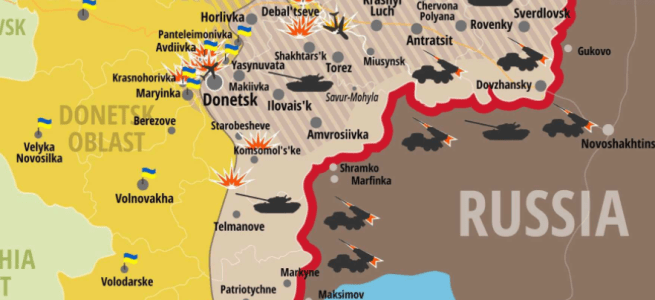
With a breathtaking rapidity, the United States in the last couple of months has moved decisively in a militaristic direction. As historian Andrew Bacevich recently wrote, many American leaders “welcome the Ukraine War as the medium that will reignite an American commitment to the sort of assertive and muscular approach to global policy favored in militaristic quarters…. Putin … has handed the United States ‘a historic opportunity to regroup and reload for an era of intense competition’—with not only Russia but also China meant to be in our crosshairs.”

The delight of these militarist leaders and the arms dealers who also are profiting so greatly from the new conflict should give people who actually care about peace on earth pause before believing the spin our government and corporate media are giving things right now. We will almost certainly face a continued ratcheting up of militaristic dynamics in our society for the foreseeable future. The warism of our culture has always been bubbling just below the surface even as other crises have demanded attention. For it to move front and center hopefully will clarify that militarism is the problem that must be resolved if we are to make progress in overcoming the climate crisis, the curse of white supremacy, the violence of our policing and mass incarceration regimes, environmental collapse, the functioning of our democracy, and many others.

Effective opposition to the warism seems far from possible at this moment, though. The one single issue that seems to unite Democrats and Republicans is expansion of our war-making capabilities. The apparent impossibility of opposition does not diminish what may be a fact—we turn from warism as a society, or we all go down.  

In face of all this, the witness of pacifism seems more relevant than ever. When there is such uncritical support for pouring weapons of war into Ukraine, Germany greatly expanding its military spending, and the dynamics of confrontation rather than reconciliation with Russia and China, it seems pacifists are some of the few who voice opposition. One hope we might have is that with our nation’s warism so front and center, more people will question whether we actually do want our nation to be so committed to military “solutions” after all. Maybe this will lead to more interest in pacifism.

Continue reading “Pacifism and saying no to the state: Various motives for refusal [Pacifism today #7]”

Reflecting morally about the conflict in Ukraine [Pacifism Today #6]

Ted Grimsrud—April 10, 2022

[In early March, as the conflict in Ukraine gained the world’s attention, I wrote a blog post, “Thinking as an American pacifist about the Russian invasion.” In the weeks since then, I have continued to think—and posted several shorter reflections on Facebook. I have gathered those pieces into this blog post essentially unchanged.]

Some different concerns in response to the Russian invasion [3.9.22]

Like most people I know, I am heartsick about the Russian invasion of Ukraine and the possibility of an expanding and continuing conflict. However, I don’t notice many other people voicing some of my main concerns.

It was almost 50 years ago that I first learned that my country’s leaders regularly, and to devastating effect, lied to justify engagement in unjust and disastrous military actions around the world. When I was in college, I learned to know numerous Vietnam War vets who told me stories that made my hair stand on end. To a man, they bitterly spoke of the lies we Americans were being told about that war.

Continue reading “Reflecting morally about the conflict in Ukraine [Pacifism Today #6]”

Abraham’s gospel: A peaceable reading of Romans (part 5; 4:1-25) [Peaceable Romans #12]

Ted Grimsrud—April 4, 2022

One of the most beautiful road trips my wife Kathleen and I have ever taken had us driving through the mountains of western North Carolina. We were on the Blue Ridge Parkway. We spent the night in the village of Little Switzerland and greatly anticipated the next morning when we would drive by Mt. Mitchell, the highest spot east of the Rockies, and then see points west.

But when we got up, it was totally foggy. As thick a fog as we’ve ever seen. The forest certainly has its own eerie beauty when you can barely see the white lines on the highway. Still, we were uneasy when we drove twenty miles or so and never saw another car. But then came the moment. We turned a corner and without any warning the fog was gone. We had the most incredible vista, in the bright sunlight, snowy mountains, valleys, forests. It was amazing. Then, we were back in the fog for several more miles. It was just those few moments, but the picture is still vivid in my memory.

The whole Bible as a peace book

This experience comes to mind as I think about Romans four. A lot of Christians, maybe especially those attracted to peace theology, are suspicious of the Old Testament. And suspicious of the Apostle Paul. And, deeply suspicious of the book of Revelation. There is the great bright light of Jesus, his picture of a God of love and mercy—and much of the rest of the Bible is kind of foggy, wars and rumors of war, legalistic religion, abstract doctrine, with the finale of Revelation’s unspeakable bloody judgment.

This is the analogy: The Bible can seem like that foggy drive on the Blue Ridge Parkway. There is but one spot of incredible beauty. Such a spot may redeem the whole thing—but the rest isn’t of much value. However, I want to say: No! The Bible is actually more like our return trip driving back home. Then the Parkway was clear and sunny all the way and we had one beautiful scene after another. Likewise, the whole Bible has great beauty.

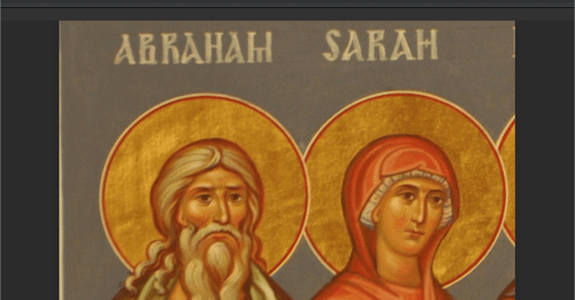
Romans four is a text that helps us to see the Bible in this way. I don’t want to deny that the Bible has a few spots that are irreparably foggy scattered around. Basically, though, I believe that the overall message is about mercy all the way down from the very start. The Bible tells an empowering story throughout. We may embrace its message of peace, restorative justice, compassion, and healing. The key figure in Romans four is Abraham, the great patriarch, considered to be the spiritual ancestor for Jews, Christians, and Muslims.

Continue reading “Abraham’s gospel: A peaceable reading of Romans (part 5; 4:1-25) [Peaceable Romans #12]”

Mercy all the way down: A peaceable reading of Romans (part 4; 3:1-31) [Peaceable Romans #11]

Ted Grimsrud—March 21, 2022

There is a famous story that almost for sure didn’t actually happen. But it’s kind of funny and it provides a metaphor I want to adapt for this post. This big time philosopher (or maybe it’s a scientist) lectures about the infinite cosmos and is challenged by an elderly woman in the audience. “What you are telling us about the universe is rubbish. The earth rests on the back of a huge turtle.” “Oh yes,” the philosopher says, “and pray tell, what holds up the turtle?” “Why, another turtle, of course.” “And what holds up that turtle?” “Ah, I get where you’re going. But sir, it is turtles, all the way down!” Turtles all the way down, we don’t need anything more.

The moral universe and Jesus’s “sacrificial” death

I don’t want to make any claims about the infinity or not of the physical universe here. My concern is the Apostle Paul’s account of the gospel. However, I do want to use this metaphor of “turtles all the way down” to think of the moral universe. In many readings of Paul—and, hence, many understandings of the gospel—we have something like this: God can forgive only because God’s justice has been satisfied by Jesus’s sacrificial death. Or maybe it’s God’s holiness or God’s honor.

The point for that perspective is that God can’t simply forgive. The moral nature of the universe requires some kind of satisfaction, some kind of payment, to balance out the enormity of human sin. Reciprocity. Retribution. Tit for tat. It can’t be mercy all the way down. The moral universe rests on something else—retributive justice or justice as fairness. Mercy is possible only in ways that account for this kind of justice. Thus, salvation is not truly based on mercy. Rather, salvation is based on an adequate payment of the universe’s moral price tag placed on human sin.

Romans 3 has often been cited to support what has been called the “satisfaction view of the atonement.” This view sees the meaning of Jesus’s death as the sacrifice of a sinless victim that satisfies God’s need for a payment for human sin. This payment allows God to offer us forgiveness if we accept Jesus as our savior. I’m going to offer a different reading. I don’t like the traditional view. There are many problems with it. Maybe most basically, it denies that God is love, it seems to me. It denies that mercy is life’s fundamental truth. It may foster fearfulness and legalism. It may make us vulnerable to giving loyalty to human structures of power and coercion—i.e., empires and other nation-states, not to mention religious institutions.

Continue reading “Mercy all the way down: A peaceable reading of Romans (part 4; 3:1-31) [Peaceable Romans #11]”

How faith communities go bad: A peaceable reading of Romans (part 3; 2:1-29) [Peaceable Romans #10]

Ted Grimsrud—March 10, 2022

Paul begins the book of Romans with a sharp critique of the Roman Empire and its idolatrous spiral into injustice and violence, as we saw in my previous post. I believe that his critique remains perceptive. However, Paul’s main focus in Romans has more to do with how faith communities go bad than with how empires go bad. He uses his Empire critique (valid and relevant as it is) to set up his faith community critique. His readers would be nodding their heads as they approve of Paul’s initial critique. But then he turns on them: “When you are judgmental toward others, you condemn yourself, because you the judge, tend to do the same things” (2:1).

In critiquing the self-righteous judge who is also unjust and violent, Paul has himself as a death-dealing persecutor of Christians in mind. In a genuine sense, his presentation of the gospel in Romans is about what he personally learned in turning from being violent in God’s name to being committed to peace—all the way down. One thing Paul learned was that faith communities are extremely vulnerable to becoming the sites of injustice and violence—ironically, often as a direct result of their quest to be rigorously faithful.

To help us understand how faith communities go wrong, Paul focuses on one particular ritual that he had seen as central to his pre-Jesus agenda of rigorously holding to the true faith. It is well known that the Bible at times can be pretty “earthy.” One notable case is one of the central rituals in the entire story—one with enormous symbolic power in both the Old and New Testaments—the ritual of circumcision. It seems to me that this ritual, both in the Bible and in contemporary life, is problematic on several levels. But the Bible obviously sees circumcision as extraordinarily meaningful, for better and for worse. And it remains present throughout the story, often on the deeper metaphorical level. Paul uses circumcision as a key example in his critique and then in his presentation in chapter 3 of the core message of the gospel of God.

Circumcision in the midst of Empire

Paul thought about circumcision a great deal. He makes it a key image in his wrestling with the life of faith. It’s in the middle of the discernment work as his community of Jesus followers sought to relate their Jewish tradition to the influx of new believers who weren’t Jews. Paul could be pretty earthy himself on occasion, such as when he wrote about conflicts concerning circumcision and its weighty symbolic legacy. In his letter to the Galatians, he gets salty when he writes about people he believed were disastrous teachers. They legalistically tried to impose circumcision on new, non-Jewish converts to Christianity. This is what Paul wrote: “Whoever it is that is confusing you will pay the penalty…. If I were still preaching legalistic circumcision, I would not be persecuted by other Jews like I am…. I wish those who unsettle you, instead of just circumcising, would castrate themselves” (Gal 5:11-12).

Continue reading “How faith communities go bad: A peaceable reading of Romans (part 3; 2:1-29) [Peaceable Romans #10]”

How empires go bad: A peaceable reading of Romans (part 2; 1:16-32) [Peaceable Romans #9]

Ted Grimsrud—March 7, 2022

More than a treatise on doctrine or a discussion preoccupied with the Christian religion and the Jewish religion, the book of Romans is a presentation focused on faithful living. And for Paul, faithful living meant embodying the way of Jesus. As I discussed in the first of this long series of posts working through the teaching of Romans, Paul begins Romans by setting up a contrast between the gospel of God as presented by Jesus and what we could call the “gospel” of the Roman Empire.

In the second half of chapter 1 of the book of Romans, Paul provides an analysis of the domination dynamics of the great nations of the world, which are the dynamics of idolatry that refuses to express gratitude to the Creator but instead puts trust in human creations (including empires and emperors). In trusting in creatures rather than the Creator, human societies inevitably ground their priorities in exploitation rather than gratitude and evolve toward injustice and violence. Without stating it explicitly, Paul seems clearly to evoke the awareness his readers in Rome would have of the particular injustices and violence of their city’s leadership class.

The gospel of God vs. the gospel of Caesar

As we continue to the following chapters of Romans, we will see that Paul’s focus in the book as a whole is not on a critique of Empire but on developing his alternative gospel. If the Empire’s gospel is a one of death, what does a gospel of life look like? If the Empire’s way of life leads to injustice, what is an alternative way of life that leads to justice?

Continue reading “How empires go bad: A peaceable reading of Romans (part 2; 1:16-32) [Peaceable Romans #9]”