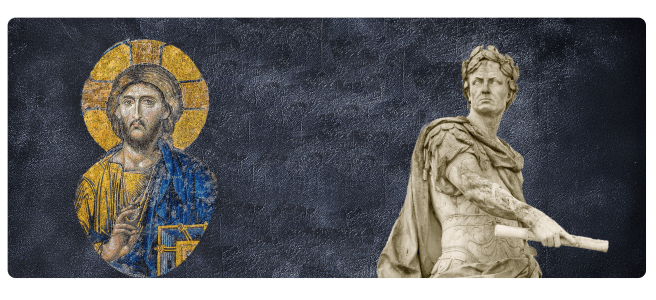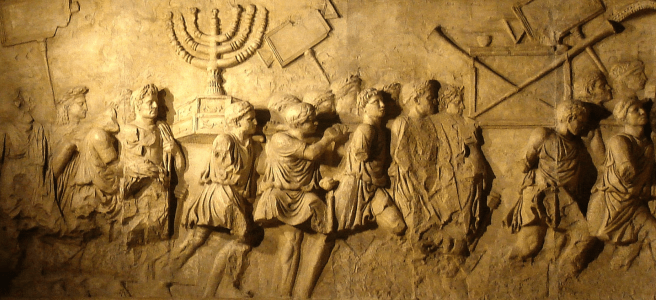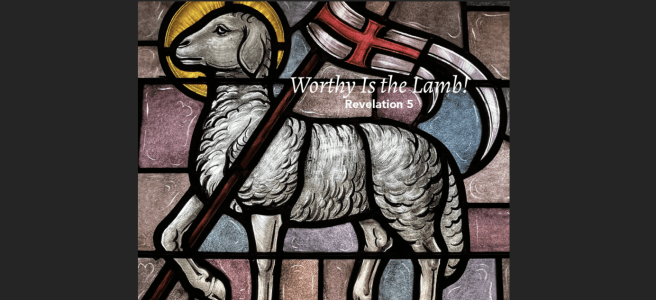
Jesus the Lamb challenges empire

Ted Grimsrud—October 17, 2025

The Bible has a reputation of being pretty pro-violence. Some Christians want the Bible to approve of violence—that helps them justify the violence they currently support. I decided back when I first embraced pacifism that I wanted to try to read the Bible as pro-peace as much as I could. I still do. An early test for me came with trying to understand the book of Revelation. Is it truly about visions of future God-approved warfare and violent judgment?

I had heard because God wants wars in Revelation, God may also want wars in our time. I decided to study Revelation to see what it actually says. I soon discerned Revelation may be read as a book of peace. I also realized that Revelation is not about predicting the future; it is about applying Jesus’s message of peace and healing in our present. A key concern in Revelation has to do with following Jesus while living in the idolatrous Roman Empire. Thus, Revelation becomes for us an essential text for reflection of the relation between Christian faith and empire.

Revelation as part of Jesus’s peace agenda

For Jesus, to resist the Empire means: Love our neighbors, say no to idolatry, give our loyalty to the God of mercy, and recognize the empire as the enemy of God, not God’s servant. Early Christians faced constant temptation to conform to Rome. It could be costly to resist. Many also found the imperial claims to be seductive. This struggle with conformity to the empire had a tragic ending for Christianity; we will see in our next post that it became an empire religion. In the early years, though, the struggle led to a sharp critique of the Empire—see Revelation.

Revelation does not collect predictions about “End Times” but describes the dynamics of imperial seduction. It describes the deep conflict between the ways of empire and the ways of the gospel. This “war of the Lamb” can only be successfully waged in one way. Wage this war with what the New Testament letter to the Ephesians described as the “whole armor of God”: The belt of truth, the breastplate of justice, the gospel of peace, the shield of faith, the helmet of salvation, and sword of the Spirit (which is the word of God) (Eph 6:13-17).

Continue reading “Jesus the Lamb challenges empire”

Jesus’s political alternative

Ted Grimsrud—October 14, 2025

Christian pacifism challenges mainstream Christianity by arguing that Jesus’s life and teaching actually do provide direct guidance for politics. Jesus, like the rest of the Bible, offers a direct alternative to the politics of empire and domination. Christians have misrepresented the Bible insofar as they have embraced uncritical nationalism. My realization that Jesus does give us a realistic peaceable direction caused me to turn away from my nationalistic embedded theology and never look back. In this post I will offer a summary of that peaceable direction.

Jesus affirmed that Torah and the prophets reveal God’s will for the world. When he taught with authority, showed love with his healing, and called together a community to embody the justice of God in the world, he fulfilled the Old Testament. Jesus’s life incurred the deadly wrath of the religious and political leaders. God raising Jesus from the dead in defiance of the leaders’ verdict of condemnation vindicated Jesus’s message. Jesus culminates the political message of the Old Testament when he critiques empire, rejects territorial kingdom as the channel for God’s promise to bless all the families of the earth, and the embodies Torah as the alternative to the ways of the nations. Like Torah and the prophets, Jesus practices power as service, offers compassion and justice for the vulnerable, and resists the powers of domination.

Politics and the gospels

The gospels present Jesus as a king. The gospel of Matthew begins with “an account of the genealogy of Jesus the Christ, the son of David, the son of Abraham” (Matthew 1:1). Christians tend to think of “Christ” as a religious term having to do with the divine identity of Jesus Christ, the savior. However, it literally means “king,” a political leader. The descriptor of Jesus that follows in Matthew 1:1, “son of David” confirms the political sense of “Messiah.” David stands as the paradigmatic king in ancient Israel, a kind of ideal king.

The rejection of the OT territorial kingdom points ahead to an alternative way to imagine the peoplehood. God never revoked Abraham’s vocation to bless all the families of the earth. If not as a territorial kingdom, then how will the promise be embodied? Jesus will be in continuity with David’s role in carrying on the promise (a great leader for the peoplehood). However, he will be in discontinuity in that his political path will not be to lead a territorial kingdom like David. The gospels provide an account for this alternative political path.

Continue reading “Jesus’s political alternative”

Breaking the hold of territorial kingdoms

Ted Grimsrud—October 10, 2025

Peace theology centers on Jesus’s life and teaching. Jesus’s life and teaching, though, make the most sense in relation to the bigger story of the Bible. In two posts, I will emphasize a few elements of the story. First, in my previous post, we note the Bible’s strong antipathy toward the big empires. Those empires powerfully challenged the Bible’s faith community—due both to the empires’ violence directed at the community and to the empires’ demands (often met) for loyalty and even idolatrous trust. The Bible offers a counter-empire vision for human life in the teaching of Torah and Jesus. These teachings explicitly offer alternatives to empire ideologies.

Second, Torah politics differ from state politics. Territorial kingdoms and nation states imitate the empires. They use coercion, exploit the vulnerable, protect boundaries, and demand absolute loyalty. The Bible’s faith community, called to bless all the earth’s families, sought to carry out that vocation as a territorial kingdom. The story shows the eventual incompatibility between the vocation to bless and identifying too closely with a territorial kingdom.

Abraham and Sarah and a new intervention from God

Genesis 12 tells of God calling Abraham and his spouse Sarah to parent this community. God gave them a child even though Sarah thought herself too old to bear children. The story that follows in the rest of the Bible presents the community in both success and failure. It offers guidance for the faithful practice of a politics of blessing. The continuation of the promise will be risky and tenuous. The human actors always risk derailing the process by their injustice, violence, and turning toward other gods. The channels for the blessing will always be imperfect human beings. The process will often be surprising. Key actors consistently will not be the people we would expect to be heroes. God’s hand in the dynamics is often difficult to discern, but somehow the promise and the blessing remain alive.

At the end of Genesis, the family of the promise moves to Egypt in order to survive a terrible famine. Then, in the book of Exodus, we learn the family does survive and multiplies, but in a condition of enslavement in the Egyptian Empire. These suffering, enslaved people cry out in their pain. God remembers the promises to Abraham and resolves to intervene. God will guide them into a recovery of faith and a new resolve to embody the promise to be a blessing.

Continue reading “Breaking the hold of territorial kingdoms”

The Bible’s suspicion of the empires

Ted Grimsrud—October 7, 2025

In the years from 1987 through 1996, I preached several hundred sermons. Almost all had to do with biblical bases for peace theology. Then I began college teaching and most of my classes were relevant for how Christian pacifist convictions could inform living in the American Empire. In what follows, I will present the message of the Bible that relates to peace theology. This message provides the grounding for an unblinkered look at the American Empire from the perspective of Christian pacifism—something I offer in the series’ final posts. The story I have told in my previous posts describes how I got to my commitment to peace theology. Now, I will turn to the story of where that commitment has led me, first theologically and then politically.

Holding the Bible loosely, but with respect

I view the Bible as a conversation partner. The big picture that comes from all its stories read together gives me a perspective from which to engage the world. To me, it is not a source of normative, explicit commands nor a miraculously accurate source of information about the past of God’s people. Yet, it is not simply ancient writings from a distant time. I see it as a fascinating collection of various kinds of literature. It reflects various human perspectives that hang together, loosely, to guide and inspire. The authors’ moral commitments give the Bible its coherence.

When read in light of Jesus’s message that centers on the call to love neighbors, the Bible serves that call. It presents a worldview shaped by love. Jesus does not originate this worldview but echoes and reinforces the Old Testament message of Torah and the prophets. The Bible tells a “Big Story” where all its parts hang together and convey a vision for life shaped by God’s love.

I discovered the Bible’s Big Story through my struggle with American warism. I found a way out of my embedded warist view of the world through an encounter with the story of Jesus. That encounter shaped how I have read the Bible ever since. In asking questions of the Bible about war, justice, and social transformation, I discovered that the Bible truly cares about politics and social transformation. It provides a powerful framework for interpreting the world.

Continue reading “The Bible’s suspicion of the empires”

A Christian political agenda? The Bible’s radical politics (part four)

Ted Grimsrud—June 16, 2025

In the first three parts of this series on the Bible’s radical politics (part 1; part 2; part 3), I have sought to show the continuity between the Old Testament and the story of Jesus. Throughout the Bible we see a critique of the great powers and the presentation of an alternative to the politics of domination and exploitation. The Bible presents the way of peace and restorative justice as a genuine alternative that it expects the people of the promise to embody.

In this series-concluding post, I offer some brief reflections on how to apply these teachings from the Bible to contemporary American political life. I started this series motivated by a sense of my country—and the wider world—being caught in a spiraling series of social crises. This spiral gets worse as our political system displays an increasing inability to respond to the problems with creative and transformative solutions. Can the Bible help?

The Bible approaches politics in the context of life within empire

From Genesis through Revelation, the Bible reports the people’s efforts to navigate a world dominated by ruthless great empires. These empires offer two distinct challenges to the people—(1) the constant threat of violence and oppression and (2) the constant temptation for the communities of the promise to absorb and embody the ideology of empire.

From the enslavement of the Hebrews in Egypt through the conquering violence of Assyria and Babylon and down to the Romans who executed Jesus as a rebel and destroyed the Jerusalem Temple, the Bible presents empires as God’s enemies, intrinsically hostile toward Torah-guided social justice. Yet empires are also seductive and alluring—either in the sense of seeking to be honored and even worshiped by those within their boundaries (see the book of Revelation) or in the sense of providing the template for the unjust ordering of life within independent kingdoms (as in the Old Testament’s Israel and Judah).

In the contemporary United States, people of faith face a strong pull from our great power to give it our ultimate loyalty. Probably nothing reflects this call to loyalty as much as demands for support for American wars and preparation for wars. Americans, with little dissent, devote their nation’s best energies and almost unlimited resources to this warism.

Continue reading “A Christian political agenda? The Bible’s radical politics (part four)”

Jesus’s upside-down empire. The Bible’s radical politics (part three)

Ted Grimsrud—June 12, 2025

As a Christian, I read the Bible with two assumptions. (1) The Old Testament has its own integrity and tells its own story. It is not simply, or mainly, or even at all relevant only in relation to events far in the future of the story being told. (2) Jesus is the center of the Bible when read as a whole. He embraced the Old Testament as scripture and affirmed the messages of Torah and the prophets as revealing God’s will for the world.

Jesus as the center of the Bible means his story clarifies and reinforces the basic message of the Old Testament. These two parts of the Big Story complement each other. Jesus embodies the political message of the Old Testament: critique of empire, rejection of territorial kingdom as the channel for God’s promise to bless all the families of the earth, and the embodiment of Torah as the alternative to the ways of the nations—including power as service, compassion and justice for the vulnerable and exploited, and resistance to the powers of domination. [This is the third in a series the Bible’s radical politics. Part one is “Ancient Israel among the great powers” and part two is “Ancient Israel as a failed state.”]

Politics and the gospels

One of the key terms in the gospels that signals their political agenda comes at the beginning: Matthew’s gospel tells “of Jesus the Messiah, the son of David, the son of Abraham” (1:1). “Messiah” equals “Christ.” Its literal meaning is “king,” a political leader.

Continue reading “Jesus’s upside-down empire. The Bible’s radical politics (part three)”

Ancient Israel as a failed state: The Bible’s radical politics (part two)

Ted Grimsrud—June 11, 2025

After considering ancient Israel among the great powers, I now want to focus on ancient Israel as what I will call a “territorial kingdom” (i.e., a political community that has boundaries and exercises sovereignty within those boundaries). The Bible’s politics start in enslavement in Egypt. The community coalesced as a people liberated by God, instructed in counter-empire living by Torah, and provided a territory wherein to live out Torah.

The story takes it for granted that the Hebrew people needed a Land where they could establish a permanent home and embody Torah. Between the time of liberation (the exodus) and of entrance to the Land, the people spent decades moving about in the “wilderness.” They struggled to maintain fidelity to Yahweh. In the end, only a handful of the original community that escaped Egypt were allowed to enter the Land with the children and grandchildren of the original community members.

The descendants of the original Hebrews faced the challenge: Overcome the hostility from surrounding nations and remain faithful to Torah in face of temptations to conform to the religious and social practices of those nations. This struggle, sadly, would be so difficult that the territorial kingdom would not be a viable arrangement for the way of Torah. The Bible actually offers a different option. You don’t have to be a territorial kingdom to embody God’s kingdom.

Continue reading “Ancient Israel as a failed state: The Bible’s radical politics (part two)”

Ancient Israel among the great powers. The Bible’s radical politics (part one)

Ted Grimsrud—June 10, 2025

I recently led a three-part adult Sunday School class on “The Bible’s radical politics.” This post is an expanded version of the first session. I will follow with the other two parts and then add a fourth post that reflects on lessons from these posts for politics today.

This first post will discuss ancient Israel among the great powers of the ancient near east. Israel’s entire existence in the Bible took place in the shadow of one great power or another, from Egypt on down to Rome. So, the politics of the Bible has a lot to do with navigating life in that shadow—resistance, subjection, imitation, alternative.

Then, the second post will zero in on Israel’s own attempt to be a territorial kingdom, a power in its own right. I call this, ancient Israel as a failed state—and will consider what follows after the failure. Israel’s time as a nation-state in the “promised land” was complicated, but ultimately ended in disaster—yet the peoplehood continued. What lessons came out of that experience that empowered the peoplehood to continue?

Third, I will turn to the New Testament and the story of Jesus, and his politics as told in the gospels with a glimpse at the book of Revelation. I call this “Jesus’s upside-down empire.” I will suggest that Jesus’s radical politics are best understood in terms of his continuity with the Old Testament.

I will conclude with a fourth post—not part of the original Sunday school class—that reflects on a Christian political agenda in light of the Bible’s radical politics. Most politically engaged people in the United States today recognize that we are facing crises of extraordinary difficulty and diversity. How might the Bible’s Big Story give us some perspective on navigating these crises?

Continue reading “Ancient Israel among the great powers. The Bible’s radical politics (part one)”

The politics of Paul and the way of Jesus as seen in Romans 13 [Peace and the Bible #17]

Ted Grimsrud—March 25, 2024

The Apostle Paul was a follower of Jesus. And his social views actually complement Jesus’s rather than contradict them, contrary to what many Christians have believed. In this post I offer a detailed look at the infamous passage in Paul’s letter to the Romans that, one could say, has launched many ships and other weapons of war. Romans 13:1-7 often serves as a counter-testimony in Christianity to the idea that Paul may have taught a principled nonviolence in agreement with Jesus. As well, Romans 13 is often seen to go against the idea that Paul understood Jesus’s peaceable way as normative for Christian social ethics.In reading a number of writings where Christian thinkers argue against pacifism, I discovered that in every single case—across a wide spectrum of theological positions—those who reject pacifism cite Romans 13:1-7 as a major reason. I will show why this text should not be read as counter to pacifism.

Setting the context for Romans 13:1-7

Our interpretation of Romans 13:1-7 should begin with reading these verses in light of their broader biblical context. Our passage is not the only place in the Bible where the political Powers are addressed. From Egypt in Genesis and Exodus, then Assyria, Babylon, Persia, and down to Rome in the book of Revelation, the Bible shows empires rebelling against God and hindering the healing vocation of God’s people. The entire Bible could appropriately be read as a manual on how people who follow Torah in seeking to love God and neighbor negotiate the dynamics of hostility, domination, idolatry, and violence that almost without exception characterize the world’s empires.

Romans 13:1-7 stands within this broader biblical context of antipathy toward the empires. If we take this context seriously, we will turn to these Romans verses and assume that their concern is something like this: given the fallenness of Rome, how might we live within this empire as people committed uncompromisingly to love of neighbor? Paul has no illusions about Rome being in a positive sense a direct servant of God. Paul, of course, was well aware that the Roman Empire had unjustly executed Jesus himself (and, according to tradition, in time executed Paul as well). As evil as these Powers might be, though, we know from biblical stories that God nonetheless can and does use the corrupt nations for God’s purposes—nations that at the same time remain under God’s judgment.

In his letter to the Romans, Paul surely had this biblical sensibility in mind as he addresses Jesus’s followers in the capital city of the world’s great superpower—the entity that had executed Jesus. Paul begins with a focus on the perennial problem related to empires—idolatry (see my previous post, “Paul’s critique of idolatry”). He discusses two major strains of idolatry in chapters 1–3: (1) the Empire and its injustices that demand the highest loyalty and (religious) devotion and (2) a legalistic approach to Torah that leads to its own kind of violence (witness Paul’s own death-dealing zealotry).

Continue reading “The politics of Paul and the way of Jesus as seen in Romans 13 [Peace and the Bible #17]”

Paul’s critique of idolatry [Peace and the Bible #16]

Ted Grimsrud—March 22, 2024

The Apostle Paul has often been interpreted as a major influence in moving Christianity away from the peaceable message of Jesus. I want to counter that interpretation, though, by noticing key peace themes that are present in Paul’s thought and by challenging one key text interpreted to support the idea that Paul accepted violence. So, I will focus on Paul’s critique of idolatry in order to show how central to Paul’s theology the way of peace is. Then, in my next post I will offer an interpretation of the infamous Romans 13 passage that shows that those verses actually offer a peaceable message.

The idolatrous roots of violence and injustice

The biblical story portrays violence and injustice having roots in idolatry. If we use violence as our criterion, we could say that whenever human beings justify violence against other human beings, they give ultimate loyalty to some entity (or “idol”) other than the God of Jesus—loyalty that demands violence, always contrary to God’s will as expressed by Jesus. Paul joins other biblical prophets in rejecting any kind of loyalty that would justify violence.

I will consider Paul’s critique of idolatry and focus on the first three chapters of his letter to the Romans. He takes on two types of idolatry. He criticizes the idol of the Roman Empire (which is manifested as what I will call the idol of “lust”). Second, he critiques those (like Paul himself before he met Jesus) who believed that loyalty to Torah requires judgmental violence in defense of the covenant community (what I will call the idol of “judging”).

Continue reading “Paul’s critique of idolatry [Peace and the Bible #16]”