A Christian political agenda? The Bible’s radical politics (part four)

Ted Grimsrud—June 16, 2025

In the first three parts of this series on the Bible’s radical politics (part 1; part 2; part 3), I have sought to show the continuity between the Old Testament and the story of Jesus. Throughout the Bible we see a critique of the great powers and the presentation of an alternative to the politics of domination and exploitation. The Bible presents the way of peace and restorative justice as a genuine alternative that it expects the people of the promise to embody.

In this series-concluding post, I offer some brief reflections on how to apply these teachings from the Bible to contemporary American political life. I started this series motivated by a sense of my country—and the wider world—being caught in a spiraling series of social crises. This spiral gets worse as our political system displays an increasing inability to respond to the problems with creative and transformative solutions. Can the Bible help?

The Bible approaches politics in the context of life within empire

From Genesis through Revelation, the Bible reports the people’s efforts to navigate a world dominated by ruthless great empires. These empires offer two distinct challenges to the people—(1) the constant threat of violence and oppression and (2) the constant temptation for the communities of the promise to absorb and embody the ideology of empire.

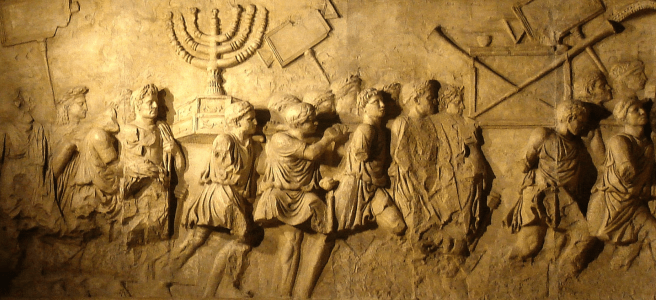
From the enslavement of the Hebrews in Egypt through the conquering violence of Assyria and Babylon and down to the Romans who executed Jesus as a rebel and destroyed the Jerusalem Temple, the Bible presents empires as God’s enemies, intrinsically hostile toward Torah-guided social justice. Yet empires are also seductive and alluring—either in the sense of seeking to be honored and even worshiped by those within their boundaries (see the book of Revelation) or in the sense of providing the template for the unjust ordering of life within independent kingdoms (as in the Old Testament’s Israel and Judah).

In the contemporary United States, people of faith face a strong pull from our great power to give it our ultimate loyalty. Probably nothing reflects this call to loyalty as much as demands for support for American wars and preparation for wars. Americans, with little dissent, devote their nation’s best energies and almost unlimited resources to this warism.

Continue reading “A Christian political agenda? The Bible’s radical politics (part four)”
Jesus’s upside-down empire. The Bible’s radical politics (part three)

Ted Grimsrud—June 12, 2025

As a Christian, I read the Bible with two assumptions. (1) The Old Testament has its own integrity and tells its own story. It is not simply, or mainly, or even at all relevant only in relation to events far in the future of the story being told. (2) Jesus is the center of the Bible when read as a whole. He embraced the Old Testament as scripture and affirmed the messages of Torah and the prophets as revealing God’s will for the world.

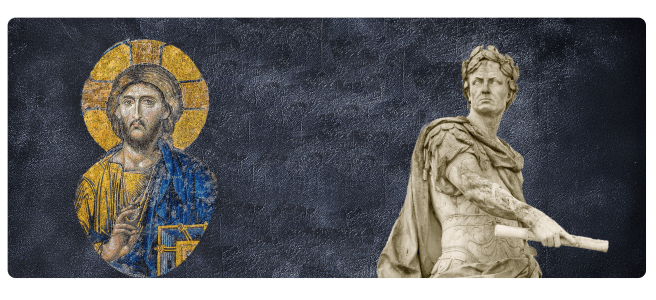
Jesus as the center of the Bible means his story clarifies and reinforces the basic message of the Old Testament. These two parts of the Big Story complement each other. Jesus embodies the political message of the Old Testament: critique of empire, rejection of territorial kingdom as the channel for God’s promise to bless all the families of the earth, and the embodiment of Torah as the alternative to the ways of the nations—including power as service, compassion and justice for the vulnerable and exploited, and resistance to the powers of domination. [This is the third in a series the Bible’s radical politics. Part one is “Ancient Israel among the great powers” and part two is “Ancient Israel as a failed state.”]

Politics and the gospels

One of the key terms in the gospels that signals their political agenda comes at the beginning: Matthew’s gospel tells “of Jesus the Messiah, the son of David, the son of Abraham” (1:1). “Messiah” equals “Christ.” Its literal meaning is “king,” a political leader.

Continue reading “Jesus’s upside-down empire. The Bible’s radical politics (part three)”

Ancient Israel as a failed state: The Bible’s radical politics (part two)

Ted Grimsrud—June 11, 2025

After considering ancient Israel among the great powers, I now want to focus on ancient Israel as what I will call a “territorial kingdom” (i.e., a political community that has boundaries and exercises sovereignty within those boundaries). The Bible’s politics start in enslavement in Egypt. The community coalesced as a people liberated by God, instructed in counter-empire living by Torah, and provided a territory wherein to live out Torah.

The story takes it for granted that the Hebrew people needed a Land where they could establish a permanent home and embody Torah. Between the time of liberation (the exodus) and of entrance to the Land, the people spent decades moving about in the “wilderness.” They struggled to maintain fidelity to Yahweh. In the end, only a handful of the original community that escaped Egypt were allowed to enter the Land with the children and grandchildren of the original community members.

The descendants of the original Hebrews faced the challenge: Overcome the hostility from surrounding nations and remain faithful to Torah in face of temptations to conform to the religious and social practices of those nations. This struggle, sadly, would be so difficult that the territorial kingdom would not be a viable arrangement for the way of Torah. The Bible actually offers a different option. You don’t have to be a territorial kingdom to embody God’s kingdom.

Continue reading “Ancient Israel as a failed state: The Bible’s radical politics (part two)”

Ancient Israel among the great powers. The Bible’s radical politics (part one)

Ted Grimsrud—June 10, 2025

I recently led a three-part adult Sunday School class on “The Bible’s radical politics.” This post is an expanded version of the first session. I will follow with the other two parts and then add a fourth post that reflects on lessons from these posts for politics today.

This first post will discuss ancient Israel among the great powers of the ancient near east. Israel’s entire existence in the Bible took place in the shadow of one great power or another, from Egypt on down to Rome. So, the politics of the Bible has a lot to do with navigating life in that shadow—resistance, subjection, imitation, alternative.

Then, the second post will zero in on Israel’s own attempt to be a territorial kingdom, a power in its own right. I call this, ancient Israel as a failed state—and will consider what follows after the failure. Israel’s time as a nation-state in the “promised land” was complicated, but ultimately ended in disaster—yet the peoplehood continued. What lessons came out of that experience that empowered the peoplehood to continue?

Third, I will turn to the New Testament and the story of Jesus, and his politics as told in the gospels with a glimpse at the book of Revelation. I call this “Jesus’s upside-down empire.” I will suggest that Jesus’s radical politics are best understood in terms of his continuity with the Old Testament.

I will conclude with a fourth post—not part of the original Sunday school class—that reflects on a Christian political agenda in light of the Bible’s radical politics. Most politically engaged people in the United States today recognize that we are facing crises of extraordinary difficulty and diversity. How might the Bible’s Big Story give us some perspective on navigating these crises?

Continue reading “Ancient Israel among the great powers. The Bible’s radical politics (part one)”