Ted Grimsrud—December 15, 2023
The Old Testament tells us that God provides salvation for God’s people as a gift—given out of God’s healing love, unearned, even unmerited by the people. The story presents two institutions linked with salvation, Torah and sacrifice. Both initially served as responses to the gift. First, the people received God’s acts of deliverance, then came gratitude. Such gratitude led to responses of obedience to God’s will for social life. These found expression in Torah and in ritualized expressions of commitment to God via sacrifice.
As the Hebrews’ political structures expanded and became centralized under the office of the king, their religious structures also became centralized around the Temple. With this, the original purposes of the Law and sacrifices were mostly forgotten. Torah originated as the framework for the Hebrews to concretize their liberation. Torah arranges for the economic viability of each household, resisting social stratification. Torah’s inheritance legislation, Sabbath year laws, and the ideal of the Year of Jubilee all pushed in the direction of widespread participation in economic wellbeing. The Law also placed special emphasis on the community tending to the welfare of vulnerable people—widows, orphans, and aliens (“for you too were aliens in Egypt before God delivered you,” Leviticus 19).
The idea of what we could call “God’s preferential option for the poor” in many ways defines what ancient Israel said about God. It arose as a core part of the understanding from the very beginning. The sacrificial practices, above all else, were intended to be linked with the faithful responses of the people, in gratitude, to God’s liberating work.
Problems with law and sacrifices
Torah meant neither the Law nor the sacrifices to be means to salvation but rather responses to the saving works of God. Torah meant for the Law and sacrifices to enhance justice in the community. Once they were established, though, the danger inevitably arose that either or both would be separated from their grounding in God’s merciful liberating works. As memory of the intent of the Law faded, the story tells of the community’s tendency to focus on external expressions, easily enforced and susceptible to becoming tools of people in power. These tendencies led to legalism and, eventually, in the prophets’ views, to removing the Law from its living heart of liberation from slavery and concern for the wellbeing of vulnerable people.
Voices of accountability arose to challenge such distortions, the voices of the prophets. The prophets emerged following the establishment of kingship to be the voice of loyalty to Torah. They challenged Israel’s practices that contradicted the covenant relation. The prophets repeatedly utilize the old traditions to determine the present status of Israel.
The first great prophet among the ancient Israelites was Elijah. Elijah challenged Israel’s king when the king departed from God’s ways—and he pointed back to the law of Moses as the basis for his challenge. He spoke on behalf of a Hebrew farmer, Naboth, when the king wanted to buy the farmer’s vineyard. Naboth refused the king because this was Naboth’s inheritance. The notion of “inheritance” recognizes the land as the Lord’s, cultivated by the family through the generations for their livelihood. When the land stays with family members, they will not be dispossessed and future generations made landless. When all have vine and fig tree to cultivate, the community will be healthy. That health is why inheritance matters.
“Vineyard,” on the other hand, as used by King Ahab, views the land as a commodity, something simply to be bought and sold with little concern for the wholeness of the entire community. Those who are wealthy and powerful may accumulate more and more. The other people become landless, disinherited—a recipe for poverty and vulnerability. Elijah confronts the king after the king has Naboth killed and seized the vineyard: The Lord has told me the injustice you have done to Naboth. You have disregarded the Lord’s commands and will suffer consequences. Elijah reminds King Ahab of God’s will for human life, as expressed in God’s commands. He sets out the template later prophets will follow: Be suspicious of people in power. Do not blindly trust their claims but test them thoroughly. But also remember who God is, what God has done for you, and what God’s will for your life is.
The first set of “writing prophets”—Amos, Hosea, and Micah in the 8th century BCE—confronted the departure from Torah. Hosea frames the “departure” in terms of idolatry. Amos focuses more on injustice. Micah emphasizes both. Originally, the people needed liberation from non-being, the barrenness symbolized by Abraham and Sarah’s lack of a future. God provided this family with a child. Around them, the Promise arose. However, within a few generations, the people stood in need of liberation. They again faced non-being, this time as slaves in Egypt. God again gave them a future—this time as a nation with its own unique law-code, its unique religious rituals, and eventually its own land. At the time of Joshua, the story portrays the Hebrews living in a state of wholeness, with a world of potential for creative growth and witness. They lived at that point with a large measure of harmony with God, due to God’s generosity. However, as the generations passed, this harmony turned to disharmony.
What Causes the Disharmony?
All three prophets spoke in response to the disharmony they perceived among the Hebrew people. The earliest of the three, Amos, draws directly on tradition, taking for granted that the people would know Torah and recognize the centrality of justice for the covenant community. Likewise, Hosea also draws directly on the liberation story that formed the core of Hebrew consciousness. His indictment in chapter 11 begins with these words: “When Israel was a child, I loved him, and out of Egypt I called my son” (11:1). Hosea then goes on to outline how the people did not remain faithful to the ways of their loving God. Micah also centrally emphasized the exodus and Torah. He asserted that violating the covenant in the way his contemporaries had, rendered the nation’s future uncertain.
It is not that Yahweh had changed from loving to wrathful; rather, a society founded on Torah-justice will become deathly ill when Torah-justice is disregarded. To draw on Amos’s imagery, we may say that where there is justice there is life; the community will be strong and healthy. Injustice, on the other hand, in inherently unhealthy. All three of these prophets saw the key for the Hebrews’ health to be Yahweh’s love and liberating work. This divine, life-giving initiative of God—Torah—included detailed guidance for liberated living in justice and Shalom.
All three books conclude with hopeful visions of healing. The prophets confront the people in hope that the community will return to trust in their liberating God. These prophets themselves had no recourse to means that would literally punish anyone. They had no interest in marshalling the power of the sword against wrongdoers. They relied on rhetoric, on their vision of Torah and of Yahweh’s justice, to seek to effect healing—not to inflict pain for pain.
The people’s break with the covenant with Yahweh may be seen in terms of the expressions in their communities of injustice, violence, idolatry, and vain religiosity.
Injustice. According to these prophets, the people had changed their original social structure. Torah had provided for a decentralized social order characterized by widespread land ownership. A transformation occurred that led to increased social stratification—a few wealthy, many poverty-stricken. Amos and Micah zeroed in on this stratification as evidence of a deeply unjust social order. God’s judgment on Israel is immanent, “because they sell the righteous for silver, and the needy for a pair of sandals—they who trample the head of the poor into the dust of the earth and push the afflicted out of the way” (Amos 2:6-7). This injustice goes contrary to the will of God expressed in Torah and, indeed, in creation itself. The Hebrews’ rulers practice injustice, not justice. They turn their responsibility as agents of Torah on its head. “Hear this, you rulers of the house of Jacob and chiefs of the house of Israel, who abhor justice and pervert all equity, who build Zion with blood and Jerusalem with wrong! Its rulers give judgment for a bribe, its priest teach for a price, its prophets give oracles for money” (Micah 3:9-11).
Violence. All these prophets identified violence as a key manifestation of disharmony. Hosea, of the three, speaks of the curse of violence the most forcefully and extensively: “Hear the word of the Lord, O people of Israel; for the Lord has an indictment against the inhabitants of the land. There is no faithfulness or loyalty, and no knowledge of God in the land. Swearing, lying, and murder, and stealing and adultery break out; bloodshed follows bloodshed” (Hosea 4:1-2). Violence only leads to violence; preparing for war leads to war. If you trust in the sword you shall die by it. Hosea continues: “You have plowed wickedness, you have reaped injustice, you have eaten the fruit of lies. Because you have trusted in your power and in the multitude of your warriors, there the tumult of war shall rise against your people, and all your fortresses shall be destroyed” (Hosea 10:13-14).
To the prophets, the covenant community, with its injustice and violence, denies the character of its founding God. They see Yahweh not first of all as a wrathful, angry, retributive God. To the contrary, the prophets see Yahweh as a loving, gracious, merciful God. Yahweh liberated these vulnerable people from slavery with the plan that the people would be agents of liberation for the whole earth. Yahweh’s anger stems from grief at the failures of the people to live out their liberation. The prophetic rhetoric of judgment does not stem from God’s retributive eye-for-an-eye justice that must punish wrongdoing. No, this rhetoric stems from God’s continuing love and is meant to call the people back (see Hos 11:8-9).
Idolatry. Hosea places the central focus on idolatry. Idolatry seems to be the root cause for the injustice and violence. The book begins with a direct reference to idolatry, “the land commits great whoredom by forsaking the Lord” (Hosea 1:2). Hosea portrays Yahweh as deeply attached to the Hebrew covenant community. This close attachment explains Yahweh’s deep hurt when the people turn to Baal and violate their covenant with Yahweh. “The Lord loves the people of Israel, though they turn to other gods” (Hosea 3:1). Just as the prophets hold the political leaders responsible for leading the Hebrews into the paths of violence when the leaders were called to foster peace, so they present the priests as responsible for leading the Hebrews into the paths of idolatry (Hosea 5:1). Instead of seeing the harvest of fruits from their fields as a time to remember Yahweh’s work on their behalf and to offer sacrifices of thanksgiving that would reinforce the people’s commitment to lives lived according to Torah, the people, according to Hosea, make their offerings to Baal (9:1-9). Micah also points to idolatry as a central concern of Yahweh’s in relation to Judah. “I will cut off your images and your pillars from among you, and you shall bow down no more to the work of your hands” (Micah 5:13).
Vain religiosity. These prophets do not reject religious practices per se; they reject religious practices separated from their original intention. The prescribed religious rituals, in, say, Leviticus, meant to reinforce justice for all and link closely with Yahweh’s liberating love, especially oriented toward widows, orphans, and resident aliens. With this link broken, the rituals become worse than simply ineffective. They become themselves occasions for sin and alienation from God. They reinforce the illusion that the community can tolerate injustice, violence, and idolatry and still connect with Yahweh through ritual.
Amos mocks the Israelites: “Come to Bethel—and transgress; to Gilgal—and multiply transgression” (4:4). Bethel and Gilgal were traditional sanctuaries. In Amos’s view, Israel’s worship and transgression have become synonymous. God places special responsibility upon the leaders, the ones called to insist that the link between religious practices and the demands of Torah remain central in the awareness of the people. “My people are destroyed for lack of knowledge; because you [O priest] have rejected knowledge, I reject you from being a priest to me. And since you have forgotten the law of your God, I will also forget your children” (Hosea 4:6). Micah asks, how might life be renewed in the context of alienation? Ritualistic tactics tried and failed due to the injustice of the community. The disharmony the prophets perceive will never be healed through rituals in and of themselves. Contrary to the logic of retribution, the Lord does not require sacrifices. The Lord’s favor is not to be regained by sacred violence within the community.
How is harmony restored?
The prophets raised their critiques for the purpose of helping the Hebrews find healing. They sought to bring the people to realize that at the depth of the catastrophes that shook their lives and brought intense suffering, God was present, providing the impulse for the return from a road leading to ruin. God thus offers a new life. The prophets reject a sacrifice-centered approach to restoring harmony. The proper role of sacrifice is as a response to God’s initiative, not as a means to turn God back toward the people. Hosea 12:6 captures what is needed in a nutshell: “Return to your God, hold fast to loving kindness and justice, and wait continually for your God.” Repent. Do kindness and justice. Trust.
Repent. Behind the prophetic all to “return” or “repent” lies the presumption of God’s availability. The alienation follows from what happens on the human side. God wants a simple turning back from sin, and then offers mercy. When Amos speaks against vain religiosity, he offers as an alternative that the people “seek the Lord and live” (5:6). “Seek” may be understood as a kind of technical term for turning to God in prayer; in this context such turning is contrasted with making pilgrimage to the main religious sites. The call to repent or return rests upon a certainty of God’s receptivity. In Amos, especially, the weight of inequity is so heavy that Israel seems doomed. But the way out is simple: “seek the Lord and live,” that is all.
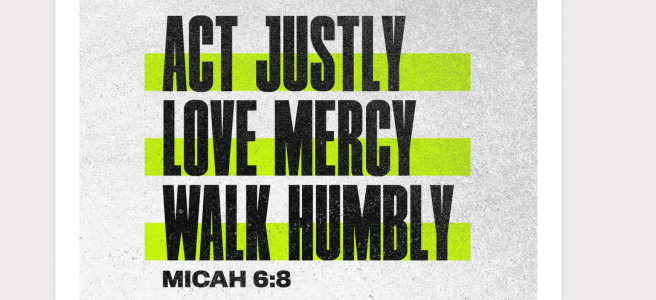
Justice. Should the people truly seek God, their lives would bear the fruit: justice and mercy (as complementary virtues). When the people seek God, their common life will be transformed. In order to live, the people must “seek good and not evil, that you may live; and so, the Lord, the God of hosts, will be with you, just as you have said. Hate evil and love good and establish justice in the gate” (Amos 5:14-15). This call to seek good simply calls to return to observing Torah. To live justly does not gain God’s favor; it rather returns to living consistently with the favor already granted. “With what shall I come before the Lord? … He has told you, O mortal, what is good; and what does the Lord require of you but to do justice, and to love kindness, and to walk humbly with your God?” (Micah 6:6,8). In calling Israel to justice, the prophets do not call for impersonal “fairness” nor for eye-for-an-eye vengeance. They call to covenant community. Doing justice relates to salvation. Saved people know themselves to be loved by the justice-seeking God, and out of this love, walk in God’s paths.
Kindness. Hosea and Micah both call upon the people to do kindness (that is, to do mercy and to practice steadfast love) as part of their core proclamation regarding salvation. They link this call to kindness with justice as two closely related and complementary emphases. “Hold fast to kindness and justice” (Hosea 12:6). The Lord requires the people “to do justice and to love kindness” (Micah 6:8). The call to do kindness, like the call to do justice, directly alludes to Torah. At their heart, the Law and the Prophets unite in calling the Hebrews to healthy and strong relationships in which all people (including, especially, vulnerable ones such as widows, orphans, and resident aliens) receive care. Healing comes as a gift from God. It obligates its recipients to live together justly and kindly.
Trust. Because of Yahweh’s own love and justice that restores relationships, the prophets assure their hearers that they may (and must) trust in Yahweh. The basic dynamic includes the interplay of these four elements. Repent, turn from idolatry and toward God. Let justice and mercy characterize your lives. Trust in your loving and faithful God. And that is it. Sacrifice, if present, comes later. Living in trusting reliance upon Yahweh leads to human fulfillment.
Social healing in the prophets
These three prophets often assert that God initiates healing out of love for the Hebrew people. The key work of salvation was the deliverance of the slaves from Egypt. Everything follows from God’s initiative. Because of God’s healing love, unearned by the people, God holds the people accountable to be loving and just themselves. For these prophets, salvation comes straight from God, at God’s free initiative, and due to God’s transforming mercy. God’s frustration with the people stems not because of their inherent impurity when they violated God’s holiness, but because the people fail to remain true to God’s loving provision for holistic life.
The prophets, preoccupied with the relationship with God, portray the disharmony they expose in terms of violation of that relationship. The people violate the relationship with idolatry and by ignoring Torah’s call for justice among those in the community. The sin is not about broken rules per se, but about breaking relationships and thereby causing harm. The use of rituals came to be separated from the relationships. Making sacrifice impersonal (and hence, empty) ritual became part of the problem, not part of the solution.
God does not require sacrifices to change God’s disposition toward God’s people. God remains, as always, favorably disposed—so long as human beings simply recognize that, trust, and live in that light. God remains, as always, ready and willing to heal the sin-caused brokenness. As Jewish theologian Abraham Heschel wrote, “The ultimate power is not an inscrutable, blind, and hostile power, to which [humans] must submit in resignation, but a God of justice and mercy to whom [humans are] called upon to return.”
God delivers, forebears, restores. This initiative is a constant. Nothing is needed to change God. The only needed changes are on the human side. Return to Yahweh. Trust in Yahweh, not in other gods, not in the works of your hands. Sacrifices are not needed to balance the scales of justice. At most, they simply serve to remind the people of God’s generosity and to foster rededication to Yahweh. Justice is not about God’s internal processes and impersonal holiness. Rather, justice fosters health in the community of people seeking to live together in a way that glorifies God.
All three prophetic books underscore God’s overarching healing love. Each presents God as seeking healing. They write of God’s anger but make clear that the portrayal of anger and wrath serves a rhetorical strategy meant to foster a return to trust in the Hebrews’ loving, patient, and healing God. The prophets do not portray a fundamentally angry, wrathful God. Rather, they show us a loving, healing God who out of committed love feels anger at the people’s self-destructive behavior. God expresses this anger, but it ultimately serves the love by fostering a return.

 Thinking Pacifism
Really excellent, Ted. Thanks.