New Book!!

I am delighted to announce that I have a new book, just released from Cascade Books—Love is the Way: A Christian Pacifist in the American Empire. This book is part theological memoir (telling the story of my move from blank check nationalism to Christian pacifism as a young adult), part theological analysis (presenting the biblical case for peace), and part critique of the American Empire (sketching the long history of American warism).

Between now and the end of November, the book is available from the publisher at 50% off and free shipping. Follow the link below and add the code CONFSHIP to the order. This webpage also gives more information about the book.

https://wipfandstock.com/products/love-is-the-way-9798385279876?variant=59030234005839

The American predicament: Why the Empire seems doomed [American Politics #21]

Ted Grimsrud—October 21, 2026

I keep paying attention to our current global situation, but I have not found clarity about what to say so have been pretty quiet. But I have some thoughts today. It is almost exactly fifty years that I have been a critic of the United States’s foreign policies and general stance in the world. I came of age at the end of the Vietnam War when my growing awareness of the evils of that war combined with new understandings of the message of Jesus to lead me to take a pacifist stance. My Jesus-inspired pacifism and my antipathy about the American Empire have continued to reinforce each other and deepen in the years since.

I have a book newly published (see comments for a link) that tells much of this story—Love is the Way: A Christian Pacifist in the American Empire. What I offer here is kind of a coda to that book (or maybe the outline for a sequel). In all these years since my epiphany about Empire and the gospel, I have believed that the Empire’s days were numbered. Now, those days are fewer than ever before. I have brainstormed a list of reasons why the end seems nigh.

This is just a beginning of a thought process. The list is suggestive, not complete. I don’t have a particular order of importance yet.

Continue reading “The American predicament: Why the Empire seems doomed [American Politics #21]” →

“Turning away” from the American Empire [American politics #20]

Ted Grimsrud—July 14, 2026

Back in 2004 I published an essay that I have been thinking about a lot lately. It was called “Anabaptist Faith and American Democracy” (see the link in the comments). In the essay, I reflected on interaction among three different stories, what I called (1) “the American Empire story,” (2) “the American Democracy story,” and (3) “the Anabaptist story.” My agenda was to encourage Anabaptist types to apply the convictions of their story to the Democracy story in contemporary America. I suggested that to separate the Democracy story from the Empire story would help we Anabaptists see better how we can be involved in the Democracy story.

I argued against what I saw as a tendency for people with Anabaptist convictions to too quickly dismiss engagement with the Democracy story. That is, I believed that Anabaptist convictions did have political significance and that Anabaptists should take their convictions as far as they can in our society’s political world—as far as we can go without compromising on those convictions (most obviously in the area of support for and participation in war).

Second thoughts

I thought I did a pretty good job of making the case, and the essay got a lot of attention. However, I now have some second thoughts about what I wrote. It is not that I no longer think Anabaptists should take our convictions as far as we can. I believe more than ever that Anabaptist convictions are directly relevant for all areas of life, including politics and public policy (and national security issues). At this point, though, I am much less certain that the American Democracy story can be separated from the American Empire story. Such a separation, it seems to me, would have to be possible for bringing the Anabaptist and American Democracy stories together. I now sense that for the United States, the Empire story has always been the dominant story and is now more than ever. It may be that there is no Democracy story apart from the Empire story in this country.

Continue reading ““Turning away” from the American Empire [American politics #20]” →

The Death Spiral of the American Empire [American Politics #19]

Ted Grimsrud—July 2, 2026

[I have been overwhelmed for several months (my last post was March 2) by the cacophony of voices claiming to explain what is actually going on in the Iran War (and in American foreign policy in general). I have continued to read a fair bit every day from numerous sources. I don’t think I have a huge amount of clarity now, but it does seem objectively to be the case that the US Empire is in trouble. What follows probably won’t provide much clarity for anyone else, but I did finally find enough in my own mind to offer some current thoughts. I hope to write something weekly on these topics for a while, and I invite conversation.]

It seems impossible for a non-connected person to know what’s going on in the current wars of America. And the evidence seems to indicate that US leaders don’t know, either—including people at the very top.

Trump’s dishonesty

I find it embarrassing as an American how dishonest Trump has been ever since the beginning of the US war of aggression on Iran in late February 2026. Even before that, with the unprovoked June 2025 bombing of Iran by first Israel and then the US, Trump without batting an eye claimed that the US had destroyed Iran’s nuclear facilities. This straight-out lie was recognized as such at the time by most observers.

We have been treated to the baffling spectacle of Trump claiming day after day that the US was crushing Iran. To the contrary, Iran took some blows but almost immediately retaliated with devasting effect, established control over the Strait of Hormuz, and essentially drove the US military out of the various American military bases in the area. As well, Iran visited as still undisclosed devastation on the Israeli military machine.

Continue reading “The Death Spiral of the American Empire [American Politics #19]” →

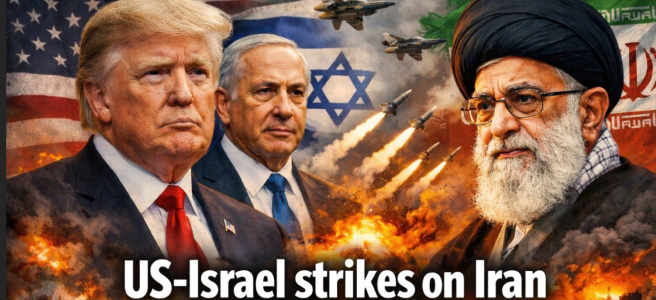
Takeaways from the US/Israel attack on Iran [American Politics #18]

Ted Grimsrud—March 2, 2026

The fog is still way too thick in the very early days of our new war to draw any stable conclusions about it. However, I believe that it is not too soon to see ways already about how the US/Israel attack on Iran underscores many of the problems humane people see with the current American Empire’s way of being in the world. Let me suggest five points.

  • We do well to redouble our work against warism. American warism created a society with an enormous military and with constant prowar propaganda so that we live in a kind of tinderbox waiting for a spark that set the fire off. Now that the nation has allowed an apparently quite war-oriented person to become president we have little potential for derailing the momentum toward an enormous disaster. What is needed, if we somehow survive the current crisis, is a concerted effort to empty the tinderbox. I don’t know how that can happen, but it is needed to prevent another similar crisis.
  • We do well to assume that the US government regularly lies, especially in relation to international affairs. We have lived with decades-long propaganda campaigns of dishonesty that have facilitated antipathy toward China, Iran, and Russia. They make it easy for our government to pursue destructive policies toward those countries with little resistance from the American people. So, we see an ongoing willingness among the American people to believe numerous mistruths regarding each of these countries as events unfold in the present.

Continue reading “Takeaways from the US/Israel attack on Iran [American Politics #18]” →

NEW REPRINT—Theology as if Jesus Matters: An Introduction to Christianity’s Main Convictions

I am happy to announce the publication of a reprint edition of my 2009 book, Theology as if Jesus Matters: An Introduction to Christianity’s Main Convictions (Pandora Press, 2025), 217pp.

This book asks what Christian theology would look like if it consistently took Jesus’s central command to love God and neighbor as the most important consideration. Engaging that question, the book addresses the main beliefs Christians affirm in clear, practical, and challenging ways. Christian theology too often seems overly complicated, abstract, and removed from actual day-to-day life. Yet Jesus’s own teachings are simple, concrete, and directly engaged with people’s lives. Theology as if Jesus Matters approaches Jesus’s life and teaching as the model and core content for theology.

From the Preface to the new edition: “Reconsidering this book now nearly two decades after I first wrote it, I realize that I believe I may have produced something a bit more significant than I intended to. I believe it still works as a basic, non-technical introduction to Christian theology, and I would love for it to be used as a textbook within and beyond Mennonite circles. However, I think it also works as a constructive proposal for an important option for construing the Christian theological task. I am grateful to Maxwell Kennell and Pandora Press for making this book available again.

“Theology as if Jesus Matters offers a practice-oriented more than doctrine-oriented approach to Christian theology. It does so by placing and keeping Jesus as the center. What do all the main theological themes look like if we think of each of them as meant to serve Jesus’s call to his followers to love their neighbors? This is a serious proposal that theology center more on the gospel story in its broad biblical context than on doctrinal traditions, creeds, and confessions.”

Endorsements:

“This deeply compelling, engaging book brings theology back to the rough ground of our lived experience, where it can have traction again. Grimsrud recaptures a vision for theology that begins and ends with Jesus, and in so doing manages to call back the discipline from its metaphysical holiday to its home in the life of the messianic community.”—Christian Early, James Madison University

“Grimsrud provides an expansive, accessible, provocative, practical, and practice-able theology rooted in the life and teachings of Jesus. This book provides a foundation for a sensible, Jesus-rooted theology for the twenty-first century.”—Keith Graber Miller, Goshen College

Available online from Amazon.

Conclusion: A Christian pacifist in the American Empire [part 2]

Ted Grimsrud—November 21, 2025

I have found Christian pacifism, properly understood, to be a most helpful framework as I try to understand the world I live in. In this series of 24 blogposts, I explain how I came to affirm pacifism and what it means for me. I have also showed how my pacifism shapes the questions I raise and criticisms I offer in relation to the American Empire. In this final post, I offer reflections on moving forward to live in the Empire in light of pacifist convictions.

Rethinking power

Christian pacifism posits two central affirmations— (1) We are called to resist and to seek to overcome evils in the world (“evil” most simply understood as that that harms life) and (2) We must work against evils in ways that do not add to the evil. The practice of pacifism helps us hold these two affirmations together. Committed to overcome evils, we engage the American Empire, the source of so many evils in our world. Committed not to add to the evil, we seek to find consistently nonviolent means as we strategize and act. One of the main ways human beings have tended to add to evil is to resist the wrong through the use of violence and coercion.

The American Empire cannot realistically be transformed in any immediate way. To try too hard to transform the Empire may lead us to take moral shortcuts that change us in ways that result to our actually adding to the evils that the Empire is doing. Violent resistance uses evil means to seek what might be good ends and may transform the effort into something that adds to the evil. On the other hand, many people try to reform the Empire through efforts that all too often actually result in compromise with the Empire on key issues and little genuinely changes.

We should recognize, then, the problematic character of conventional, top-down politics. Let’s use the term “Constantinianism” for politics that both tries to control history by making it turn out right and uses top-down power that is coercive and dominating. The embrace of such methods ensures that our efforts will add to evil, not overcome it. Pacifism understands power in a different way. It recognizes that we are not in control and that the only way to overcome evil is always to act consistently with love. One of the great insights of Gandhi and King was to recognize that ends and means must go together. We only achieve genuine healing when we act in healing ways. Violent and coercive means cannot achieve healing ends.

Continue reading “Conclusion: A Christian pacifist in the American Empire [part 2]” →

23. Conclusion: A Christian pacifist in the American Empire [part one]

Ted Grimsrud—November 18, 2025

My journey as an American citizen may be characterized as a radical reversal. I switched from a young adult ready to take up arms to serve the wishes of my nation’s leaders to an advocate for unrelenting resistance to those wishes. The reversal happened quickly back in the mid-1970s due to an intense simultaneous immersion in both a pacifist reading of the message of Jesus and a critical reading of the American Empire in light of the American war on Vietnam.

My sincerity in wanting to follow Jesus helped me to turn from the uncritical nationalism I grew up with. Jesus’s message helped me be ready to see the immorality of my country when it became apparent in unprecedented ways at the end of the war on Vietnam. The timing was significant. The hold of my embedded theology of uncritical nationalism was weakened due to Vietnam at precisely the moment I encountered the pacifist Jesus for the first time.

These blog posts have traced how I have deepened both the biblical grounding for my peace theology and my critical interpretation of the history of the American Empire in the years since 1976. I read that history through the lenses of Christian pacifism. Those lenses helped me ask questions I never would have imagined as long as I affirmed the uncritical nationalism I grew up with. When I have learned how the dynamics of imperialism have always shaped US policies, I have seen an endless series of choices for domination and exploitation that have determined the character of my country—a character full of violence, domination, and exploitation. Such choices have put the country on what now seems like an irreversible path to self-destruction.

In this concluding set of reflections, I think about how Christian pacifist convictions might contribute to the task of moral engagement within our empire. As I accept this task with utmost seriousness, I also recognize the relative powerlessness of the Christian pacifist. We do not command a massive following that we might mobilize to transform society. And the kind of power we seek to exercise is the power of service, of presence with, of compassion and love. That is, it is a kind of powerless power.

Continue reading “23. Conclusion: A Christian pacifist in the American Empire [part one]” →

The tragic American Empire story in light of the gospel

Ted Grimsrud—October 24, 2025

I recognize my upbringing as a proud citizen in the world’s most powerful empire to be part of my identity. As I described previously, I experienced an eventful meeting between two world-defining stories—the American Empire met Jesus’s gospel of peace. American Christians tend to see faith and nation as fully compatible, even mutually reinforcing. In contrast, for me their meeting was a collision that forced me to make a choice. It had to be one story or the other.

I chose the Jesus story to be my defining story—and chose against the American Empire. That choice led me to affirm Christian pacifism and turn from the uncritical nationalism central the Empire story. I started to interpret the story of the American Empire without blinders. At the same time, I found the Bible to be a key source for a peace-oriented, anti-empire defining story. My fundamentalist Christian teachers had asserted a high view of the Bible as direct revelation from God. However, such an assertion had not protected them from uncritical nationalism. Rather than rejecting the Bible when I rejected fundamentalism, I started reading the Bible in a different way. I no longer ignored Jesus’s peace teaching as I had been taught to do; I made it central.

The basis for stepping away from uncritical nationalism

When I began to read the Bible for peace, I noticed its critique of uncritical nationalism. I noticed the Bible did not teach the submit-to-the-government message as Americans assumed. If the Bible be central, I would choose Jesus’s gospel of peace instead of uncritical nationalism. The Old Testament provides a template, in Torah, that critiques all human territorial kingdoms. Torah pointed to a new kind of kingdom committed to justice and the wellbeing of all its people. The Old Testament kingdom, though, in practice evolved ever more toward injustice, militarism, economic stratification, and corruption. The brokenness grew to a point where the prophets saw the kingdom’s leaders not as agents of God but as enemies of the original vision of a just society.

Eventually, those who retained a commitment to Torah made sustaining those convictions more important than remaining loyal to any kind of territorial kingdom. The story continues with Jesus’s ministry. He announced the presence of God’s kingdom as a non-territorial communal expression of the ways of Torah. Echoing Genesis 12, Jesus’s kingdom message meant to bless all the families of the earth. This blessing would not come through a close connection with territorial kingdoms (or nation-states). Rather, the blessing would come through the witness of countercultural communities that put convictions about the ways of Torah at the center.

Does this story have relevance for our contemporary world? Let me identify four biblical themes that speak to life amidst the world’s empires. (1) The practice of justice should define the aspirations of societies that seek to be healthy. This justice will center on care for the vulnerable of the community since a society cannot be healthy without the good health of those most easily exploited and discarded. (2) People in power should always be treated with skepticism. Power tends to corrupt. People in power tend to be deluded by their commitments to sustain that power at all costs. Such people should be pushed to guide the society toward justice with an expectation that they will likely tend toward serving their own interests and not those of the vulnerable in society. (3) The “horses and chariots” problem tends to define territorial kingdoms and leads to the proclivity to prepare for and engage in warfare (warism). The accumulation of weapons of war favors society’s wealthy and powerful and leads to devastating conflicts. (4) Throughout human history (and in the Bible’s stories), territorial kingdoms and nation-states have provided some of the central rivals to God as the objects of human trust. This type of idolatry, as Israel’s prophets show, leads directly to injustice.

Continue reading “The tragic American Empire story in light of the gospel” →

Christianity’s accommodation to empire

Ted Grimsrud—October 21, 2025

Amidst its diversity, we may discern in the Bible a specific political sensibility. God has called into being a community to know God’s love and to embody that love so as to bless all the families of the earth. Torah provides a social framework for this blessing that includes mutual aid, welcome to the vulnerable, justice for all in the community, no social stratification, and a recognition that God’s blessings can be resisted and will be revoked when the community turns from the core teachings of Torah. Jesus then reinforces this Torah-based framework.

So, what happened to Christianity? My Christianity in the early 1970s little resembled the ideals of the Bible. Christians have tended more to be complicit with empire than oppose it. How did this happen that Christianity accommodated to empire? We have two reasons to repudiate such accommodation. First, to make it easier to recover the truths of the biblical story. Second, to help us find ways to break uncritical nationalism and American warism. We need self-awareness about the problematic of Christianity and empire in order to discern a new healing path.

Struggles with Rome

Early Christians did to some extent embody the way of Jesus, but always with difficulty. The picture presented in the seven messages to congregations in Asia in Revelation 2–3 applies to the first several generations of the Christian movement. In Revelation we meet a few churches that adhered closely to Jesus’s teaching and example and faced persecution. These tended to be small and poor. Others found more prosperity and comfort—but too easily collaborated with the surrounding culture. They risked losing their connection with Jesus and his message.

The Bible does not tell of a golden age when the community got everything right but of an ongoing struggle that continues to characterize Christianity. Those who embody Torah’s and Jesus’s message will always be at odds with their wider culture and tempted to compromise that message. The earliest Christians come from the margins of society. In time, the communities attract more people of higher social status and their antipathy toward the Empire lessens. Persecution of Christians continued as empire elites found that to scapegoat this fringe religious minority helped strengthen their hold on power. By the end of the third century CE, however, many in the churches looked for more accommodation with the Empire.

Continue reading “Christianity’s accommodation to empire” →