How the story of Jesus’s resurrection points toward peace [Peace and the Bible #15]

Ted Grimsrud—March 18, 2024

Christianity, it seems, owes its existence to on-going presence of Jesus among his followers after he was executed by the Romans. Against all expectations including their own, Jesus’s disciples within a few days of his death proclaimed that God had raised Jesus from the dead. Ever since, Jesus’s resurrection has been a rallying cry for Christian faith. It was quite a turnaround, because in the immediate aftermath of Jesus’s arrest and execution, it appeared that his movement had met its end.

The shock for Jesus’s followers

Jesus’s arrest and crucifixion were a devastating blow to his followers’ hopes. They “had hoped he was the one to redeem Israel” (Luke 24:21); in the days that followed the shattering of those hopes they scattered and wandered around Judea. Jesus’s most prominent disciple, Peter, led the desertion by Jesus’s followers. They concluded that God had abandoned their leader—in line with Deuteronomy 21:23: “For a hanged man is accursed by God.” Jesus’s mission seemed to have ended up for naught. His message about God’s mercy, it appeared, proved to be no match for the forces of powers-that-be in their society. Whatever the disciples may have thought about the possibility of resurrection from the dead at the end of time, they clearly seemed not to have imagined that it would apply to Jesus in the immediate aftermath of his death.

A few of Jesus’s followers did remain close to him—Mary Magdalene, Jesus’s mother, a couple of others. They seem to have remained simply out of love for him and as an expression of solidarity in their grief, not that they expected his resurrection. Though the story tells that Jesus alluded to resurrection as he spoke of his likely death, it seems that no one actually understood him to mean his personal resurrection prior to the general resurrection at the end of time. The events of Easter Sunday took everyone by surprise.

Continue reading “How the story of Jesus’s resurrection points toward peace [Peace and the Bible #15]”

Guardians of God’s shalom: The Old Testament prophets (Peace and the Bible #10)

Ted Grimsrud—December 15, 2023

The Old Testament tells us that God provides salvation for God’s people as a gift—given out of God’s healing love, unearned, even unmerited by the people. The story presents two institutions linked with salvation, Torah and sacrifice. Both initially served as responses to the gift. First, the people received God’s acts of deliverance, then came gratitude. Such gratitude led to responses of obedience to God’s will for social life. These found expression in Torah and in ritualized expressions of commitment to God via sacrifice.

As the Hebrews’ political structures expanded and became centralized under the office of the king, their religious structures also became centralized around the Temple. With this, the original purposes of the Law and sacrifices were mostly forgotten. Torah originated as the framework for the Hebrews to concretize their liberation. Torah arranges for the economic viability of each household, resisting social stratification. Torah’s inheritance legislation, Sabbath year laws, and the ideal of the Year of Jubilee all pushed in the direction of widespread participation in economic wellbeing. The Law also placed special emphasis on the community tending to the welfare of vulnerable people—widows, orphans, and aliens (“for you too were aliens in Egypt before God delivered you,” Leviticus 19).

The idea of what we could call “God’s preferential option for the poor” in many ways defines what ancient Israel said about God. It arose as a core part of the understanding from the very beginning. The sacrificial practices, above all else, were intended to be linked with the faithful responses of the people, in gratitude, to God’s liberating work.

Problems with law and sacrifices

Torah meant neither the Law nor the sacrifices to be means to salvation but rather responses to the saving works of God. Torah meant for the Law and sacrifices to enhance justice in the community. Once they were established, though, the danger inevitably arose that either or both would be separated from their grounding in God’s merciful liberating works. As memory of the intent of the Law faded, the story tells of the community’s tendency to focus on external expressions, easily enforced and susceptible to becoming tools of people in power. These tendencies led to legalism and, eventually, in the prophets’ views, to removing the Law from its living heart of liberation from slavery and concern for the wellbeing of vulnerable people.

Continue reading “Guardians of God’s shalom: The Old Testament prophets (Peace and the Bible #10)”

The key to a peaceable reading of the Bible: The single-story approach [Peace and the Bible #8]

Ted Grimsrud—December 7, 2023

I have what may seem like a counter-intuitive impression about how Christians tend to read the Bible. They make Jesus Christ too central to how they read scripture and as a consequence make the Bible less peaceable. That is, by making Jesus Christ too central in the way that they do, many Christians actually misinterpret his message. In a nutshell, I believe that the Bible as a whole is a book of peace. When it is not read as a somewhat coherent whole, even the seemingly peaceable parts may actually become less peaceable.

The typical Christian way of reading the Bible assumes a major turning point in the message that comes with Jesus’s entry into the story, a turning point that in practice turns the Bible into two stories. I believe that we are better off to think more in terms of a single story, what I call the “Big Story,” that encompasses both the Old Testament and the New Testament. This single-story approach allows us better to appreciate the peaceable elements of the Old Testament and the political elements of the New Testament. With the single-story approach, we do still have an important turning point. It comes sooner, though, and may be the key to a thoroughly peaceable reading of the whole. Let me explain.

Problems with the typical Christian reading

Christian approaches to the Bible tend to assume that something qualitatively new happens with Jesus. This new thing does not simply intensify what was already present in the Old Testament but is something categorically unprecedented. This newness, it is said, may be seen is in terms of salvation. Whatever was practiced before Jesus was not adequate to make salvation fully available. The main “new thing” is that Jesus’s death provides the definitive atoning sacrifice that was necessary for God to be able to offer salvation.

To read the Bible in light of this atonement theology results is what we could call a “two-story” understanding of the Bible. The Old Testament provides the first story, one that ultimately ends in failure because the means for salvation were not fully available. The second story, told in the New Testament, does depend upon the first story for establishing the problem for which Jesus’s sacrificial death provides the solution—hence, a two-story Bible. But the second story is the necessary and authoritative one.

Continue reading “The key to a peaceable reading of the Bible: The single-story approach [Peace and the Bible #8]”

Is Christianity the only way to God? [Questioning faith #23]

Ted Grimsrud—May 11, 2023

A number of years ago, my wife Kathleen and I visited a Sunday School class in a large Mennonite congregation. The speaker was a member of the congregation who had just returned from a year in the Far East, and he was reporting on the experience. He talked about how he found the religious beliefs and practices that he had seen so interesting. He then told how he tried to encourage his new friends to be the best Buddhists (or it could have been Hindus) they could be.

I learned later that this comment caused a bit of a furor. People who believed that faith in Jesus as Savior is the only way to find salvation were distressed. The speaker’s embrace of religious pluralism, his implied belief that any number of religions can lead a person to God, raised concerns.

Religious pluralism as a fact of life

This issue of Christian faith in relation to other religions grows ever more challenging for Christians in our globalized world. Here in the United States, we can no longer avoid asking about different religions. Many of us travel around the world, doing business with people from many cultures and religious traditions, and, if nothing else, rub shoulders in grocery stores, ethnic restaurants, and even in our own neighborhoods with other-than-Christian religious folks.

I taught for many years at a tiny Christian college in small, fairly remote town in Virginia’s Shenandoah valley. I had students who were Muslim, Hindu, Jewish, and Buddhist. Our favorite places to eat in town have included restaurants operated by recent immigrants from Nepal, Vietnam, China, Indonesia, Germany, Thailand, India, El Salvador, Mexico, and Ethiopia. A few years ago, I heard that our local public high school had students from sixty-four different countries who spoke forty-four different languages—and represented many different faiths. Religious pluralism has become part of our everyday life, like it or not.

So, what do we think of the various religions of the world? How do we relate our own Christian faith to Buddhism, Islam, Hinduism, Judaism, and so on? How does our understanding of the religions fit with our broader theological convictions?

Continue reading “Is Christianity the only way to God? [Questioning faith #23]”

What are Christians saved from? [Questioning faith #11]

Ted Grimsrud—December 15, 2022

“Salvation” is one of those Christian words that we use a great deal but aren’t always clear about what we mean by it. In my recent posts, I have focused on how we might find salvation without really addressing what it is. One way to work at understanding what salvation is is to reflect on what we are saved from. Other words in the Bible that seem to be rough synonyms with salvation include “liberation,” “redemption,” and “ransom.” All of these seem to have in mind being delivered or freed from something. What are we saved from?

The old story

My first encounter with Christianity came when I joined a Baptist church when I was 17 years old. The main message about salvation I heard was that, in reality, we are saved from God. More specifically, we are saved from God’s judgment, God’s punitive justice, God’s wrath. Or, we could say, we are saved from hell, from eternal torment in separation from God. The means to gain this salvation was very narrow and particular. We must accept Jesus as our personal savior, which means to believe in the efficacy of his sacrificial crucifixion on my behalf, a death he took upon himself in order to receive, as our substitute, the punishment that we deserve.

Because I did not grow up with this theology and had a much more positive sense of my place in the world, that salvation story did not scare me in the way that it has so many other people. I didn’t have the deep-seated anxiety about whether I was okay or not that many lifelong Christians seem to have. Despite not feeling that anxiety, I did try to believe that story—though I was always uneasy about it—until a few years into my journey when I began to learn of another way to read and apply the story.

I won’t go into all the problems here with the kind of atonement theology I was taught. I’ll just note that from the beginning I sensed that the story of Jesus and his love was not fully compatible with belief in an angry and punitive God. Though I don’t remember thinking of the issue in these terms, I would say now that part of my problem with what I was taught was that my sense of the human problem was not that God was displeased with us so much as that too many human beings gave allegiance to oppressive and hurtful ideologies and institutions.

In retrospect, I think it is important to remember that the period in my life that I became a Christian, left home for college, and initially worked out my theology coincided with the final years of the Vietnam War and the Watergate scandal that drove President Richard Nixon from office. I became much more interested in social issues during this time and discovered and embraced Christian pacifism. I was eager for a theology that would help me make sense of the world I was living in and that would empower peaceable social ethics. I realized the salvation story I had been told wasn’t doing that. The key for me came when I realized that Jesus himself talked about his cross as a model for his followers, not as a necessary sacrifice to satisfy God’s punitive justice. How do we best understand salvation in light of Jesus’s cross as a model?

Continue reading “What are Christians saved from? [Questioning faith #11]”

In what sense is Jesus our “savior”? [Questioning faith #3]

Ted Grimsrud—November 7, 2022

Quite a few Christians, it seems, assume that there is a clear demarcation between those who are Christians and those who are not. They might differ on how they describe the line of demarcation, but for many it has to do with whether a person trusts in Jesus as one’s savior or not. That is certainly what I was taught when I started going to church. I don’t find that a helpful notion anymore.

What I was taught about salvation

It took a while after my age 17 conversion for me to figure out what I was actually being taught about Jesus as savior. As I look back now all these years later, I find it remarkable that something that was such a pillar of faith would be so little explained. But this is how I would now reconstruct my first church’s understanding of Jesus as savior.

The key first step would be to assert that human beings are inherently sinful—each one of us. We are born that way. And because we are sinful, we exist in alienation from God. Ultimately, if something does not happen, we will be condemned to spend eternity in hell. So, making “something happen” is extremely important. We can be assured that God wants this “something” to happen, that God has provided a way for this alienation to be overcome.

This way (and it is the only way) is for us to accept Jesus as our personal savior, to recognize that we are sinful and deserve condemnation, and to recognize that Jesus’s death on our behalf has made is possible for us to find reconciliation with our holy God and thus to escape our certain condemnation. What is rarely explained, though, is how this works. How does Jesus’s death make our salvation possible?

Continue reading In what sense is Jesus our “savior”? [Questioning faith #3]

Mercy all the way down: A peaceable reading of Romans (part 4; 3:1-31) [Peaceable Romans #11]

Ted Grimsrud—March 21, 2022

There is a famous story that almost for sure didn’t actually happen. But it’s kind of funny and it provides a metaphor I want to adapt for this post. This big time philosopher (or maybe it’s a scientist) lectures about the infinite cosmos and is challenged by an elderly woman in the audience. “What you are telling us about the universe is rubbish. The earth rests on the back of a huge turtle.” “Oh yes,” the philosopher says, “and pray tell, what holds up the turtle?” “Why, another turtle, of course.” “And what holds up that turtle?” “Ah, I get where you’re going. But sir, it is turtles, all the way down!” Turtles all the way down, we don’t need anything more.

The moral universe and Jesus’s “sacrificial” death

I don’t want to make any claims about the infinity or not of the physical universe here. My concern is the Apostle Paul’s account of the gospel. However, I do want to use this metaphor of “turtles all the way down” to think of the moral universe. In many readings of Paul—and, hence, many understandings of the gospel—we have something like this: God can forgive only because God’s justice has been satisfied by Jesus’s sacrificial death. Or maybe it’s God’s holiness or God’s honor.

The point for that perspective is that God can’t simply forgive. The moral nature of the universe requires some kind of satisfaction, some kind of payment, to balance out the enormity of human sin. Reciprocity. Retribution. Tit for tat. It can’t be mercy all the way down. The moral universe rests on something else—retributive justice or justice as fairness. Mercy is possible only in ways that account for this kind of justice. Thus, salvation is not truly based on mercy. Rather, salvation is based on an adequate payment of the universe’s moral price tag placed on human sin.

Romans 3 has often been cited to support what has been called the “satisfaction view of the atonement.” This view sees the meaning of Jesus’s death as the sacrifice of a sinless victim that satisfies God’s need for a payment for human sin. This payment allows God to offer us forgiveness if we accept Jesus as our savior. I’m going to offer a different reading. I don’t like the traditional view. There are many problems with it. Maybe most basically, it denies that God is love, it seems to me. It denies that mercy is life’s fundamental truth. It may foster fearfulness and legalism. It may make us vulnerable to giving loyalty to human structures of power and coercion—i.e., empires and other nation-states, not to mention religious institutions.

Continue reading “Mercy all the way down: A peaceable reading of Romans (part 4; 3:1-31) [Peaceable Romans #11]”

What is Paul good for? [Rethinking salvation #3]

Ted Grimsrud—September 1, 2021

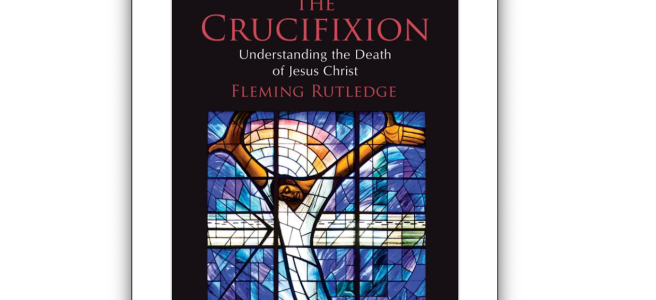
When I read Fleming Rutledge’s book, The Crucifixion: Understanding the Death of Jesus, I was struck with how much she focused on the thought of Paul the Apostle (as she interpreted it) and how little she paid attention to the life and teaching of Jesus. She presented her theology of salvation, in my opinion, in a clear and persuasive way. And I would say that she quite definitely takes her place square in the middle of the Christian tradition—Catholic and Protestant—that may broadly be categorized as Augustinian. That tradition, going back to the fifth-century Bishop of Hippo (the second most influential Christian theologian ever, after Paul himself), has been by far the dominant shaper of Christian theology in the West. Rutledge echoes the theological line from runs from Augustine through Anselm, Luther, Calvin, and down to Barth.

Christian faith with Jesus at the center

I believe that Rutledge (and the others) present a problematic understanding of salvation, though. I think they distort the biblical story’s portrayal of salvation, on the one hand. And, on the other hand, I think that salvation theology, not coincidentally, has a problematic legacy in relation to the ethical practices of the Christian churches, especially in relation to the ethics of warism and violence more broadly. A big part of these problems, I would say, seems to follow from the interpretive move to marginalize the life and teaching of Jesus (and with that, the teachings of many of the Old Testament prophets and the message of Torah itself) and foreground a certain reading of the Apostle Paul.

So, I advocate for a reading of the New Testament and a theology of salvation that places Jesus’s life and teaching at the center. I see this as simply a straightforward way to read the New Testament since it clearly places the story of Jesus as the main event. Even if the mainstream tradition does not approach theology this way, I think it should have. It is more faithful to the Bible itself to do so. I also believe that such a Jesus-centered approach underwrites a more peace-oriented perspective. No longer would the message of Jesus be marginalized, and no longer would we affirm an understanding of the cross and salvation in general that marginalizes the call to embody Jesus’s way of life as central to the very definition of Christian faith.

In making this point about centering the story of Jesus and de-centering the theology of Paul, though, I am not advocating excluding Paul’s thought from our theology. To the contrary, I believe that the tradition Rutledge embodies actually misreads Paul himself. I think reading Paul in light of Jesus is the best way to appropriate the message that Paul actually intended to convey. To read the New Testament straightforwardly, I would say, is to take the ordering of the writings there seriously.

Continue reading “What is Paul good for? [Rethinking salvation #3]”

A Peaceable Take on Christian Salvation: The Genealogy of a Writing Project [Theological memoir #14/Rethinking salvation #2]

Ted Grimsrud—August 19, 2021

I have long been interested in the theological theme of salvation. This interest stemmed from my concern with how complicit it seems that Christianity has long been in accepting warfare and other violent practices. I came to see a connection between atonement theologies and the acceptance of war. In the 2003-4 school year, I received a sabbatical from Eastern Mennonite University in order to write a book on this topic. Shortly before the sabbatical began, I presented this paper at an EMU Bible and Religion forum (April 2, 2003) that described the upcoming project.

As it turned out, I did most of the work on the book during my sabbatical year, but for various reasons was unable to complete it until 2013. During that time, my plans changed a bit so the final book was a bit different than what I outline in this paper. Most obviously, I changed the title from “Salvation Without Violence” to Instead of Atonement: The Bible’s Salvation Story and Our Hope for Wholeness (Cascade Books, 2013). I also decided to include the discussion of Paul and Revelation and make it a one-volume project.

I reproduce the paper here as it was presented mainly because I think it is informative to see how I understood the rationale for the project before I did the work on it. My interest in these issues has not diminished (see this recent post, “Why the cross of Christ is so hard to understand?”). To put it mildly, my proposal for a different to approach atonement theories and the understanding of Jesus’s crucifixion did not get much traction among theologians. But maybe if I keep trying….

In the fall of 2002, I received one of the great gifts of the academic life—the granting of a sabbatical from EMU. This sabbatical meant that I would be paid a significant part of my salary for the 2003-4 school year and freed to research and write full time. In order to be granted a sabbatical, I had to gain approval for a proposal outlining the main project I intend to work on next year. What follows in this paper is what I shared in our forum (drawing from my sabbatical proposal) about the genealogy of this writing project—how it was that I came to be interested in a subject with enough intensity and passion that I wanted to devote about a year of my life to do nothing else except write about that subject. And in sharing this story, I expected to open a bit of a window into how my mind works. What follows is my paper from April 2003:

The title of my project is “Salvation Without Violence.” In a nutshell, what I intend to do is write a book taking a pacifist perspective on the biblical portrayal of God’s initiative toward human beings. I am intense and passionate about this issue because I think that a fundamental misunderstanding of God lies behind much of the ideology has and continues to undergird Christian support for violence. In telling you how I came to see this as an issue and how I have been approaching it, hopefully I will communicate at least a little of what I think is at stake.

Continue reading “A Peaceable Take on Christian Salvation: The Genealogy of a Writing Project [Theological memoir #14/Rethinking salvation #2]”

Why the cross of Christ is so hard to understand: A response to Fleming Rutledge’s The Crucifixion [Rethinking salvation #1]

Ted Grimsrud—August 10, 2021

When I was in seminary, with the help of my New Testament professor, I noticed and analyzed the connection between Jesus’s cross and the call to discipleship. It seemed like an obvious theme once I thought about it: Jesus taught directly, “Take up your cross and follow me.” What could he have meant but that his life of subversive peacemaking was our model, even as it led to his conflict to the death with the religious and political leaders? However, this was a new way of thinking for me—and it did not seem widely emphasized among Christians. The problem was that everything I had been taught about Jesus’s crucifixion had emphasized that it was a unique thing. He died so that we don’t have to.

Ever since then I have worked at trying to make sense out of this tension. Why is there such as difference between what Western Christianity (Catholic and Protestant) teaches about salvation, atonement, Jesus’s death on the one hand, and what the gospels themselves seem clearly to emphasize on the other? The difficulties pointed to by this question became even more acute for me when I read books such as Timothy Gorringe’s God’s Just Vengeance: Crime, Violence, and the Rhetoric of Salvation (Cambridge University Press, 1996) that show the historic connection between traditional atonement theologies that focus on God’s punitive disposition toward sinners and the actual devastating practice of punitive criminal justice in our world.

Fleming Rutledge’s The Crucifixion

This question was very much on my mind when I recently read Fleming Rutledge’s impressive book, The Crucifixion: Understanding the Death of Jesus Christ (Eerdmans, 2015). The book received great acclaim upon its publication. When I did a quick internet search, I found laudatory reviews from mainline Protestants in periodicals such as the Christian Century, a book of the year award from evangelical Christianity Today, and mostly positive reviews from conservative Reformed theologians. I noticed hardly any negative criticisms. The reviews present this book as an instant classic. As I worked my way through The Crucifixion, I could see why it was so well received and how it could appeal to such a wide array of readers. It is, in a nutshell, well-written, scholarly and pastoral, accessible and substantial.

Rutledge is a retired Episcopalian priest who writes with an evangelical sensibility. Her skill as a preacher shapes the book. She is deeply influenced by the core theological tradition—Augustine, Anselm, Luther, Calvin, and especially Barth. If anyone could help me make sense of my basic questions about the meaning of Jesus’s death, it would seem to be her. I suggest that The Crucifixion is the ideal one-stop account of the meaning of the crucifixion in the mainstream Protestant Christian tradition.

It’s a big book, over 600 pages of text, that to its great credit, reads relatively easily. I felt pulled along by Rutledge’s prose. And she marks the development of her argument with regular summaries and by linking back to earlier discussions as she moves along. Strictly on stylistic grounds, I would give the book a high grade and recommend it—though the final chapter disappointingly kind of petered out without achieving the apex of clarity and punch that the author had promised along the way (more on this below).

The point of my essay here, though, is to discuss why, in the end, I put the book down with some deep disappointments. I am disappointed, though, not so much with Rutledge as a writer and thinker as with the tradition that she actually represents so well. Her skill as an author actually would seem to make her the ideal guide. In just about every case, the points in the book that disappointed or frustrated me were due to her good work in articulating the issues. I think the reason that my starting question about the difference between the gospels’ story and the Christian theological tradition concerning Jesus’s death was not satisfactorily answered by this book is that the Western tradition simply is not set up to answer it.

Continue reading “Why the cross of Christ is so hard to understand: A response to Fleming Rutledge’s The Crucifixion [Rethinking salvation #1]”