Ted Grimsrud—January 10, 2022
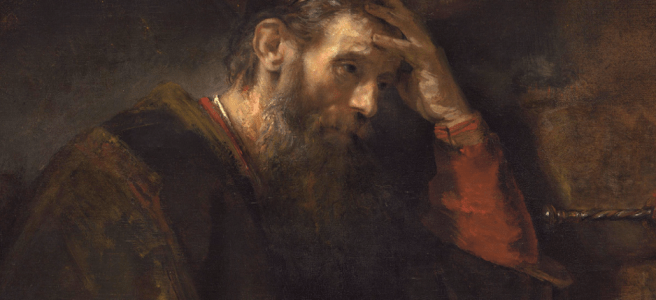
The more I read what scholars have to say about the writings of Paul, the more I feel like they miss important elements of Paul’s thought that might speak to us today. I think of Paul as a biblical prophet alongside the great Old Testament prophets, Jesus himself, and John of Patmos who wrote Revelation. As such, I think Paul is a great witness to the message of shalom that I associate with the prophets and with Jesus.
However, the Paul of Christian biblical scholars seems more like a teacher of a new religion, one centered on beliefs about Jesus’s death and resurrection and on escaping the failures of the ancient Hebrews. Such a Paul has little to say against domination and power politics and little to say about key issues of social justice such as wealth, social power, warism, and systemic prejudice. That is, the Paul of the Christian biblical scholar seems cut off from the OT portrayal of Torah, the insights of the prophets, and even the life and teaching of Jesus.
In raising this critique here, though, I am not intending to focus on recent Christian scholarship (at least not yet). Rather, I want simply to raise a few questions about how we might approach Paul in ways that are different from the standard approaches and that have promise to be more relevant for our current world healing concerns. I like the idea of reading Paul (for right now, I will focus on Romans) in the context of the Bible as a whole, where we keep the Big Story plot line from the Old Testament in mind and where, especially, we read Paul in light of the life and teaching of Jesus.
Continue reading “Reading Paul in light of Old Testament social conflict [Peaceable Romans #2]”
 Thinking Pacifism