A Christian pacifist in the American Empire, part 3: The American Empire without blinders

Ted Grimsrud—September 15, 2023

In the first post in this three-part Theological Memoir, “Embedded Theology,” I gave an account of my first two decades of life with a focus on how my “embedded theology” led me to accept the “blank check” regarding my loyalty to the American Empire, even to the point of being (reluctantly) willing to go to war if called. This acceptance of the blank check was, if anything, strengthened when I became a Christian and was taught that the “gospel” included an embrace of American patriotism.

The second post, “Jesus’s gospel of peace,” describes the circumstances around the transformation of my perspective due my encounter with Jesus—an embrace of Christian pacifism and a rejection of the blank check that involved a deeply critical disposition toward the American Empire. I also briefly sketch the Bible-oriented theology that undergirds that critical disposition.

My encounter with the gospel of peace has defined the rest of my life. Right away in 1976, I sought to bring together the two main elements of this new exciting vision for life and faith: First, an embrace of Jesus’s gracious and humane call that love of God and neighbor are the core meaning of life. Second, an ever-widening analysis in our social and political context of the vicious, expansionist, profoundly violent American Empire. From the very start, for me, these were two sides of a single coin. The call to love illuminated the realities of the Empire and the realities of the Empire continually challenged me to understand the practical and embodied character of the call to love. The more I studied the Bible, the more convinced I became of the radical nature of this story of God’s call of a people to bless all the families of the earth with their message of shalom. In this post I will outline my critique of the American Empire.

Continue reading “A Christian pacifist in the American Empire, part 3: The American Empire without blinders” →

And they call it democracy…. Critical thoughts on America’s proxy war

Ted Grimsrud—August 24, 2023

[Early in 2022, after Russia greatly accelerated its military engagement with Ukraine, I wrote several blog posts and then some shorter posts on Facebook with my reflections. After all these months, I decided to re-engage these issues as the war continues unabated. Here are several recent Facebook posts.]

War, what is it good for? Absolutely nothing! (August 3, 2023)

War almost always ends up way worse than those who initiate it expect. Classic examples are the American Civil War and World War I, in both cases famously entered into by all sides with the expectation the war would be quick and victorious. What followed were the two worst bloodbaths in human history up to the time with indecisive results. American history in the past 75 years is full of case after case of this dynamic (e.g., Korea, Vietnam, Iraq, Afghanistan).

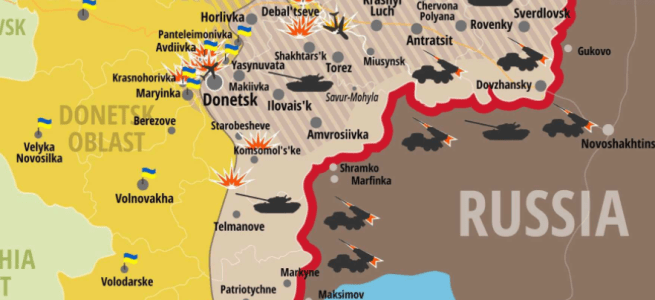
Almost certainly, Russia expected its direct military intervention in the Ukrainian civil war to end quickly back a year and a half ago. There is a chance it might have had the negotiations of the Spring of 2022 managed to reach a conclusion. However, Ukraine pulled back, and the current devastating war of attrition accelerated with no happy ending in sight.

More controversially, some observers are suggesting that the US/NATO side of this conflict was also a miscalculation that is leading to profoundly negative unanticipated consequences for that side. One of these observers is the American political scientist John Mearsheimer, a professor at the University of Chicago. Mearsheimer is often categorized as a “realist” who, it could be said, believes in the American Empire but believes many of the past and current actions of the empire are ill-considered and self-defeating.

In a recent interview, he reemphasizes his perception that the Ukrainian counteroffensive against Russian forces in eastern Ukraine right now is essentially a hopeless operation and has been from the start. The West pushed Ukraine into this operation, but to Mearsheimer, it was “like encouraging them to launch a suicidal offensive that is completely counterproductive.” Why the push? “The West is very fearful that time is running out, that if the Ukrainians don’t show some significant success on the battlefield in the year 2023, public support for the war will dry up and the Ukrainians will lose—and the West will lose.”

Continue reading “And they call it democracy…. Critical thoughts on America’s proxy war” →

Is there such a thing as a Christian political philosophy? [Questioning faith #22]

Ted Grimsrud—April 22, 2023

As long as I have cared about Christianity and politics, which is about as long as I have been a pacifist, I have thought that we need a political philosophy that captures key elements of the biblical vision of human social life. None of the main options one encounters in a political theory class (such as liberal democracy, communism, or monarchy) seem to come close to doing that. That leaves pacifist Christians with a kind of disembodied political philosophy—which is surely part the reason that pacifism seems too unrealistic. To try to fit pacifism into a philosophy of liberal democracy where a core principle is that the meaning of the state rests on its monopoly on legitimate violence is like trying to fit the proverbial round peg into a square hole.

Not long after I embraced pacifism, I learned to know a couple of anarchists. They helped open my eyes to a possible option. Then, when I took a class on the history of political theory in graduate school, I was pleased that the professor treated anarchism as a legitimate theory within the cacophony of theories that have been articulated in the western tradition. He didn’t spend much time on anarchism in the class, but that recognition of anarchism as a serious political philosophy planted a seed for me. I am still trying to make sense of Christian pacifism as a realistic and important set of convictions for people of good will. In this post, I want to reflect on the possibility that something like anarchism (or, more precisely what I will call an “anarchistic sensibility”) actually may help us imagine better the political relevance of pacifism.

What is anarchism?

The term “anarchism,” similarly to “nonviolence,” is a negative term that in its most profound sense speaks of a positive approach to human social life. Though the term “anarchism” literally means against “authority” (arché), it is at its heart—as I understand it—not mainly against something. It is for freedom and for decentralized ways of organizing social life that enhance human well-being. Anarchism has an unfair, though not totally unfounded, reputation for being violent, even terrorist. There indeed have been numerous acts of violence in the name of anarchism, perhaps most notably in the US the 1901 assassination of President McKinley at the hand of a self-proclaimed anarchist (though one who had few links with other anarchists).

Continue reading “Is there such a thing as a Christian political philosophy? [Questioning faith #22]” →

More thoughts about Ukraine and the American Empire [Pacifism Today #8]

Ted Grimsrud—June 23, 2022

[In early March, as the conflict in Ukraine gained the world’s attention, I began to write about that conflict, especially in relation to the American Empire. I posted a blog entry, “Thinking as an American pacifist about the Russian invasion” on March 3. On April 10, I posted “Reflecting morally on the conflict in Ukraine,” a collection of four shorter Facebook posts from the previous month. This current post also collects Facebook posts and leaves them essentially unchanged.]

So, what’s going on with Russia/Ukraine? [5.10.22]

I have struggled with how best to understand the current conflict in Ukraine and, especially, the American role in it—especially in light of Jesus and his biases toward peace and against the power elite. These are some brief points about which I have developed some clear impressions (subject to revision):

1. The US has been seeking a unipolar world at least since 1945 (for example, note the size of the American military budget in relation to the rest of the world and its extensive set of military bases around the world). This quest for global dominance has led to the US relationship with the Soviet Union/Russia to be very adversarial. Russia has a long history of facing aggression from the West going back to Napoleon.

2. Ukraine was the site of armed conflict before the Russian invasion in early February 2022, with thousands dying since 2014. What happened in February was an acceleration of the conflict, not an initiating of it.

3. There are great profits for arms dealers (war profiteers) in the deepening of this conflict. These profits come on top of the great profits throughout the Cold War era and the resistance to a post-Cold War “peace dividend.” These profits have been a key factor driving American policies.

4. Our mainstream (corporate) media are mainly repeating what they are being fed by government. Note the lack of dissenting voices in relation to the militarized American response in the core national media (e.g., Times, Post, NPR, CNN, MSNBC, New Yorker, Atlantic).

Continue reading “More thoughts about Ukraine and the American Empire [Pacifism Today #8]” →

Reflecting morally about the conflict in Ukraine [Pacifism Today #6]

Ted Grimsrud—April 10, 2022

[In early March, as the conflict in Ukraine gained the world’s attention, I wrote a blog post, “Thinking as an American pacifist about the Russian invasion.” In the weeks since then, I have continued to think—and posted several shorter reflections on Facebook. I have gathered those pieces into this blog post essentially unchanged.]

Some different concerns in response to the Russian invasion [3.9.22]

Like most people I know, I am heartsick about the Russian invasion of Ukraine and the possibility of an expanding and continuing conflict. However, I don’t notice many other people voicing some of my main concerns.

It was almost 50 years ago that I first learned that my country’s leaders regularly, and to devastating effect, lied to justify engagement in unjust and disastrous military actions around the world. When I was in college, I learned to know numerous Vietnam War vets who told me stories that made my hair stand on end. To a man, they bitterly spoke of the lies we Americans were being told about that war.

Continue reading “Reflecting morally about the conflict in Ukraine [Pacifism Today #6]” →

The politics of Paul and the way of Jesus, part 2 (Romans 13) [Peaceable Romans #7]  

Ted Grimsrud—February 22, 2022

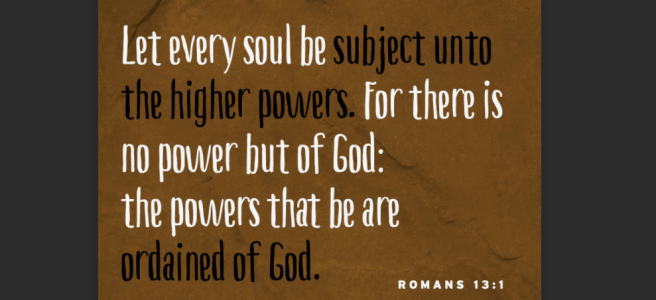
The Apostle Paul was a follower of Jesus. And his social views actually complement Jesus’s rather than stand in tension with them, contrary to how many Christians have believed. Part 1 of this two-part series of posts sketches a summary of key elements of Paul’s views, leaving for this second part a more detailed look at the infamous passage in Paul’s letter to the Romans that, one could say, has launched many ships and other weapons of war. Romans 13, specifically 13:1-7, often serves as a counter-testimony in the Christian tradition to the idea that Paul may have taught nonviolent resistance to the Roman Empire. As well, Romans 13 is often seen to go against the idea that Paul understood Jesus’s peaceable way as normative for Christian social ethics.

Setting the context for Romans 13:1-7

However, I will show that those verses actually are fully compatible with the peaceable way of Jesus. Our interpretation of Romans 13:1-7 should begin with reading these verses in light of their broader biblical context. From Egypt in Genesis and Exodus, then Assyria, Babylon, Persia, and down to Rome in the book of Revelation, the Bible shows empires rebelling against God and hindering the healing vocation of God’s people. The entire Bible could appropriately be read as a manual on how people who follow Torah in seeking to love God and neighbor negotiate the dynamics of hostility, domination, idolatry, and violence that almost without exception characterize the world’s empires.

Romans 13:1-7 stands in this general biblical context of antipathy toward the empires. If we take this context seriously, we will turn to these Romans verses assuming that their concern is something like this: given the fallenness of Rome, how might we live within this empire as people committed uncompromisingly to love of neighbor? Paul has no illusions about Rome being in a positive sense a direct servant of God. Paul, of course, was well aware that the Roman Empire had unjustly executed Jesus himself. As evil as the they might be, though, we know from biblical stories that God nonetheless can and does use the corrupt nations for God’s purposes—nations that also remain under God’s judgment.

In his letter to the Romans, Paul surely had this biblical sensibility in mind as he addresses Jesus followers in the capital city of the world’s great superpower—the entity that had executed Jesus. Paul begins with a focus on the perennial problem related to empires—idolatry. He discusses two major strains of idolatry in chapters 1–3: (1) the Empire and its injustices that demand the highest loyalty and (religious) devotion and (2) a legalistic approach to Torah that leads to its own kind of violence (witness Paul’s own death-dealing zealotry). Continue reading “The politics of Paul and the way of Jesus, part 2 (Romans 13) [Peaceable Romans #7]  “ →

The pacifist ache: What’s missing in our politics? [Pacifism/Peace Theology #2]

Ted Grimsrud—July 6, 2020

At this stage in my life, especially during our new era of social distancing, I am more an observer than active participant in American politics. Even from a bit of a remove, though, I have experienced this year, 2020, as an emotional roller coaster. It has made me think of the old ABC Sports show, “Wide World of Sports,” and its iconic opening with brief glimpses of “the thrill of victory and the agony of defeat.”

The ups and the downs

I was thrilled when Bernie Sanders won the Nevada primary, looked to be the leader in the race for the Democratic nomination, and appeared to be showing that a candidate advocating for policies such as Medicare for All and a Green New Deal actually could realistically hope to be elected to the presidency. Then, all too quickly, came the triple whammy of Joe Biden snatching victory from the jaws of defeat versus Sanders, the emergence and shocking spread of the COVID-19 pandemic, and Donald Trump continuing his descent into unfathomable presidential malfeasance and incompetence. Trump’s failures were made all the more devastating in face of our need for a constructive governmental response to the pandemic.

More recently, though, I have again been thrilled with the emergence of what seems like one of the most radical popular uprising in our nation’s history—a direct challenge to the ever-strengthening hold of militarized policing and an empowering of the victims of our nation’s centuries-old plague of white supremacy.

So, it has been and continues to be an emotional yo-yo. It’s quite a time for political junkies—and for everyone else who is interested in what is going to become of our society. In all this, there is always a tension for me, what I will call a “pacifist ache.” I felt even in the height of my hopefulness about Bernie’s chances, and I feel it even when I am most hopeful about our current uprising. It has to do with lack of interest in pacifism (by which I mean the conviction that all of life is precious which leads to a rejection of war and other forms of lethal violence). Of course, this is not surprising. Pacifism has almost always been ignored or dismissed in American politics. Still, it’s too bad. I have spent a lot of time over the past 45 years imagining how a pacifist sensibility could help things out a lot in our society. Continue reading “The pacifist ache: What’s missing in our politics? [Pacifism/Peace Theology #2]” →

Thinking of the United States as foundationally racist [American politics #5; Civil War #7]

Ted Grimsrud—June 29, 2020

People in this country have greatly differing deep-seated views of the very meaning of the story of the US. I suspect these differences make achieving healing amidst our current crises extremely difficult. This is true especially as related to what the great thinker W.E.B. DuBois in 1900 looked ahead foresightedly to call the problem of the 20th century—the problem of the color line (from The Souls of Black Folk). This problem clearly remains one of the main problems of the 21st century, and it affects all our other crises.

Two versions of the story of the United States

Let me suggest that, even with all our diversity, we think of two main general perspectives on the United States story that are held by those who oppose racism and see the legacy of slavery in this country as a bad thing. The first perspective sees the United States as foundationally and systemically racist from the beginning down to our present day in spite of scattered attempts to move toward freedom for all. The second perspective sees the United States ultimately as a nation of freedom and justice, in spite of scattered missteps along the way. (I recognize that there are some in the nation who are not all that negative about either racism or slavery; my concern here is with people who would say racism and slavery are bad.)

The term “racism” is complicated—and later in this essay I will probably make it even more complicated. For now, I want to use “racism” in the sense defined by Ibram X. Kendi in his book, Stamped From the Beginning: The Definitive History of Racist Ideas in America: “My definition of a racist idea is a simple one: it is any concept that regards one racial group as inferior or superior to another racial group in any way. I define anti-Black racist ideas as any idea suggesting that Black people, or any group of Black people, are inferior in any way to another racial group” (p. 5).

My thoughts about these two perspectives were helped by a recent essay by Masha Gessen, “Why are some journalists afraid of ‘moral clarity’?” (on the New Yorker website, June 24, 2020). Gessen interacts with commentator Andrew Sullivan. She summarizes Sullivan’s description of the first view (which he opposes) that sees the US as “systemically racist, and a white-supremacist project from the start.” In this view, “the ideals about individual liberty, religious freedom, limited government, and the equality of human beings” were always secondary to the white supremacy project. “The liberal system is itself a form of white supremacy—which is why racial inequality endures.”

The second view (with which Sullivan agrees) tells the story of the United States as “primarily one of a nation of immigrants, the story of a society that, over time, enfranchised an ever-greater number of its members, and where the arc of history has bent toward justice.” This view then assumes a legacy of progress even against racism, witness the Civil War and the Civil Rights Movement. Continue reading “Thinking of the United States as foundationally racist [American politics #5; Civil War #7]” →

The Crisis in American Politics: A 2020 Campaign Diary [3]

Ted Grimsrud—May 15, 2020

[More than any other presidential campaign in my lifetime, I paid attention to and cared about the 2020 campaign. Beginning in January, I wrote a number of short posts on my Facebook page. There will be many more twists and turns before November, I am sure, but virtually all my hopefulness has drained away. I fear the people of the United States and the world are heading into a time of even deeper darkness. This post captures a bit of the up and down of my sense of hope. These are excerpts from the Facebook posts. Here’s Part I: Sanders Ascendent and Part II: Biden Takes Control.]

Part III: Taking stock

April 14, 2020

How did Trump get elected? [The first of three sections]

I don’t think it’s an exaggeration to say that this year’s presidential election is the most crisis-surrounded one since 1932. No one knew then what kind of president Franklin Roosevelt would be. He was far from perfect, but he rose to the occasion and helped make things better. I have no hope for such an outcome this year. How should we think about this? Let’s start with the 2016 election.

Barack Obama won the 2012 election fairly comfortably, and most expected Hillary Clinton to follow suite. She did win the popular vote by about 2% but lost in the electoral college. My sense is that two key parts of the electorate that had supported Obama did not give Clinton the same support: (1) some white working class people who voted for Obama and then voted for Trump and (2) some younger people who voted for Obama and then didn’t vote for president in 2016 (e.g., supposedly in Michigan the number of people who voted but left the line for president blank was four times higher than Trump’s margin of victory). The numbers didn’t have to be huge, just enough to make a difference. It appears that Trump did not out-perform Mitt Romney (46.1% of the vote compared to Romney’s 47.2%); the difference was that Clinton under-performed Obama, especially among those two groups.

Clinton, it seems, ran a campaign focused more on putting Trump down than on offering a strong, positive vision that would give undecided people a reason to vote for her. She barely campaigned in the key rust belt states that turned the election. She showed inadequate interest in and empathy toward working people (white and black) who had been hurt by the economic crises of 2008-9. She did little to build bridges to Bernie Sanders’s constituencies. Her tone was that “everything is great” in America, something that may have felt tone-deaf to people who struggled to get by. Continue reading “The Crisis in American Politics: A 2020 Campaign Diary [3]” →

The Crisis in American Politics: A 2020 Campaign Diary [Part 2]

Ted Grimsrud—May 2, 2020

[More than any other presidential campaign in my lifetime, I paid attention to and cared about the 2020 campaign. Beginning in January, I wrote a number of short posts on my Facebook page. There will be many more twists and turns before November, I am sure, but virtually all my hopefulness has drained away. I fear the people of the United States and the world are heading into a time of even deeper darkness. This post captures a bit of the ups and downs of my sense of hope. These are excerpts from the Facebook posts. [Here’s Part I: Sanders ascendant]

Part II: Biden takes control

March 11, 2020

The Democratic Party’s presidential primaries have taken a dizzying turn these past couple of weeks. It’s been amazing, really.

One of the stunning aspects is how Biden has all of sudden become the presumptive nominee without actually doing anything to earn that status. He has scarcely campaigned and remains the same tepid candidate who was given up for dead just a short time ago.

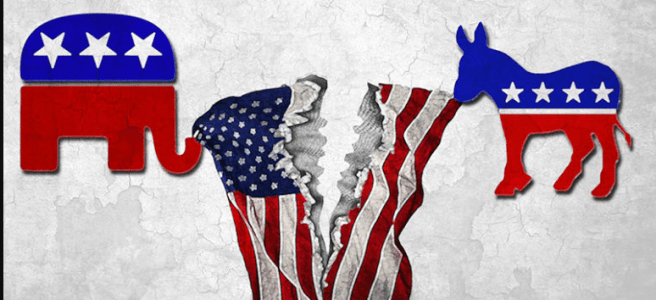
My sense is that the most powerful factor among Democratic Party voters has been terror at the idea of another Trump term. That extreme fearfulness has been skillfully exploited by the corporate interests. They turned the fearfulness into an anti-Sanders fear (this has included, for months, an endless drumbeat of hostility toward Sanders in the corporate media), so when all the other “moderates” dropped out and left Biden as the only alternative to Sanders, fearful voters turned to him.

The end result, of course, is a terrific victory for the corporate interests—they have their boy in place (though it is a bit unsettling to have the sense that they were close to completely abandoning Biden just weeks ago until it became clear that none of the other candidates had much of a chance; they also seemed to be recognizing his weakness as a candidate). So we are left with a choice—vicious corporatocracy vs. a somewhat kinder, gentler corporatocracy. Of course, this has almost always been our only choice—but for a moment it seemed that this year might be different. Continue reading “The Crisis in American Politics: A 2020 Campaign Diary [Part 2]” →