The politics of Paul and the way of Jesus, part 1 [Peaceable Romans #6]

Ted Grimsrud—February 18, 2022

Christians have tended to hold Jesus and Paul in tension. On the one side, Christians of a more liberal persuasion have tended to take their cues from Jesus and see Paul as a supporter of the status quo. Others wouldn’t so much say there is a tension as assume (often without realizing it) that Jesus is not particularly relevant for their social ethics. His message is often seen to focus on personal ethics and the ideals of our future in heaven. For such conservatives, Paul teaches us more relevant political principles, especially about obeying the governing authorities and respecting the state’s police function.

Reasons not to dismiss Paul’s politics

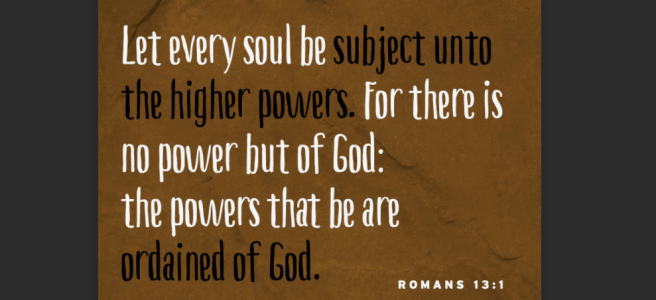
Now, I definitely am on the Jesus-as-central side. Some years ago, I read a wide variety of Christian thinkers who reject pacifism. I was struck with how every single one of them—from evangelicals to Catholics to theological liberals—cited Romans 13 as a key biblical text that supported their anti-pacifist stance. In face of that consensus, I can understand why a more peace-oriented Christian might want to be done with Paul.

However, I don’t think it’s a good idea to take the easy way out with Paul. First of all, I believe that the pro-war reading of Romans 13 is a bad interpretation. If we read those verses carefully, I believe we will realize that they do not support the standard account—even if that standard account is long-lived and widely affirmed. Just on the grounds of accuracy, then, Paul should not be seen as the advocate par excellence of Christian submission to the state.

Second, the message of the Bible’s story as a whole contradicts the assumption that Christians should issue the state a moral blank check and simply “submit to the state.” Christians generally have practiced that kind of submission going back to Augustine. But such an embrace was highly ironic (and tragic) given the strong biblical emphasis in opposition to empires going back to the story of the exodus. Especially striking is how Augustine give the Roman Empire the moral authority to discern when to involve Christians in war. This flies in the face of the New Testament: That same Roman Empire executed Jesus and that same Roman Empire was linked with Satan in the book of Revelation. So, it is strange that a short, cryptic passage from Paul’s writing would take precedence over the negative overall biblical message about the state.

Third, when we simply grant validity to the Paul-as-pro-submission-to-the-state position without argument we lose the main avenue for possibly persuading Christians not to grant such a blank check. This avenue is to ground one’s counterargument in the Bible. If we don’t question that interpretation of Romans 13, then the by far most important biblical basis for Christian acceptance of warism will remain in place—and it becomes difficult to imagine an effective way to persuade Christians not to support for the warring state.

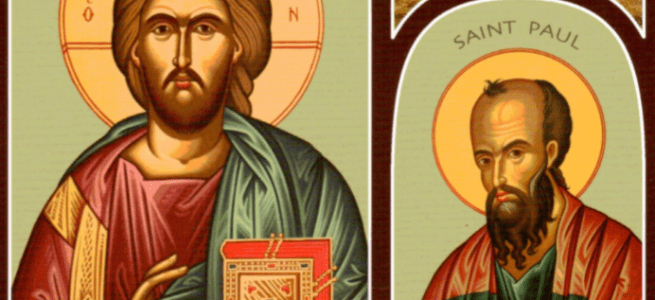
So, I think there are good reasons to examine Paul’s writings more closely, with an openness that he might actually turn out to be much closer to Jesus in thought than has normally been recognized. I believe that, together, Jesus and Paul do provide a political perspective that is relevant in our world. Not only relevant, but I would argue that together Jesus and Paul give us essential guidance for creative and transformative political engagement. Continue reading “The politics of Paul and the way of Jesus, part 1 [Peaceable Romans #6]”

Paul’s critique of idolatry, part 3 — Liberation from idolatry [Peaceable Romans #5]

Ted Grimsrud—January 31, 2022

As we have seen in the previous two blog posts in this three-part series, Paul begins his letter to the followers of Jesus in Rome with a two-part analysis of the dynamics of idolatry—first, political idolatry and then religious idolatry. He concludes that “all are under the power of sin” (Romans 3:9)—that is, both types of idolatry keep us from living the free and fruitful lives God intends for us. Paul’s intent, though, is not emphasizing the total depravity of humankind. Rather, he sets up the problem in order to provide a solution—liberation for sinners.

He states this solution beginning at 3:21. His statement is dense and open to different interpretations. I believe that if we read Paul in light of Jesus’s life and teaching and if we assume that Paul’s agenda is to empower his readers to live lives of service and healing justice, we will be best suited to discern the meaning of his theologically and ethically potent emphases in 3:21-31. Of course, fully to understand the content and implications of what he writes in those verses, we will need to analyze the chapters that follow in Romans—a task for future blog posts.

The true revelation of Jesus as savior (liberator)

Our starting point in analyzing Romans 3 should be a recognition that Paul’s theology here was decisively shaped by his own experience before he met Jesus. When Saul the Pharisee made “works of the law” central (i.e., when he focused on the boundary markers that protected the core of religious identity that for him found expression in strict adherence to rituals of separation [such as circumcision and dietary restrictions]), he had zealously devoted himself to violent persecution of the followers of Jesus. After he met Jesus, Saul renamed as Paul realized with a shock that instead of serving God, he had been serving an idol—and was guilty of blasphemy rather than faithfully serving God. So, Paul himself when he was Saul the Pharisee was stuck right in the middle of idolatry that enslaved him under the power of sin. In his trust in works of the law, he himself had been enslaved. He had been part of the dynamic of slavery to idols that concludes the negative part of his argument at 3:20.

So, when we turn to the next step in the argument, we remember that it is a personal testimony for Paul. He affirms that God’s healing justice, God’s transformative love, has been made known to humanity (and, specifically, to Paul himself) “apart from the law” (3:21). Paul’s response to the problem of idolatry flows from his own liberation. This is how the problem is solved: “Now, apart from the law, the justice of God has been disclosed, and is attested by the law and the prophets, the justice of God through the faithfulness of Jesus Christ for all who believe” (3:21-22).

Continue reading “Paul’s critique of idolatry, part 3 — Liberation from idolatry [Peaceable Romans #5]”

Paul’s critique of idolatry, part 2 – The religious temptation [Peaceable Romans #4]

Ted Grimsrud—January 24, 2022

One of the ways that the Bible is most helpful for peacemakers is in its critique of idolatry. The Apostle Paul’s letter to the Romans especially offers an analysis of the dynamics where lack of gratitude to the Creator leads to trusting in created things rather than in the Creator —things such as human political and human religious structures. Such trust feeds a spiral of injustice and violence as seen in the social world of the Roman Empire—and other empires since. We also see a legacy of injustice and violence in religious communities.

In the first of three blog posts, “Paul’s critique of idolatry, part 1 – The political temptation,” I looked at Paul’s critique of the Empire’s idolatrous ways in Romans 1, suggesting that this critique has an on-going validity. However, the first chapter of Romans needs to be read in conjunction with Romans 2, where Paul offers an analysis and critique of a more subtle kind of idolatry—idols probably closer to home for his readers then and now.

Idolatry II: Religious boundary maintenance

Paul’s critique of Empire-idolatry has its own validity and importance. However, it should not be read in isolation from what follows in Romans. Paul combines his Empire-idolatry critique with a critique of the way people in the covenant community embrace a different kind of idolatry. Following pioneering Pauline scholar James Dunn, I will use the term “works of the law” for what Paul criticizes—in distinction from the law understood as the original revelation of Torah through Moses, something that Paul embraces. Paul’s lack of precision in his use of the term “law” makes it difficult to perceive the nuances of his argument.

Dunn sees Paul’s use of the term “works of the law” in Galatians 2:16 (“We know that a person is justified, not by the works of the law but through faith in Jesus Christ”) as helpful for helping us distinguish between Paul’s critique of how the law was being understood among his opponents in the churches and Paul’s strong affirmation of the continuing validity of the law (Romans 13:8-10: “The commandments, ‘You shall not commit adultery; You shall not murder; You shall not steal; You shall not covet’; and any other commandment, are summed up in this word: ‘Love your neighbor as yourself’”).

In his groundbreaking essay from the early 1980s, “The new perspective on Paul,” Dunn summarizes his core point: “Paul’s objection is not to ritual law, but to exclusivist or particularist attitudes which came to expression in and are reinforced by certain rituals. Not the rituals as such, but the attitude behind them, expressed typically as a ‘boasting’ in works of the law (Rom 2:17-23; 3:27ff).” Behind Paul’s critique here is his own earlier use of works of the law as boundary markers. He protected the “true faith” with extreme violence. Paul as Saul the Pharisee, before he met Jesus, had made an idol of works of the law in a way that made him guilty of the same kind of death-dealing injustice as the leaders of the Roman Empire in his harsh persecution of Jesus’s followers.

Continue reading “Paul’s critique of idolatry, part 2 – The religious temptation [Peaceable Romans #4]”

Paul’s critique of idolatry, part 1 – The political temptation [Peaceable Romans #3]

Ted Grimsrud—January 17, 2022

I believe that one of the ways the stories and teachings of the Bible speak to our world today is in how they criticize the dynamics of idolatry. The biblical stories often portray violence and injustice having roots in idolatry. Trusting in things other than the creator God who made all human beings in the divine image leads to a diminishment of the value of some human beings—a prerequisite for injustice and violence. Torah, the prophets, and Jesus all emphasize the centrality of loving the neighbor as part of what it means to love God above all else.

I think that the writings of Paul the apostle are also an important part of the critique of idolatry and the envisioning of peaceable life. This is the first of a three-part series of posts on Paul’s critique of idolatry. Especially the book of Romans emphasizes idolatry and how to overcome it. Noting the importance of idolatry in Paul’s thought helps us recognize how closely connected Paul was with Jesus and the Old Testament prophets. All too often, Christian theology has tended to see more discontinuity between Paul and his predecessors than is warranted—or helpful.

The struggle against idols characterizes the biblical story from the concern with “graven images” in the Ten Commandments down to the blasphemies of the Beast in Revelation. Certainly, at times the battle against idols itself crosses the line into violence and injustice. However, for my purposes here I will assume that those accounts stand over against the overall biblical story. When anti-idolatry takes the form of violence, a new idolatry has taken its place. Our challenge is to seek to overcome evil without becoming evil ourselves.

The critique of idolatry

We find in the biblical critique of idolatry perspectives that are important, even essential for responding to the problems of violence in our world today. If we use violence as our criterion, we could say that whenever human beings justify violence against other human beings, they give ultimate loyalty to some entity (or “idol”) other than the God of Jesus Christ. It could well be that forces that underwrite violence today—loyalty to warring nations, labeling those outside our religious or ethnic circle as less than fully human, placing a higher priority on gathering wealth than on community wellbeing—are contemporary versions of the idolatrous dynamics that biblical prophets condemn.

Continue reading “Paul’s critique of idolatry, part 1 – The political temptation [Peaceable Romans #3]”

Reading Paul in light of Old Testament social conflict [Peaceable Romans #2]

Ted Grimsrud—January 10, 2022

The more I read what scholars have to say about the writings of Paul, the more I feel like they miss important elements of Paul’s thought that might speak to us today. I think of Paul as a biblical prophet alongside the great Old Testament prophets, Jesus himself, and John of Patmos who wrote Revelation. As such, I think Paul is a great witness to the message of shalom that I associate with the prophets and with Jesus.

However, the Paul of Christian biblical scholars seems more like a teacher of a new religion, one centered on beliefs about Jesus’s death and resurrection and on escaping the failures of the ancient Hebrews. Such a Paul has little to say against domination and power politics and little to say about key issues of social justice such as wealth, social power, warism, and systemic prejudice. That is, the Paul of the Christian biblical scholar seems cut off from the OT portrayal of Torah, the insights of the prophets, and even the life and teaching of Jesus.

In raising this critique here, though, I am not intending to focus on recent Christian scholarship (at least not yet). Rather, I want simply to raise a few questions about how we might approach Paul in ways that are different from the standard approaches and that have promise to be more relevant for our current world healing concerns. I like the idea of reading Paul (for right now, I will focus on Romans) in the context of the Bible as a whole, where we keep the Big Story plot line from the Old Testament in mind and where, especially, we read Paul in light of the life and teaching of Jesus.

Continue reading “Reading Paul in light of Old Testament social conflict [Peaceable Romans #2]”

What is Paul good for? [Rethinking salvation #3]

Ted Grimsrud—September 1, 2021

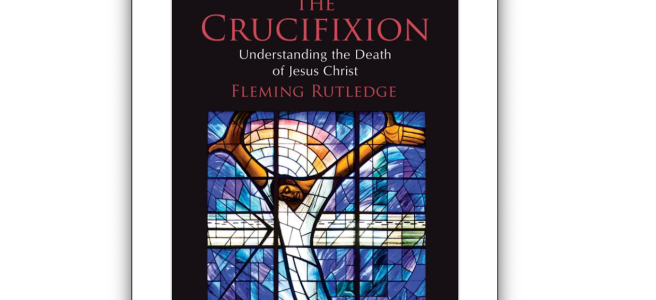
When I read Fleming Rutledge’s book, The Crucifixion: Understanding the Death of Jesus, I was struck with how much she focused on the thought of Paul the Apostle (as she interpreted it) and how little she paid attention to the life and teaching of Jesus. She presented her theology of salvation, in my opinion, in a clear and persuasive way. And I would say that she quite definitely takes her place square in the middle of the Christian tradition—Catholic and Protestant—that may broadly be categorized as Augustinian. That tradition, going back to the fifth-century Bishop of Hippo (the second most influential Christian theologian ever, after Paul himself), has been by far the dominant shaper of Christian theology in the West. Rutledge echoes the theological line from runs from Augustine through Anselm, Luther, Calvin, and down to Barth.

Christian faith with Jesus at the center

I believe that Rutledge (and the others) present a problematic understanding of salvation, though. I think they distort the biblical story’s portrayal of salvation, on the one hand. And, on the other hand, I think that salvation theology, not coincidentally, has a problematic legacy in relation to the ethical practices of the Christian churches, especially in relation to the ethics of warism and violence more broadly. A big part of these problems, I would say, seems to follow from the interpretive move to marginalize the life and teaching of Jesus (and with that, the teachings of many of the Old Testament prophets and the message of Torah itself) and foreground a certain reading of the Apostle Paul.

So, I advocate for a reading of the New Testament and a theology of salvation that places Jesus’s life and teaching at the center. I see this as simply a straightforward way to read the New Testament since it clearly places the story of Jesus as the main event. Even if the mainstream tradition does not approach theology this way, I think it should have. It is more faithful to the Bible itself to do so. I also believe that such a Jesus-centered approach underwrites a more peace-oriented perspective. No longer would the message of Jesus be marginalized, and no longer would we affirm an understanding of the cross and salvation in general that marginalizes the call to embody Jesus’s way of life as central to the very definition of Christian faith.

In making this point about centering the story of Jesus and de-centering the theology of Paul, though, I am not advocating excluding Paul’s thought from our theology. To the contrary, I believe that the tradition Rutledge embodies actually misreads Paul himself. I think reading Paul in light of Jesus is the best way to appropriate the message that Paul actually intended to convey. To read the New Testament straightforwardly, I would say, is to take the ordering of the writings there seriously.

Continue reading “What is Paul good for? [Rethinking salvation #3]”

The eclipse of Mennonite peace theology? A diminishing tradition faces questions [Theological memoir #15]

Ted Grimsrud—August 25, 2021

I first learned about Mennonites in the late 1970s, right after I finished college. I was part of a small, independent evangelical Christian church and became interested in theology, first, and then pacifism. I found the peace position I was introduced to by the first Mennonites I met to be enormously attractive. The desire to be part of a peace church tradition led my wife Kathleen and me first to attend a Mennonite seminary and then join a Mennonite congregation. Both of us ended up becoming Mennonite pastors and then teaching at a Mennonite college. Peace theology was always a central part of our engagement.

After all these years, I am sensing that what seemed to be a vital community of activists and academics and ministers seeking, often together, to develop and put into practice Jesus-centered pacifist convictions has become much less vital. At least that is a hypothesis I want to test in this blog post. First, I want to describe what I mean by “peace theology” and then I will suggest a number of factors that may be contributing to the loss of vitality.

The emergence of Mennonite peace theology

I wrote my doctoral dissertation on the experience of US conscientious objectors during World War II. As one of my central learnings, I analyzed how Mennonites managed to find in those challenging years resources that actually generated creativity and the expansion of their peace witness in the years following the War. A crucial dynamic was the investment Mennonite churches were willing to make to support their young men seeking conscientious objector status and performing alternative service in the Civilian Public Service program. Mennonite leaders joined with Quakers and Brethren to help shape the legislation that established the option for alternative service for young men who were conscientiously disposed not to join the military.

A key victory for the peace church lobbyists in relation to what had happened during World War I came when the CPS program was established as an entity separate from the military. This meant that prospective conscientious objectors would not have their quest for CO status subject to military oversight (a part of the World War I system that led to extreme difficulties for many pacifists). On the other hand, a key defeat came when the legislation required that funding for CPS come from non-governmental sources. That meant that the COs themselves would have to provide funding for their living expenses. For Mennonites, this meant that a great deal of fundraising among the churches would be necessary. As it turned out, people in the churches were extraordinarily generous, especially given that Mennonites tended to be people of modest means.

Continue reading “The eclipse of Mennonite peace theology? A diminishing tradition faces questions [Theological memoir #15]”

A Peaceable Take on Christian Salvation: The Genealogy of a Writing Project [Theological memoir #14/Rethinking salvation #2]

Ted Grimsrud—August 19, 2021

I have long been interested in the theological theme of salvation. This interest stemmed from my concern with how complicit it seems that Christianity has long been in accepting warfare and other violent practices. I came to see a connection between atonement theologies and the acceptance of war. In the 2003-4 school year, I received a sabbatical from Eastern Mennonite University in order to write a book on this topic. Shortly before the sabbatical began, I presented this paper at an EMU Bible and Religion forum (April 2, 2003) that described the upcoming project.

As it turned out, I did most of the work on the book during my sabbatical year, but for various reasons was unable to complete it until 2013. During that time, my plans changed a bit so the final book was a bit different than what I outline in this paper. Most obviously, I changed the title from “Salvation Without Violence” to Instead of Atonement: The Bible’s Salvation Story and Our Hope for Wholeness (Cascade Books, 2013). I also decided to include the discussion of Paul and Revelation and make it a one-volume project.

I reproduce the paper here as it was presented mainly because I think it is informative to see how I understood the rationale for the project before I did the work on it. My interest in these issues has not diminished (see this recent post, “Why the cross of Christ is so hard to understand?”). To put it mildly, my proposal for a different to approach atonement theories and the understanding of Jesus’s crucifixion did not get much traction among theologians. But maybe if I keep trying….

In the fall of 2002, I received one of the great gifts of the academic life—the granting of a sabbatical from EMU. This sabbatical meant that I would be paid a significant part of my salary for the 2003-4 school year and freed to research and write full time. In order to be granted a sabbatical, I had to gain approval for a proposal outlining the main project I intend to work on next year. What follows in this paper is what I shared in our forum (drawing from my sabbatical proposal) about the genealogy of this writing project—how it was that I came to be interested in a subject with enough intensity and passion that I wanted to devote about a year of my life to do nothing else except write about that subject. And in sharing this story, I expected to open a bit of a window into how my mind works. What follows is my paper from April 2003:

The title of my project is “Salvation Without Violence.” In a nutshell, what I intend to do is write a book taking a pacifist perspective on the biblical portrayal of God’s initiative toward human beings. I am intense and passionate about this issue because I think that a fundamental misunderstanding of God lies behind much of the ideology has and continues to undergird Christian support for violence. In telling you how I came to see this as an issue and how I have been approaching it, hopefully I will communicate at least a little of what I think is at stake.

Continue reading “A Peaceable Take on Christian Salvation: The Genealogy of a Writing Project [Theological memoir #14/Rethinking salvation #2]”

Why the cross of Christ is so hard to understand: A response to Fleming Rutledge’s The Crucifixion [Rethinking salvation #1]

Ted Grimsrud—August 10, 2021

When I was in seminary, with the help of my New Testament professor, I noticed and analyzed the connection between Jesus’s cross and the call to discipleship. It seemed like an obvious theme once I thought about it: Jesus taught directly, “Take up your cross and follow me.” What could he have meant but that his life of subversive peacemaking was our model, even as it led to his conflict to the death with the religious and political leaders? However, this was a new way of thinking for me—and it did not seem widely emphasized among Christians. The problem was that everything I had been taught about Jesus’s crucifixion had emphasized that it was a unique thing. He died so that we don’t have to.

Ever since then I have worked at trying to make sense out of this tension. Why is there such as difference between what Western Christianity (Catholic and Protestant) teaches about salvation, atonement, Jesus’s death on the one hand, and what the gospels themselves seem clearly to emphasize on the other? The difficulties pointed to by this question became even more acute for me when I read books such as Timothy Gorringe’s God’s Just Vengeance: Crime, Violence, and the Rhetoric of Salvation (Cambridge University Press, 1996) that show the historic connection between traditional atonement theologies that focus on God’s punitive disposition toward sinners and the actual devastating practice of punitive criminal justice in our world.

Fleming Rutledge’s The Crucifixion

This question was very much on my mind when I recently read Fleming Rutledge’s impressive book, The Crucifixion: Understanding the Death of Jesus Christ (Eerdmans, 2015). The book received great acclaim upon its publication. When I did a quick internet search, I found laudatory reviews from mainline Protestants in periodicals such as the Christian Century, a book of the year award from evangelical Christianity Today, and mostly positive reviews from conservative Reformed theologians. I noticed hardly any negative criticisms. The reviews present this book as an instant classic. As I worked my way through The Crucifixion, I could see why it was so well received and how it could appeal to such a wide array of readers. It is, in a nutshell, well-written, scholarly and pastoral, accessible and substantial.

Rutledge is a retired Episcopalian priest who writes with an evangelical sensibility. Her skill as a preacher shapes the book. She is deeply influenced by the core theological tradition—Augustine, Anselm, Luther, Calvin, and especially Barth. If anyone could help me make sense of my basic questions about the meaning of Jesus’s death, it would seem to be her. I suggest that The Crucifixion is the ideal one-stop account of the meaning of the crucifixion in the mainstream Protestant Christian tradition.

It’s a big book, over 600 pages of text, that to its great credit, reads relatively easily. I felt pulled along by Rutledge’s prose. And she marks the development of her argument with regular summaries and by linking back to earlier discussions as she moves along. Strictly on stylistic grounds, I would give the book a high grade and recommend it—though the final chapter disappointingly kind of petered out without achieving the apex of clarity and punch that the author had promised along the way (more on this below).

The point of my essay here, though, is to discuss why, in the end, I put the book down with some deep disappointments. I am disappointed, though, not so much with Rutledge as a writer and thinker as with the tradition that she actually represents so well. Her skill as an author actually would seem to make her the ideal guide. In just about every case, the points in the book that disappointed or frustrated me were due to her good work in articulating the issues. I think the reason that my starting question about the difference between the gospels’ story and the Christian theological tradition concerning Jesus’s death was not satisfactorily answered by this book is that the Western tradition simply is not set up to answer it.

Continue reading “Why the cross of Christ is so hard to understand: A response to Fleming Rutledge’s The Crucifixion [Rethinking salvation #1]”

At the fiftieth anniversary of my conversion are there second thoughts? [Theological memoirs #13]

Ted Grimsrud—June 30, 2021

I can’t be sure, because I never made a record of it, but as near as I can figure, 50 years ago today is when I self-consciously made a decision to become a Christian. My self-conscious identity changed at that moment. Every day in my life since then has been shaped by that choice even as my understanding of what actually happened in those moments has evolved a great deal.

My question for today is whether it was a good choice. I am basically pleased with the trajectory my life has taken. Thinking of myself as a Christian has from June 30, 1971, to today given my life meaning and direction (for better or worse, but mostly better it still seems). I’m grateful for the people who have entered my life over the years due to my engagement in Christian communities. I have had meaningful educational and work experiences that I owe to this engagement.

At the same time, my sense of confidence in the intellectual validity of Christian teachings is lower than it has ever been. And this matters for me, because my entry and on-going participation in the Christian world has always been a choice based to a large extent on my convictions. I didn’t grow up in the church. Some branches of my extended family were active church people (including numerous pastors), but those never lived nearby and were never influential in my life. I’ve never had the “it’s in my bones” kind of pull to be a Christian that many of my friends do—something that keeps quite a few them within the circle of faith.

What are the main concerns?

The roots of my dis-ease go back to the very motivations that drove me to take the step of faith to begin with. My burning passion was to understand the truth. It was that simple. Through reflections on my experiences in life and through conversations with a close friend, I came to sense that the Christian message was true. That to know the truth meant to take the step of (in the language I was taught at the time) “accepting Jesus as my personal savior.” But my “need” was never to feel forgiven or to be “saved” from anything. I never feared death or condemnation. I just wanted to understand the world I lived in and to move toward the truth (whatever that might be).

It seems highly ironic now that I would have thought jumping into fundamentalist Christianity (the Bible Baptist Church) would have been a move toward the truth. I think the theological schema I was initially taught was profoundly untrue. However, I think there was always a core of something present that did point me in the right direction. The message of Jesus about love, restorative justice, and resistance to the domination system began to work on my heart from early on, even if it took several years for me to recognize it for what it was.

Continue reading “At the fiftieth anniversary of my conversion are there second thoughts? [Theological memoirs #13]”