Ted Grimsrud—November 22, 2023
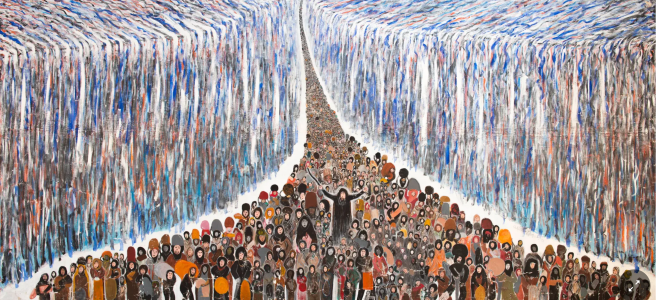
The story told in the book of Exodus of how God liberated the enslaved Hebrew people from the Egyptian empire is exciting, complicated, inspiring, troubling, and extremely important for both Jewish and Christian traditions. Liberation theologians especially like it and pacifists tend to have strongly mixed feelings about it. I know I share both of those orientations.
Was the liberation of the Hebrews due to terrorism?
I was struck recently with how interesting the exodus story is when I reflect on it in the context of considering what is in our day called “terrorism.” Let’s start with a simple (and admittedly imperfect) definition of terrorism: The use of violence to intimidate, frighten, and coerce non-combatants for political ends. I think it is important to recognize that terrorism is a tactic of both formal state-controlled militaries and non-state insurgents, even if in general usage the focus usually is on the latter type of actions.
In what follows I will especially have in mind “terrorism” in relation to non-state actors, especially those who do not have the firepower to directly take on the militaries of states and empires. I have some tentative thoughts that have arisen when I think of the story of the exodus in light of contemporary expressions of terrorism. It does seem as if there may be some parallels between the famous story of the ancient Hebrews and what’s been going in recent history. The Hebrews were an oppressed and essentially powerless group of people in the midst of an exploitive empire. They had little hope of directly bringing major changes. As it turns out, though, they did still try—and their tactics did include a great deal of violence that brought bloodshed and suffering onto the people of Egypt.
From the point of view of the storyteller, it seems clear that the violent actions of the Hebrews and their God were not the beginning of the violence in the story. Rather, the violence was already profound and widespread—the systemic violence of slavery and the more immediate violence of the actions of Pharaoh’s minions to grind the Hebrews into dust. As the Hebrews cried out for justice, the violence of the system bore down on them all the harder. Finally, though, the acts of resistance began to have an effect—which only accelerated the violence from the state.
Continue reading “Was Moses a terrorist? [Peace and the Bible #3]”
 Thinking Pacifism