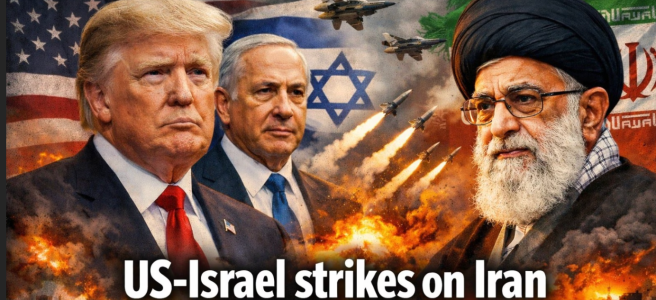
Takeaways from the US/Israel attack on Iran [American Politics #18]

Ted Grimsrud—March 2, 2026

The fog is still way too thick in the very early days of our new war to draw any stable conclusions about it. However, I believe that it is not too soon to see ways already about how the US/Israel attack on Iran underscores many of the problems humane people see with the current American Empire’s way of being in the world. Let me suggest five points.

  • We do well to redouble our work against warism. American warism created a society with an enormous military and with constant prowar propaganda so that we live in a kind of tinderbox waiting for a spark that set the fire off. Now that the nation has allowed an apparently quite war-oriented person to become president we have little potential for derailing the momentum toward an enormous disaster. What is needed, if we somehow survive the current crisis, is a concerted effort to empty the tinderbox. I don’t know how that can happen, but it is needed to prevent another similar crisis.
  • We do well to assume that the US government regularly lies, especially in relation to international affairs. We have lived with decades-long propaganda campaigns of dishonesty that have facilitated antipathy toward China, Iran, and Russia. They make it easy for our government to pursue destructive policies toward those countries with little resistance from the American people. So, we see an ongoing willingness among the American people to believe numerous mistruths regarding each of these countries as events unfold in the present.

Continue reading “Takeaways from the US/Israel attack on Iran [American Politics #18]”
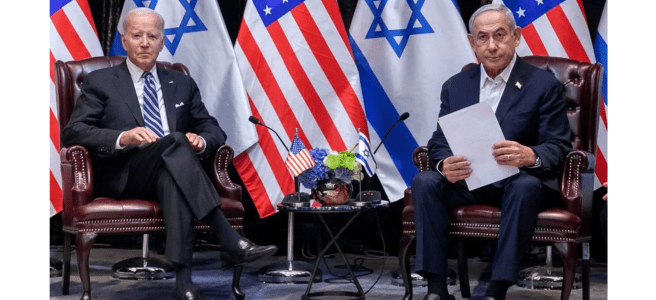
The fatal alliance: The US and Israel

Ted Grimsrud—November 14, 2025

Along with the various pillars of the US national security state that were established during the 1940s (such as the building of the Pentagon, establishing the nuclear weapons program, and creating the CIA and the National Security Council), another key element of the American Empire that dates back to the 1940s is America’s close alliance with Israel. The “special relationship” of the US with Israel has been the 21st century’s definitive expression of the American Empire. No other nation has as regularly backed American foreign policies. Israel’s failure to resolve its persistent conflicts with the people it has shared Palestine with throughout its existence has had huge ramifications for the US and its moral standing in the world. The US actually played only a secondary role in Israel’s foundation and early history. It was after the Six Day War of 1967 that the alliance become close and nearly unconditional.

The emergence of Zionism

The Zionist movement originated in Eastern Europe in the 19th century. These early Zionists imagined ancient Israel’s territory as a Jewish homeland. Early in the 20th century, the Ottoman Empire dominated Palestine. European Zionists began to move to Palestine and hoped eventually to gain political control of the area. The Arab population largely tolerated those initial Zionist settlements. In time as it became clearer that the new settlers did not seek harmonious coexistence and in fact wanted to displace the original inhabitants, tensions inevitably followed.

The European Zionists sought a major power to align with. Eventually, the British became that power. The Zionist cause was helped by the presence in Britain of Christian Zionists in positions of power. The British wanted a foothold in Western Asia near the newly constructed Suez Canal. The Balfour Declaration of 1917 set British policy for the following decades. It affirmed British support for the creation of a “Jewish homeland” in Palestine. The Declaration alluded to respect for the rights of the native Arab population—but only in a general sense with no support for a state for Palestinians. In fact, the Palestinians remained nameless.

Britain gained direct control over territories in the region after World War I in hopes mainly to strengthen control over the newly established oil production sites. The new League of Nations gave the British a Mandate to govern Palestine, directing the British to prepare the territory for self-governance. Palestinian Arabs increasingly recognized the Zionist settlements’ threat to their interests. However, they found it difficult to unify politically. The British overseers encouraged the tensions among the various Palestinian factions.

Continue reading “The fatal alliance: The US and Israel”