How Revelation’s non-predictive prophecy speaks to our pandemic (Peaceable Revelation #7)

Ted Grimsrud—January 29, 2021

I am sure that it is no coincidence that the emergence of mass crises in the 20th and 21st centuries (world wars, pandemics, famines, environmental devastations, et al) has corresponded with increased interest in the book of Revelation and other materials in the Bible that are said to have prophetic importance. Sadly, the assumption that “biblical prophecy” has mainly to do with predicting the future has blinded many Christians to the wisdom that prophecy understood in a non-predictive sense has to offer for our difficult times.

One way to get insights into the wisdom of Revelation is to try to apply it to our present pandemic—but not in the sense that Revelation directly predicted what is happening now nor even in the sense of thinking of our current events as in some sense related to the End Times. Instead, I will reflect a bit on how Revelation’s insights into the world of the first century might be helpful for us in the same ways that the stories of the gospels or the theological analyses of Paul’s letter might be helpful.

Revelation as non-predictive prophecy

I begin with an assumption that we should read Revelation in the same way as we read other books in the New Testament. We understand it to be written by a person of the first century addressing readers in the first century about issues that mattered in the first century. It is indeed prophetic writing—in the same sense that Paul’s writings were prophetic writing. These writings follow the Old Testament prophets in speaking on behalf of God to people of their own time, offering challenges and exhortations that their readers live faithfully in light of the message of Torah and (in Paul’s context) the message of Jesus.

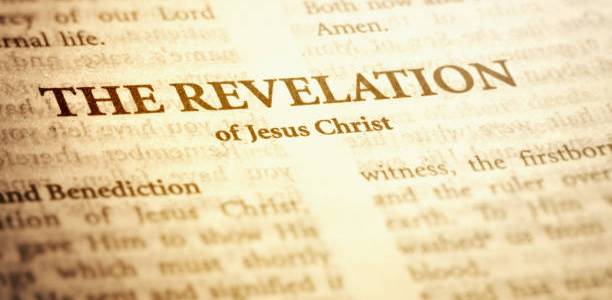
So, I do not read Revelation to be offering predictions about the long-distant future. It is “non-predictive prophecy.” As a “revelation of Jesus Christ,” it is basing its critique and exhortation on the message of Jesus. Too often, interpreters of Revelation have (and still do) miss the ways that the book is oriented around Jesus—missing, that is, the relevance of its first verse that gives a self-identification as the revelation of Jesus Christ.

Continue reading “How Revelation’s non-predictive prophecy speaks to our pandemic (Peaceable Revelation #7)”

Does Christianity prepare people to be misled by those in power? [Pacifism/Peace Theology #3]

Ted Grimsrud—January 23, 2021

Many Americans have been disturbed since the November election at how gullible so many in our nation seem to be about former President Trump’s claims that the election was stolen. A shocking number of people believe that Biden stole the election—including, it appears, quite a large number of professing Christians. That so many Christians believe such an outrageous thing seemingly simply because Trump has told them to has made me think. Is there a connection between Christian theologies and ways of thinking and being misled by people in power.

As I have thought about this question of a special Christian susceptibility to such gullibility, it occurred to me that this is not an issue only in relation to conservative Christians. Take the mostly unquestioned acceptance over the past 75 years of American warism and the nuclear weapons regime. There have occasionally been moments of opposition to these suicidal societal commitments (I’m thinking especially of the anti-Vietnam War movement of the late-1960s and early 1970s and the nuclear Freeze movement of the 1980s —both of which petered out in spite of little success), but the generally positive attitude about the politics of death has spanned the theological spectrum from right to left. And what is this positive attitude other than gullibility in relation to people in power?

The big question

Is there something inherent in Christianity that makes Christians especially susceptible to such manipulation? I’m not ready to claim that Christians are more easily misled than other people, but I do suspect that there might be dynamics within Christianity that do enhance the possibilities of this.

Part of my motivation is my own sense of disappointment. Back in the mid-1970s I became very interested in what we called “radical Christianity.” I became a pacifist and affirmed many other countercultural causes such as environmentalism, feminism, racial justice, and anti-capitalism. I believed that it was because of the Bible and Christian convictions that I took such stands. I believed that Christianity made that kind of difference. I still have most of the same convictions—both politically and theologically—but am much less sanguine about the significance of Christianity for making a big difference in the world. My suspicion now is that being a Christian in this country makes a person more likely to be pro-war, white supremacist, sexist, and pro-capitalism. Behind that likelihood, perhaps, is a willingness among Christians to accept uncritically what powerful people say.

This is the thesis I want to consider: Christianity can be epistemologically crippling because its theological system and the practices that follow have often stemmed from beliefs that are not based on evidence, at times not even based on rationality. I wonder if the willingness to ground Christianity on non-evidential, non-rational, even at times magical thinking and mystification, has also led Christians to accept claims from political leaders that are non-evidential, non-rational, and even magical thinking.

Continue reading “Does Christianity prepare people to be misled by those in power? [Pacifism/Peace Theology #3]”

Satan in the book of Revelation—and today [Peaceable Revelation #6]

Ted Grimsrud—January 20, 2021

As we struggle to comprehend the various large-scale social problems that we face today, we might do well to do some thinking about the book of Revelation. Although the word “evil” is not used in Revelation, the concept of evil is quite present. I find myself thinking that reflection on evil is part of what we need to do as we seek social healing.

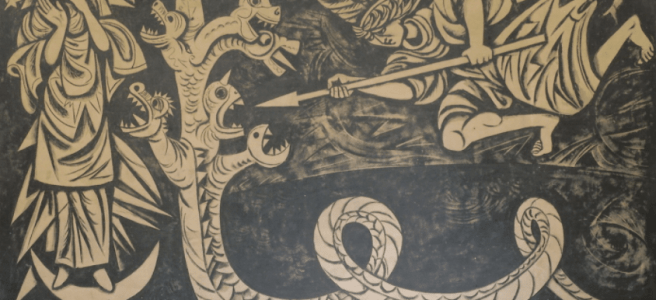
Revelation features the spiritual forces of evil quite prominently. And it presents us with the character of the Dragon as the mastermind behind those forces—this Dragon “who is called the Devil and Satan, the deceiver of the whole world” (Revelation 12:9). Now, the character of Satan is a deeply problematic figure in our culture’s history. Without engaging the bigger issues about why Satan is so problematic, in this post I want to focus on the use of “Dragon,” “Satan,” and “the devil” in Revelation and how those images might actually be helpful for us today, though in somewhat complicated ways.

What do we learn about Satan in Revelation?

Though the Dragon character is not explicitly introduced in Revelation until chapter 12, it does cast a shadow back over the earlier part of the book and remains central for what follows in chapters 13 and following. I think that because the Dragon will be closely linked with the Beast, who in turn has a close connection with the Roman Empire, all the allusions from the beginning of the book to the Empire and to the kings of the earth and to the conflicts that John’s readers have with their wider world point to the importance of the Dragon. Revelation presents the environment its readers lived in (and, by implication, the environment that we live in) as plague filled: wars and rumors of wars, environmental devastation, economic injustices, and on and on. In my interpretation, the Dragon will prove to be the immediate force behind the plagues. So, the entire agenda of Revelation has to do with living faithfully in a Dragon-infused world.

At the same time, it is crucial that we recognize that Revelation does not have the agenda of presenting an open-ended war between near equally powerful protagonists. The Lamb is victorious over the Dragon from the very beginning of the book. The struggle lies in the embodiment of that victory. Satan in Revelation is actually quite similar to Satan in the gospels. There is a sense in both places that the battle is Jesus vs. Satan. The words from the letter to the Ephesians describe the situation: “Our struggle is not against enemies of blood and flesh, but against the rulers, against the authorities, against the cosmic power of this present darkness, against the spiritual forces of evil in the heavenly places” (Eph 6:12). Or, in the words in Revelation: the struggle is about “destroying the destroyers of the earth” (11:18). Let’s equate “Satan” with the “spiritual forces of evil” and the “destroyers of the earth.” The struggle against the “spiritual forces of evil” is what the “war of the Lamb” in Revelation is about.

Continue reading “Satan in the book of Revelation—and today [Peaceable Revelation #6]”

Why I am not (quite) an atheist [theological memoir #9]

Ted Grimsrud—January 17, 2021

I flirted with atheism for a while when I was a teenager. I realize now that that happened because I was very interested in God, not because I was rejecting God. Unlike most of my current friends, I did not grow up in the church or with a detailed embedded theology. I wasn’t exposed to theology or philosophy, but I liked to think. I didn’t think the God I had superficially heard about made a lot of sense, so I tried on the idea of rejecting God’s existence.

It wasn’t any kind of argument that got me to accept the existence of God, nor was it some sort of crisis or sense of need. Initially, it was simply an experience of presence at a friend’s funeral. But I also wanted to understand, to make sense of things. It happened that I turned to a trusted friend, a kind of mentor who was several years older. He guided me toward a personal conversion, educating me in what I in time came to recognize as a Christian fundamentalist orientation toward God and salvation.

My conversion when I was 17 was genuine, I believe. But I was driven more by a desire for intellectual coherence than a profound personal encounter with the personal God of American evangelicalism. I tried to believe in that God. The first couple of years I absorbed the doctrines of my faith community. These especially centered around belief that Jesus was returning at any moment and that the most important expression of Christian faith was the necessary conversion where a sinner turns to Christ as one’s personal savior.

When I was about 21, I began to get quite interested in theology and rather drastically to revise my belief system. The first steps were to reject both the future-prophetic theology of the End Times and the personal conversion centered understanding of faith. I experienced those moves as steps toward God even as they were decisive steps away from the God I had been presented with after my conversion. But the movement has never stopped, and it has left me with a notion of God that is incompatible with what I was first taught when I affirmed Christian faith.

Continue reading “Why I am not (quite) an atheist [theological memoir #9]”

Living in a broken world: Power, love and the plagues in Revelation [Peaceable Revelation #5]

Ted Grimsrud—January 15, 2021

I believe that the book of Revelation offers people in the contemporary world some helpful guidance—though not in the ways popular Christianity would have us think. Revelation is not a source of insights for fortune telling helping us to know the future before it happens. Rather, Revelation is, I believe, a meditation on the centrality of love as we seek to navigate a world in crisis. So, the argument I offer here goes against both those who think predictive prophecy is how Revelation is relevant and those who think the Bible as a whole—and certainly the Bible’s last book—is simply an ancient work with little to say that is relevant in any way today.

Two big problems

Let’s start with two general problems. The first is the problem of living humanely in our contemporary world. Such humane living seems to require that we seek to overcome, say, the brokenness of ever-present warism with its weapons of mass destruction, the all too present trauma of our nation’s legacy of white supremacy, the overwhelming impact of predatory capitalism and always worsening economic inequality, our emerging climate catastrophe and other ecological crises, and the curse of mass incarceration and its companion police brutality. How do we move ahead in such a world?

The second problem is more esoteric, but I believe significant, nonetheless. This is the problem of the visions in Revelation that portray a world undergoing several series of escalating catastrophes (or plagues). These visions seem to tell us that God initiates these plagues, and the standard interpretations across the theological spectrum generally understand these God-initiated plagues as acts of God’s punitive judgment. This very problematic view of God leads some to dismiss God and the Bible altogether and others to affirm a morally corrupt view of God. To believe that God brings punitive judgment often leads Christians themselves to become agents of the forces of destruction that exacerbate the crises mentioned above.

Is it possible that if we biblically interested Christians could resolve the problem of the plague visions that we would be better able to respond to the brokenness problem? I believe we are challenged to hold together our affirmations that (1) God is love, (2) Revelation is truthful, and (3) brokenness in our world is real. However, if the “truth” of Revelation is that God is the author of the plagues then we will have trouble being agents of healing.

Continue reading “Living in a broken world: Power, love and the plagues in Revelation [Peaceable Revelation #5]”

Hope and the embrace of our imperfect present [Theological memoir #8]

Ted Grimsrud—January 9, 2021

At some point when I was a child, perhaps seven or eight years old, I learned about the difference between a person called an “optimist” and one called a “pessimist.” Whoever explained this to me—it was probably one of my older sisters—used my mother as an example of an optimist. I didn’t really understand what I was being told very well, but from that time on I looked at my mom a bit differently. I hoped I could be like her.

“Optimistic” theology

It may be that my entire theological project—emphasizing peace, arguing for restorative as opposed to retributive justice, understanding salvation in terms of God’s mercy—has followed from the sense that I wanted to be an optimist too. I don’t really have a theory for why some people are optimists and others are not. I probably was inclined to be optimistic about life even before I learned what the word meant, saw it exemplified by my mother, and decided I wanted to affirm that approach. Still, I’d like to believe it is at least partly something we can choose, and that it is more compatible with the gospel to choose to be optimistic about life than not to.

At some point, about the time I finished college, I began to believe strongly in the importance of seeking social change—to oppose war and injustice and to try to move things in a peaceable direction. This belief especially took the shape for me of working in Christian communities and of researching and writing what I came to call “peace theology.” I tend to think that such work probably needs to rest on an optimism about life—we can change things, we can live peaceably, at least somewhat.

Continue reading “Hope and the embrace of our imperfect present [Theological memoir #8]”

Our need for the book of Revelation’s peace message (Peaceable Revelation #4)

Ted Grimsrud—January 5, 2021

I’ve been interested in the book of Revelation for a long time. Of course, others have also found Revelation interesting over the years. But not that many have perceived Revelation to be a positive resource for peaceable living in our warring world. So, I hope to make the case for the value of a peaceable approach—and that this is actually the most accurate way to read Revelation.

What we need in 2021

As a way to begin, let me reflect for a bit on our current historical moment. Is it possible that we are in a time and place where a new reading of Revelation could actually be especially helpful and empowering? I suspect so.

One of our big problems in the US right now (as always) is the destructive influence of embedded biases, fears, and idolatries that we grow up absorbing—our institutions, ideologies, structures, and the like shape us toward violence, hostility, and stereotyping and othering people. Racism, sexism, heterosexism, nationalism, consumerism, classism. The list goes on.

Continue reading “Our need for the book of Revelation’s peace message (Peaceable Revelation #4)”

A social gospel for the 21st century: Drew Hart’s creative synthesis

Ted Grimsrud—September 3, 2020

In his new book, Who Will Be a Witness? Igniting Activism for God’s Justice, Love, and Deliverance (Herald Press), Messiah College theology professor Drew Hart has given us a much-needed theological resource for embodying the way of Jesus in our troubled times.

A theology for Christian social engagement

The most attractive aspect of this engagingly written book is how Hart synthesizes three streams of Christian theology: (1) a Jesus-centered biblical radicalism that has a visionary suspicion of the mainstream Christian tradition, (2) a socially-engaged sensibility shaped by the black experience in America (a legacy Hart calls “the black prophetic tradition”), and (3) an Anabaptistic orientation that emphasizes the call to transformative nonviolence.

While Hart writes explicitly as a black theologian, what he provides is not a narrowly focused “contextual theology.” His first book, the well-received Trouble I’ve Seen: Changing the Way the Church Views Racism, focuses on the African American context. This new book, Who Will Be a Witness?, may in turn more accurately be understood as a much broader Christian theology of social engagement that Hart constructs through the lens of the black Christian tradition.

Thus, Hart’s book may be seen as a contemporary expression of what theological historian Gary Dorrien presents as “the black social gospel” in his recent magisterial two-volume history of that tradition in the United States. Dorrien argues that the black social gospel has been a perspective that speaks to all Christians with a profound awareness of the concrete relevance of the Christian gospel for life in this world. Like the great practitioners of the black social gospel such as Howard Thurman and Martin Luther King, Jr., Hart gives us a powerful challenge for all Christians to understand that at the very core of our faith lies a call to be an active presence in the world witnessing to God’s work of justice and healing. Continue reading “A social gospel for the 21st century: Drew Hart’s creative synthesis”

The pacifist ache: What’s missing in our politics? [Pacifism/Peace Theology #2]

Ted Grimsrud—July 6, 2020

At this stage in my life, especially during our new era of social distancing, I am more an observer than active participant in American politics. Even from a bit of a remove, though, I have experienced this year, 2020, as an emotional roller coaster. It has made me think of the old ABC Sports show, “Wide World of Sports,” and its iconic opening with brief glimpses of “the thrill of victory and the agony of defeat.”

The ups and the downs

I was thrilled when Bernie Sanders won the Nevada primary, looked to be the leader in the race for the Democratic nomination, and appeared to be showing that a candidate advocating for policies such as Medicare for All and a Green New Deal actually could realistically hope to be elected to the presidency. Then, all too quickly, came the triple whammy of Joe Biden snatching victory from the jaws of defeat versus Sanders, the emergence and shocking spread of the COVID-19 pandemic, and Donald Trump continuing his descent into unfathomable presidential malfeasance and incompetence. Trump’s failures were made all the more devastating in face of our need for a constructive governmental response to the pandemic.

More recently, though, I have again been thrilled with the emergence of what seems like one of the most radical popular uprising in our nation’s history—a direct challenge to the ever-strengthening hold of militarized policing and an empowering of the victims of our nation’s centuries-old plague of white supremacy.

So, it has been and continues to be an emotional yo-yo. It’s quite a time for political junkies—and for everyone else who is interested in what is going to become of our society. In all this, there is always a tension for me, what I will call a “pacifist ache.” I felt even in the height of my hopefulness about Bernie’s chances, and I feel it even when I am most hopeful about our current uprising. It has to do with lack of interest in pacifism (by which I mean the conviction that all of life is precious which leads to a rejection of war and other forms of lethal violence). Of course, this is not surprising. Pacifism has almost always been ignored or dismissed in American politics. Still, it’s too bad. I have spent a lot of time over the past 45 years imagining how a pacifist sensibility could help things out a lot in our society. Continue reading “The pacifist ache: What’s missing in our politics? [Pacifism/Peace Theology #2]”

Thinking of the United States as foundationally racist [American politics #5; Civil War #7]

Ted Grimsrud—June 29, 2020

People in this country have greatly differing deep-seated views of the very meaning of the story of the US. I suspect these differences make achieving healing amidst our current crises extremely difficult. This is true especially as related to what the great thinker W.E.B. DuBois in 1900 looked ahead foresightedly to call the problem of the 20th century—the problem of the color line (from The Souls of Black Folk). This problem clearly remains one of the main problems of the 21st century, and it affects all our other crises.

Two versions of the story of the United States

Let me suggest that, even with all our diversity, we think of two main general perspectives on the United States story that are held by those who oppose racism and see the legacy of slavery in this country as a bad thing. The first perspective sees the United States as foundationally and systemically racist from the beginning down to our present day in spite of scattered attempts to move toward freedom for all. The second perspective sees the United States ultimately as a nation of freedom and justice, in spite of scattered missteps along the way. (I recognize that there are some in the nation who are not all that negative about either racism or slavery; my concern here is with people who would say racism and slavery are bad.)

The term “racism” is complicated—and later in this essay I will probably make it even more complicated. For now, I want to use “racism” in the sense defined by Ibram X. Kendi in his book, Stamped From the Beginning: The Definitive History of Racist Ideas in America: “My definition of a racist idea is a simple one: it is any concept that regards one racial group as inferior or superior to another racial group in any way. I define anti-Black racist ideas as any idea suggesting that Black people, or any group of Black people, are inferior in any way to another racial group” (p. 5).

My thoughts about these two perspectives were helped by a recent essay by Masha Gessen, “Why are some journalists afraid of ‘moral clarity’?” (on the New Yorker website, June 24, 2020). Gessen interacts with commentator Andrew Sullivan. She summarizes Sullivan’s description of the first view (which he opposes) that sees the US as “systemically racist, and a white-supremacist project from the start.” In this view, “the ideals about individual liberty, religious freedom, limited government, and the equality of human beings” were always secondary to the white supremacy project. “The liberal system is itself a form of white supremacy—which is why racial inequality endures.”

The second view (with which Sullivan agrees) tells the story of the United States as “primarily one of a nation of immigrants, the story of a society that, over time, enfranchised an ever-greater number of its members, and where the arc of history has bent toward justice.” This view then assumes a legacy of progress even against racism, witness the Civil War and the Civil Rights Movement. Continue reading “Thinking of the United States as foundationally racist [American politics #5; Civil War #7]”