The politics of Paul and the way of Jesus as seen in Romans 13 [Peace and the Bible #17]

Ted Grimsrud—March 25, 2024

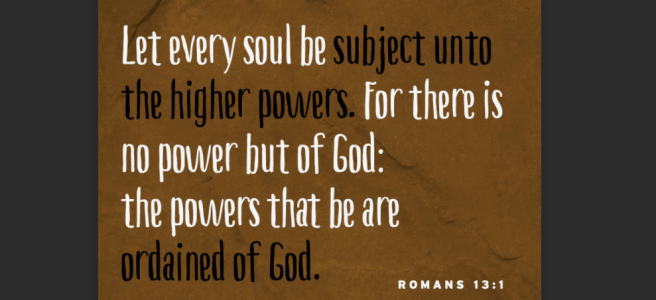
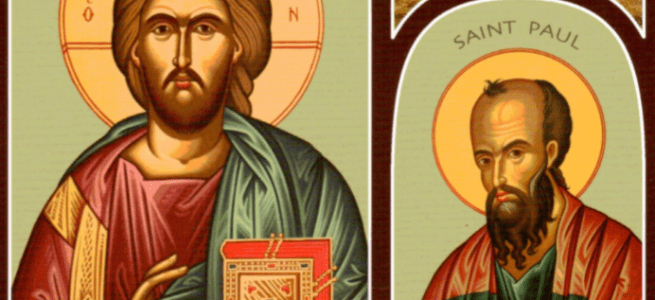
The Apostle Paul was a follower of Jesus. And his social views actually complement Jesus’s rather than contradict them, contrary to what many Christians have believed. In this post I offer a detailed look at the infamous passage in Paul’s letter to the Romans that, one could say, has launched many ships and other weapons of war. Romans 13:1-7 often serves as a counter-testimony in Christianity to the idea that Paul may have taught a principled nonviolence in agreement with Jesus. As well, Romans 13 is often seen to go against the idea that Paul understood Jesus’s peaceable way as normative for Christian social ethics.In reading a number of writings where Christian thinkers argue against pacifism, I discovered that in every single case—across a wide spectrum of theological positions—those who reject pacifism cite Romans 13:1-7 as a major reason. I will show why this text should not be read as counter to pacifism.

Setting the context for Romans 13:1-7

Our interpretation of Romans 13:1-7 should begin with reading these verses in light of their broader biblical context. Our passage is not the only place in the Bible where the political Powers are addressed. From Egypt in Genesis and Exodus, then Assyria, Babylon, Persia, and down to Rome in the book of Revelation, the Bible shows empires rebelling against God and hindering the healing vocation of God’s people. The entire Bible could appropriately be read as a manual on how people who follow Torah in seeking to love God and neighbor negotiate the dynamics of hostility, domination, idolatry, and violence that almost without exception characterize the world’s empires.

Romans 13:1-7 stands within this broader biblical context of antipathy toward the empires. If we take this context seriously, we will turn to these Romans verses and assume that their concern is something like this: given the fallenness of Rome, how might we live within this empire as people committed uncompromisingly to love of neighbor? Paul has no illusions about Rome being in a positive sense a direct servant of God. Paul, of course, was well aware that the Roman Empire had unjustly executed Jesus himself (and, according to tradition, in time executed Paul as well). As evil as these Powers might be, though, we know from biblical stories that God nonetheless can and does use the corrupt nations for God’s purposes—nations that at the same time remain under God’s judgment.

In his letter to the Romans, Paul surely had this biblical sensibility in mind as he addresses Jesus’s followers in the capital city of the world’s great superpower—the entity that had executed Jesus. Paul begins with a focus on the perennial problem related to empires—idolatry (see my previous post, “Paul’s critique of idolatry”). He discusses two major strains of idolatry in chapters 1–3: (1) the Empire and its injustices that demand the highest loyalty and (religious) devotion and (2) a legalistic approach to Torah that leads to its own kind of violence (witness Paul’s own death-dealing zealotry).

Continue reading “The politics of Paul and the way of Jesus as seen in Romans 13 [Peace and the Bible #17]”

Paul’s critique of idolatry [Peace and the Bible #16]

Ted Grimsrud—March 22, 2024

The Apostle Paul has often been interpreted as a major influence in moving Christianity away from the peaceable message of Jesus. I want to counter that interpretation, though, by noticing key peace themes that are present in Paul’s thought and by challenging one key text interpreted to support the idea that Paul accepted violence. So, I will focus on Paul’s critique of idolatry in order to show how central to Paul’s theology the way of peace is. Then, in my next post I will offer an interpretation of the infamous Romans 13 passage that shows that those verses actually offer a peaceable message.

The idolatrous roots of violence and injustice

The biblical story portrays violence and injustice having roots in idolatry. If we use violence as our criterion, we could say that whenever human beings justify violence against other human beings, they give ultimate loyalty to some entity (or “idol”) other than the God of Jesus—loyalty that demands violence, always contrary to God’s will as expressed by Jesus. Paul joins other biblical prophets in rejecting any kind of loyalty that would justify violence.

I will consider Paul’s critique of idolatry and focus on the first three chapters of his letter to the Romans. He takes on two types of idolatry. He criticizes the idol of the Roman Empire (which is manifested as what I will call the idol of “lust”). Second, he critiques those (like Paul himself before he met Jesus) who believed that loyalty to Torah requires judgmental violence in defense of the covenant community (what I will call the idol of “judging”).

Continue reading “Paul’s critique of idolatry [Peace and the Bible #16]”

A political reading of the New Testament (part 2): The apostolic witness

Ted Grimsrud—November 8, 2023

[Back in 2015, I posted a series of short essays in Thinking.Pacifism.net on an anarchistic reading of the Bible. The series included several pieces on the Old Testament and one on Jesus. At the time, I planned to conclude the series with a post on Paul and Revelation. For various reasons, I have only just now completed that post. Here is a link to the post on Jesus, “part one” of the two parts on the New Testament.]

One way to read the New Testament is essentially to go from the beginning to the end, reading the gospels as the main event and seeing the epistles as commentary on the story of Jesus and application of that story to the lives of the early Christians. In relation to our task of reading the Bible for its political content in light of an anarchistic sensibility, we will find that the apostolic witness reiterates the basic political content of the gospels—adding perspective on our reflections on politics as if Jesus matters. This short chapter will only scratch the surface of an anarchistic reading of the apostolic witness of the New Testament. I will touch very briefly on the book of the Acts of the Apostles, discuss a few texts from the Apostle Paul’s writings, and conclude with some reflections on the book of Revelation.

The story of early Christianity

The Acts of the Apostles, attributed to Luke, the same author of the gospel of that name and presented as a kind of sequel to the story of Jesus, has as its main agenda an account of the spreading of the message of Jesus from Jerusalem to “the ends of the earth” (Acts 1:8; in this case, from Jerusalem to Rome). The story reinforces the political message of Jesus—not an overt attempt to replace the Roman Empire with a different territorial kingdom but a political sensibility that de-centers the state and the nations and understands humane politics to involve grassroots, self-organized communities free from state domination that embody generosity, mercy, and restorative justice (these are elements of what I call an “an anarchistic sensibility” regarding politics)—and willingly accept the likelihood of suffering at the hand to authoritarian political and religious institutions.

The general tenor of social life in Acts shows a strong commitment on the part of the early Christians to defy human authority when it stands against the gospel (“we must obey God, not human authorities,” Acts 5:39-42). In Acts, as in the gospels, the “human authorities” who most commonly presented problems were leaders in the institutional religious arena (the Temple authorities and the Pharisees)—but in the Judaism in the period of Acts (the first 70 years of the Common Era) in Palestine operated as the political authorities as well as religious authorities.

The Roman Empire is a somewhat ambiguous presence in Acts. The hero of the book, the Apostle Paul, does at one point declare that he is a Roman citizen when that helps protect him from local authorities. Near the end of the book, Paul makes it to Rome and has not entirely negative encounters with Roman leaders. It appears that the writer of Acts wants to focus on the conflict with the religious leaders and minimize problems with Rome, perhaps to keep the book from being repressed by Roman authorities. However, we have good reasons to believe that Paul himself (along with the Apostle Peter) was executed by the Empire, following the path of Jesus. When read in light of the Jesus story (as well as other New Testament writings and the Old Testament), Acts mainly communicates a general suspicion of human authorities that would implicitly include the Roman Empire. The focus of the book, in any case, is on the constructive model of the early Christian communities as a counter-witness to the ways of authoritarian human structures—empires and oppressive religious institutions.

Continue reading “A political reading of the New Testament (part 2): The apostolic witness”

Abraham’s gospel: A peaceable reading of Romans (part 5; 4:1-25) [Peaceable Romans #12]

Ted Grimsrud—April 4, 2022

One of the most beautiful road trips my wife Kathleen and I have ever taken had us driving through the mountains of western North Carolina. We were on the Blue Ridge Parkway. We spent the night in the village of Little Switzerland and greatly anticipated the next morning when we would drive by Mt. Mitchell, the highest spot east of the Rockies, and then see points west.

But when we got up, it was totally foggy. As thick a fog as we’ve ever seen. The forest certainly has its own eerie beauty when you can barely see the white lines on the highway. Still, we were uneasy when we drove twenty miles or so and never saw another car. But then came the moment. We turned a corner and without any warning the fog was gone. We had the most incredible vista, in the bright sunlight, snowy mountains, valleys, forests. It was amazing. Then, we were back in the fog for several more miles. It was just those few moments, but the picture is still vivid in my memory.

The whole Bible as a peace book

This experience comes to mind as I think about Romans four. A lot of Christians, maybe especially those attracted to peace theology, are suspicious of the Old Testament. And suspicious of the Apostle Paul. And, deeply suspicious of the book of Revelation. There is the great bright light of Jesus, his picture of a God of love and mercy—and much of the rest of the Bible is kind of foggy, wars and rumors of war, legalistic religion, abstract doctrine, with the finale of Revelation’s unspeakable bloody judgment.

This is the analogy: The Bible can seem like that foggy drive on the Blue Ridge Parkway. There is but one spot of incredible beauty. Such a spot may redeem the whole thing—but the rest isn’t of much value. However, I want to say: No! The Bible is actually more like our return trip driving back home. Then the Parkway was clear and sunny all the way and we had one beautiful scene after another. Likewise, the whole Bible has great beauty.

Romans four is a text that helps us to see the Bible in this way. I don’t want to deny that the Bible has a few spots that are irreparably foggy scattered around. Basically, though, I believe that the overall message is about mercy all the way down from the very start. The Bible tells an empowering story throughout. We may embrace its message of peace, restorative justice, compassion, and healing. The key figure in Romans four is Abraham, the great patriarch, considered to be the spiritual ancestor for Jews, Christians, and Muslims.

Continue reading “Abraham’s gospel: A peaceable reading of Romans (part 5; 4:1-25) [Peaceable Romans #12]”

Mercy all the way down: A peaceable reading of Romans (part 4; 3:1-31) [Peaceable Romans #11]

Ted Grimsrud—March 21, 2022

There is a famous story that almost for sure didn’t actually happen. But it’s kind of funny and it provides a metaphor I want to adapt for this post. This big time philosopher (or maybe it’s a scientist) lectures about the infinite cosmos and is challenged by an elderly woman in the audience. “What you are telling us about the universe is rubbish. The earth rests on the back of a huge turtle.” “Oh yes,” the philosopher says, “and pray tell, what holds up the turtle?” “Why, another turtle, of course.” “And what holds up that turtle?” “Ah, I get where you’re going. But sir, it is turtles, all the way down!” Turtles all the way down, we don’t need anything more.

The moral universe and Jesus’s “sacrificial” death

I don’t want to make any claims about the infinity or not of the physical universe here. My concern is the Apostle Paul’s account of the gospel. However, I do want to use this metaphor of “turtles all the way down” to think of the moral universe. In many readings of Paul—and, hence, many understandings of the gospel—we have something like this: God can forgive only because God’s justice has been satisfied by Jesus’s sacrificial death. Or maybe it’s God’s holiness or God’s honor.

The point for that perspective is that God can’t simply forgive. The moral nature of the universe requires some kind of satisfaction, some kind of payment, to balance out the enormity of human sin. Reciprocity. Retribution. Tit for tat. It can’t be mercy all the way down. The moral universe rests on something else—retributive justice or justice as fairness. Mercy is possible only in ways that account for this kind of justice. Thus, salvation is not truly based on mercy. Rather, salvation is based on an adequate payment of the universe’s moral price tag placed on human sin.

Romans 3 has often been cited to support what has been called the “satisfaction view of the atonement.” This view sees the meaning of Jesus’s death as the sacrifice of a sinless victim that satisfies God’s need for a payment for human sin. This payment allows God to offer us forgiveness if we accept Jesus as our savior. I’m going to offer a different reading. I don’t like the traditional view. There are many problems with it. Maybe most basically, it denies that God is love, it seems to me. It denies that mercy is life’s fundamental truth. It may foster fearfulness and legalism. It may make us vulnerable to giving loyalty to human structures of power and coercion—i.e., empires and other nation-states, not to mention religious institutions.

Continue reading “Mercy all the way down: A peaceable reading of Romans (part 4; 3:1-31) [Peaceable Romans #11]”

How faith communities go bad: A peaceable reading of Romans (part 3; 2:1-29) [Peaceable Romans #10]

Ted Grimsrud—March 10, 2022

Paul begins the book of Romans with a sharp critique of the Roman Empire and its idolatrous spiral into injustice and violence, as we saw in my previous post. I believe that his critique remains perceptive. However, Paul’s main focus in Romans has more to do with how faith communities go bad than with how empires go bad. He uses his Empire critique (valid and relevant as it is) to set up his faith community critique. His readers would be nodding their heads as they approve of Paul’s initial critique. But then he turns on them: “When you are judgmental toward others, you condemn yourself, because you the judge, tend to do the same things” (2:1).

In critiquing the self-righteous judge who is also unjust and violent, Paul has himself as a death-dealing persecutor of Christians in mind. In a genuine sense, his presentation of the gospel in Romans is about what he personally learned in turning from being violent in God’s name to being committed to peace—all the way down. One thing Paul learned was that faith communities are extremely vulnerable to becoming the sites of injustice and violence—ironically, often as a direct result of their quest to be rigorously faithful.

To help us understand how faith communities go wrong, Paul focuses on one particular ritual that he had seen as central to his pre-Jesus agenda of rigorously holding to the true faith. It is well known that the Bible at times can be pretty “earthy.” One notable case is one of the central rituals in the entire story—one with enormous symbolic power in both the Old and New Testaments—the ritual of circumcision. It seems to me that this ritual, both in the Bible and in contemporary life, is problematic on several levels. But the Bible obviously sees circumcision as extraordinarily meaningful, for better and for worse. And it remains present throughout the story, often on the deeper metaphorical level. Paul uses circumcision as a key example in his critique and then in his presentation in chapter 3 of the core message of the gospel of God.

Circumcision in the midst of Empire

Paul thought about circumcision a great deal. He makes it a key image in his wrestling with the life of faith. It’s in the middle of the discernment work as his community of Jesus followers sought to relate their Jewish tradition to the influx of new believers who weren’t Jews. Paul could be pretty earthy himself on occasion, such as when he wrote about conflicts concerning circumcision and its weighty symbolic legacy. In his letter to the Galatians, he gets salty when he writes about people he believed were disastrous teachers. They legalistically tried to impose circumcision on new, non-Jewish converts to Christianity. This is what Paul wrote: “Whoever it is that is confusing you will pay the penalty…. If I were still preaching legalistic circumcision, I would not be persecuted by other Jews like I am…. I wish those who unsettle you, instead of just circumcising, would castrate themselves” (Gal 5:11-12).

Continue reading “How faith communities go bad: A peaceable reading of Romans (part 3; 2:1-29) [Peaceable Romans #10]”

How empires go bad: A peaceable reading of Romans (part 2; 1:16-32) [Peaceable Romans #9]

Ted Grimsrud—March 7, 2022

More than a treatise on doctrine or a discussion preoccupied with the Christian religion and the Jewish religion, the book of Romans is a presentation focused on faithful living. And for Paul, faithful living meant embodying the way of Jesus. As I discussed in the first of this long series of posts working through the teaching of Romans, Paul begins Romans by setting up a contrast between the gospel of God as presented by Jesus and what we could call the “gospel” of the Roman Empire.

In the second half of chapter 1 of the book of Romans, Paul provides an analysis of the domination dynamics of the great nations of the world, which are the dynamics of idolatry that refuses to express gratitude to the Creator but instead puts trust in human creations (including empires and emperors). In trusting in creatures rather than the Creator, human societies inevitably ground their priorities in exploitation rather than gratitude and evolve toward injustice and violence. Without stating it explicitly, Paul seems clearly to evoke the awareness his readers in Rome would have of the particular injustices and violence of their city’s leadership class.

The gospel of God vs. the gospel of Caesar

As we continue to the following chapters of Romans, we will see that Paul’s focus in the book as a whole is not on a critique of Empire but on developing his alternative gospel. If the Empire’s gospel is a one of death, what does a gospel of life look like? If the Empire’s way of life leads to injustice, what is an alternative way of life that leads to justice?

Continue reading “How empires go bad: A peaceable reading of Romans (part 2; 1:16-32) [Peaceable Romans #9]”

Paul’s antidote to Empire: A peaceable reading of Romans (part 1; 1:1-17) [Peaceable Romans #8]

Ted Grimsrud—February 28, 2022

I have long believed that the Apostle Paul, and especially his letter to Jesus followers in Rome, is a friend to peacemakers, not a thorn in our flesh. And I have often argued with various friends over the years who don’t agree. The issue, in essence, has been whether Paul is a friend or enemy for peace-oriented Christians. I’d say “friend!”; they’d say “enemy!” And off we’d go.

Part of the problem for me has been that many of Paul’s biggest supporters have not been people I necessarily would want to be allied with—those who oppose welcoming gays into the church, those who support patriotic wars, those who teach a gospel of human depravity and the need for an individualistic kind of personal conversion (what I was taught years ago as the “Romans road to salvation”). Paul’s most famous piece of writing, his letter to the Romans, contains what are surely two of the most hurtful, destructive passages in all of the Bible. I’m thinking of the part of chapter one that seems to condemn gays and lesbians. These verses are almost always cited when Bible-believers speak against Christians taking a welcoming stance. And I’m thinking of the verses in chapter 13 that begin, “let every person be subject to the governing authorities.” I know from my research that Romans 13 is by far the most important part of the Bible for those who argue against pacifism and in favor of “necessary” war.

Paul’s antidote to Empire

Yet, still, I want to say, to paraphrase Paul’s own words: “I am not ashamed of the Apostle Paul and his letter to the Romans.” I want to explain why in a series of blog posts that will work through the letter. I will show that the typical uses of Romans to support hostility toward gays and to support going to war are misuses. More than refuting misuses of Romans, though, I want to show how Romans can be a powerful resource for peace in our broken world. I want to show how Paul gives us an “antidote to Empire.” Paul presents a story that is meant to subvert, counter, even overturn the story the Roman Empire told about what matters most in life. Sadly, we need this subversion, countering, and overturning of the story of Empire as much today as ever.

Continue reading “Paul’s antidote to Empire: A peaceable reading of Romans (part 1; 1:1-17) [Peaceable Romans #8]”

The politics of Paul and the way of Jesus, part 2 (Romans 13) [Peaceable Romans #7]  

Ted Grimsrud—February 22, 2022

The Apostle Paul was a follower of Jesus. And his social views actually complement Jesus’s rather than stand in tension with them, contrary to how many Christians have believed. Part 1 of this two-part series of posts sketches a summary of key elements of Paul’s views, leaving for this second part a more detailed look at the infamous passage in Paul’s letter to the Romans that, one could say, has launched many ships and other weapons of war. Romans 13, specifically 13:1-7, often serves as a counter-testimony in the Christian tradition to the idea that Paul may have taught nonviolent resistance to the Roman Empire. As well, Romans 13 is often seen to go against the idea that Paul understood Jesus’s peaceable way as normative for Christian social ethics.

Setting the context for Romans 13:1-7

However, I will show that those verses actually are fully compatible with the peaceable way of Jesus. Our interpretation of Romans 13:1-7 should begin with reading these verses in light of their broader biblical context. From Egypt in Genesis and Exodus, then Assyria, Babylon, Persia, and down to Rome in the book of Revelation, the Bible shows empires rebelling against God and hindering the healing vocation of God’s people. The entire Bible could appropriately be read as a manual on how people who follow Torah in seeking to love God and neighbor negotiate the dynamics of hostility, domination, idolatry, and violence that almost without exception characterize the world’s empires.

Romans 13:1-7 stands in this general biblical context of antipathy toward the empires. If we take this context seriously, we will turn to these Romans verses assuming that their concern is something like this: given the fallenness of Rome, how might we live within this empire as people committed uncompromisingly to love of neighbor? Paul has no illusions about Rome being in a positive sense a direct servant of God. Paul, of course, was well aware that the Roman Empire had unjustly executed Jesus himself. As evil as the they might be, though, we know from biblical stories that God nonetheless can and does use the corrupt nations for God’s purposes—nations that also remain under God’s judgment.

In his letter to the Romans, Paul surely had this biblical sensibility in mind as he addresses Jesus followers in the capital city of the world’s great superpower—the entity that had executed Jesus. Paul begins with a focus on the perennial problem related to empires—idolatry. He discusses two major strains of idolatry in chapters 1–3: (1) the Empire and its injustices that demand the highest loyalty and (religious) devotion and (2) a legalistic approach to Torah that leads to its own kind of violence (witness Paul’s own death-dealing zealotry). Continue reading “The politics of Paul and the way of Jesus, part 2 (Romans 13) [Peaceable Romans #7]  “

The politics of Paul and the way of Jesus, part 1 [Peaceable Romans #6]

Ted Grimsrud—February 18, 2022

Christians have tended to hold Jesus and Paul in tension. On the one side, Christians of a more liberal persuasion have tended to take their cues from Jesus and see Paul as a supporter of the status quo. Others wouldn’t so much say there is a tension as assume (often without realizing it) that Jesus is not particularly relevant for their social ethics. His message is often seen to focus on personal ethics and the ideals of our future in heaven. For such conservatives, Paul teaches us more relevant political principles, especially about obeying the governing authorities and respecting the state’s police function.

Reasons not to dismiss Paul’s politics

Now, I definitely am on the Jesus-as-central side. Some years ago, I read a wide variety of Christian thinkers who reject pacifism. I was struck with how every single one of them—from evangelicals to Catholics to theological liberals—cited Romans 13 as a key biblical text that supported their anti-pacifist stance. In face of that consensus, I can understand why a more peace-oriented Christian might want to be done with Paul.

However, I don’t think it’s a good idea to take the easy way out with Paul. First of all, I believe that the pro-war reading of Romans 13 is a bad interpretation. If we read those verses carefully, I believe we will realize that they do not support the standard account—even if that standard account is long-lived and widely affirmed. Just on the grounds of accuracy, then, Paul should not be seen as the advocate par excellence of Christian submission to the state.

Second, the message of the Bible’s story as a whole contradicts the assumption that Christians should issue the state a moral blank check and simply “submit to the state.” Christians generally have practiced that kind of submission going back to Augustine. But such an embrace was highly ironic (and tragic) given the strong biblical emphasis in opposition to empires going back to the story of the exodus. Especially striking is how Augustine give the Roman Empire the moral authority to discern when to involve Christians in war. This flies in the face of the New Testament: That same Roman Empire executed Jesus and that same Roman Empire was linked with Satan in the book of Revelation. So, it is strange that a short, cryptic passage from Paul’s writing would take precedence over the negative overall biblical message about the state.

Third, when we simply grant validity to the Paul-as-pro-submission-to-the-state position without argument we lose the main avenue for possibly persuading Christians not to grant such a blank check. This avenue is to ground one’s counterargument in the Bible. If we don’t question that interpretation of Romans 13, then the by far most important biblical basis for Christian acceptance of warism will remain in place—and it becomes difficult to imagine an effective way to persuade Christians not to support for the warring state.

So, I think there are good reasons to examine Paul’s writings more closely, with an openness that he might actually turn out to be much closer to Jesus in thought than has normally been recognized. I believe that, together, Jesus and Paul do provide a political perspective that is relevant in our world. Not only relevant, but I would argue that together Jesus and Paul give us essential guidance for creative and transformative political engagement. Continue reading “The politics of Paul and the way of Jesus, part 1 [Peaceable Romans #6]”