Ancient Israel as a failed state: The Bible’s radical politics (part two)

Ted Grimsrud—June 11, 2025

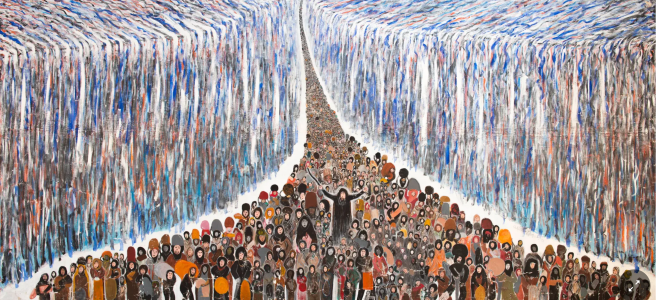
After considering ancient Israel among the great powers, I now want to focus on ancient Israel as what I will call a “territorial kingdom” (i.e., a political community that has boundaries and exercises sovereignty within those boundaries). The Bible’s politics start in enslavement in Egypt. The community coalesced as a people liberated by God, instructed in counter-empire living by Torah, and provided a territory wherein to live out Torah.

The story takes it for granted that the Hebrew people needed a Land where they could establish a permanent home and embody Torah. Between the time of liberation (the exodus) and of entrance to the Land, the people spent decades moving about in the “wilderness.” They struggled to maintain fidelity to Yahweh. In the end, only a handful of the original community that escaped Egypt were allowed to enter the Land with the children and grandchildren of the original community members.

The descendants of the original Hebrews faced the challenge: Overcome the hostility from surrounding nations and remain faithful to Torah in face of temptations to conform to the religious and social practices of those nations. This struggle, sadly, would be so difficult that the territorial kingdom would not be a viable arrangement for the way of Torah. The Bible actually offers a different option. You don’t have to be a territorial kingdom to embody God’s kingdom.

Continue reading “Ancient Israel as a failed state: The Bible’s radical politics (part two)”

Ancient Israel among the great powers. The Bible’s radical politics (part one)

Ted Grimsrud—June 10, 2025

I recently led a three-part adult Sunday School class on “The Bible’s radical politics.” This post is an expanded version of the first session. I will follow with the other two parts and then add a fourth post that reflects on lessons from these posts for politics today.

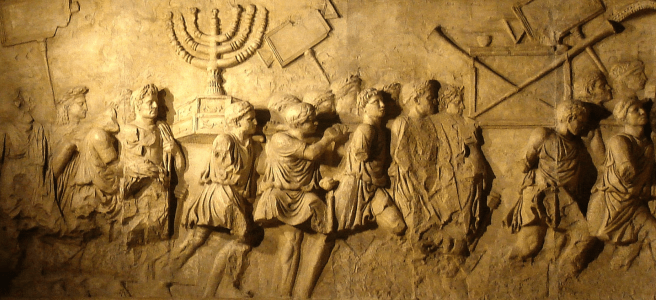
This first post will discuss ancient Israel among the great powers of the ancient near east. Israel’s entire existence in the Bible took place in the shadow of one great power or another, from Egypt on down to Rome. So, the politics of the Bible has a lot to do with navigating life in that shadow—resistance, subjection, imitation, alternative.

Then, the second post will zero in on Israel’s own attempt to be a territorial kingdom, a power in its own right. I call this, ancient Israel as a failed state—and will consider what follows after the failure. Israel’s time as a nation-state in the “promised land” was complicated, but ultimately ended in disaster—yet the peoplehood continued. What lessons came out of that experience that empowered the peoplehood to continue?

Third, I will turn to the New Testament and the story of Jesus, and his politics as told in the gospels with a glimpse at the book of Revelation. I call this “Jesus’s upside-down empire.” I will suggest that Jesus’s radical politics are best understood in terms of his continuity with the Old Testament.

I will conclude with a fourth post—not part of the original Sunday school class—that reflects on a Christian political agenda in light of the Bible’s radical politics. Most politically engaged people in the United States today recognize that we are facing crises of extraordinary difficulty and diversity. How might the Bible’s Big Story give us some perspective on navigating these crises?

Continue reading “Ancient Israel among the great powers. The Bible’s radical politics (part one)”

Finding peace in the Old Testament [Peace and the Bible #19]

Ted Grimsrud—September 23, 2024

One of the first things that came up for me back nearly fifty years ago when I first thought of myself as a Christian pacifist was the question of the Old Testament. How can we reconcile all the violence of the Old Testament with the idea that Jesus calls us to be peacemakers? The first step for me at the time, and I think the first step for many, is to acknowledge that this is a problem but to emphasize the clarity of Jesus’s message for me. I’m not sure what the OT says, but I do know what Jesus says. The effect of this step, though, can easily be simply to set the Old Testament aside as being mainly a problem and not a good guide. I always felt uneasy about such a move.

So, one of my interests has been to work at reading the Old Testament as a positive resource for my peace convictions. I have done some recent thinking that has provided a sense of clarity about one particular angle that I want to outline in this post. I have long believed, and still do, that my pacifism does not depend on the Old Testament. However, I think pacifism is compatible with the Old Testament—and even benefits greatly from taking the Old Testament seriously.

Benefits from losing the promised land?

Lately I have read several helpful books about the Old Testament and Christian theology. At one point, I paused and thought about something I had read over and over. That was that it was such a terrible thing when the ancient Hebrews were driven from their territorial kingdom, having their temple destroyed and king dethroned. The entire story, it seems, revolves around that loss and an accompanying, long-lasting desire to restore this territorial kingdom and get their king back.

I was struck, though, with a sense that these assumptions might not be the best way to read the story. One of the books I read noted that the faith of the ancient Hebrews was established in a normative way before the people entered the promised land and established a territorial kingdom. The core elements of the faith—as found in the creation story, the exodus story, and the gift of Torah—existed independently of the territorial kingdom. As the story continues, the people enter the promised land, seek to embody Torah, establish a territorial kingdom, and, in time, lose that kingdom. Yet the peoplehood continued, based on that earlier foundation. And in the thousands of years since, the peoplehood has continued without (until very recently) a territorial kingdom. So, was losing that kingdom actually such a bad thing? In fact, might it be part of the story that territorial kingdoms are inherently problematic? Maybe the peace message of the Bible has a lot to do with precisely the point that faithful living is best pursued apart from taking responsibility for territorial kingdoms or nation-states.

Continue reading “Finding peace in the Old Testament [Peace and the Bible #19]”

Guardians of God’s shalom: The Old Testament prophets (Peace and the Bible #10)

Ted Grimsrud—December 15, 2023

The Old Testament tells us that God provides salvation for God’s people as a gift—given out of God’s healing love, unearned, even unmerited by the people. The story presents two institutions linked with salvation, Torah and sacrifice. Both initially served as responses to the gift. First, the people received God’s acts of deliverance, then came gratitude. Such gratitude led to responses of obedience to God’s will for social life. These found expression in Torah and in ritualized expressions of commitment to God via sacrifice.

As the Hebrews’ political structures expanded and became centralized under the office of the king, their religious structures also became centralized around the Temple. With this, the original purposes of the Law and sacrifices were mostly forgotten. Torah originated as the framework for the Hebrews to concretize their liberation. Torah arranges for the economic viability of each household, resisting social stratification. Torah’s inheritance legislation, Sabbath year laws, and the ideal of the Year of Jubilee all pushed in the direction of widespread participation in economic wellbeing. The Law also placed special emphasis on the community tending to the welfare of vulnerable people—widows, orphans, and aliens (“for you too were aliens in Egypt before God delivered you,” Leviticus 19).

The idea of what we could call “God’s preferential option for the poor” in many ways defines what ancient Israel said about God. It arose as a core part of the understanding from the very beginning. The sacrificial practices, above all else, were intended to be linked with the faithful responses of the people, in gratitude, to God’s liberating work.

Problems with law and sacrifices

Torah meant neither the Law nor the sacrifices to be means to salvation but rather responses to the saving works of God. Torah meant for the Law and sacrifices to enhance justice in the community. Once they were established, though, the danger inevitably arose that either or both would be separated from their grounding in God’s merciful liberating works. As memory of the intent of the Law faded, the story tells of the community’s tendency to focus on external expressions, easily enforced and susceptible to becoming tools of people in power. These tendencies led to legalism and, eventually, in the prophets’ views, to removing the Law from its living heart of liberation from slavery and concern for the wellbeing of vulnerable people.

Continue reading “Guardians of God’s shalom: The Old Testament prophets (Peace and the Bible #10)”

The meaning of “no other gods before me” [Peace and the Bible #7]

Ted Grimsrud—December 4, 2023

The Christian Bible gives us quite a bit of material about what are human problems. It presents idolatry as perhaps the most fundamental human problem, the root of many other problems. But what is idolatry? I’m not sure the Bible is totally clear about that. But this is what I think: Idolatry is giving ultimate loyalty to things other than God. When things become idols, even if they are generally good things, they tend to become too important, too demanding, and too likely to push people to hurt other people and to hurt nature.

That leads to another question, though, what does it mean to be called to give loyalty to God above everything else? Is this call about believing in a certain doctrine? Belonging to a certain religion? Having some kind of mystical connection? Or is it something else? I will opt for the “something else” in this blog post by reflecting on one of the Ten Commandments: “You shall have no other gods before me” (Exodus 20:3). What might that command mean for us today?

What kind of God?

The first issue might be to reflect on what we have in mind when we say “God” as the object of our trust. Typically, Christians view God as a transcendent “person,” a being who exists outside of time and outside of our physical space. This God is understood to be the one and only God. However, these notions of God are not all that apparent in the Bible. They owe more to post-biblical creeds, confessions, and other doctrines.

Continue reading “The meaning of “no other gods before me” [Peace and the Bible #7]”

A resolution to the problem of violence in the Old Testament? [Peace and the Bible #4]

Ted Grimsrud—November 24, 2023

The Old Testament has a poor reputation among many Christians (and others) for telling stories of terrible violence that is either initiated directly by God or clearly favored by God. Certainly, this can be a problem for Christian pacifists. But it actually should be a problem for anyone who gives the OT authority as divinely revealed scripture. I had a student once who thought he was in favor of OT violence and sought to gather evidence for an argument against pacifism. As he studied the OT, though, he realized that it was a lot more violent than he had anticipated; before long he had given up on Christianity altogether. Thus, I would say that the “problem” requires attention, even for those who do not find it a deal-breaker for faith.

Not long after I became a pacifist in 1976, I had a short time of struggle as I confronted the problem of violence in the Old Testament. I was assured by some people I respected that the problem could be overcome. So, I kind of put it on the back burner and moved ahead with developing my peace theology, emphasizing, of course, the message of Jesus. Since that time, I have not been troubled by the OT problem all that much but have focused more on finding a peace message on those writings. However, I have remained interested in how to think about divinely initiated violence. Here are some of my current thoughts.

An alternative political economy

The first argument for a certain kind of pacifist reading of the Old Testament that I encountered was a chapter in John Howard Yoder’s book The Original Revolution, the first book on Christian pacifism I ever read. Yoder drew heavily from his colleague at the Associated Mennonite Biblical Seminaries, Old Testament professor Millard Lind. A bit later, I used the library at the University of Oregon to track down Lind’s PhD dissertation on war and the Old Testament that Yoder cited. Lind turned that work into a book, Yahweh is a Warrior: The Theology of Warfare in the Old Testament. As it happened, this book was published late in 1980 when I was a student at AMBS. In the spring of 1981, Millard taught a class on the book, and I was fortunate enough to be able to take it.

In my memory now, the class was quite helpful, though it was fairly narrowly focused. The main emphasis was on how to understand the stories in the books of Exodus and Joshua of God’s violent intervention in liberating the Hebrews from slavery in Egypt and driving the Canaanites out of the promised land. Millard’s main point, as I remember, was that the stories tell us that God fought instead of the Hebrews. It was a unique moment in the people’s history that was not repeated. The key motif was that the people needed to depend on God for their security, not on their own military might. After they settled in the promised land and established a territorial kingdom, their political dynamics changed. They became “like the nations,” including establishing a standing army. Crucially, the kingdom became quite corrupt, practicing injustice against the vulnerable in their community and also beginning to practice idolatry. Because of these injustices, God turned against the Hebrew kingdom and allowed it to be destroyed by the area’s great empires, Assyria and Babylon.

Continue reading “A resolution to the problem of violence in the Old Testament? [Peace and the Bible #4]”

Was Moses a terrorist? [Peace and the Bible #3]

Ted Grimsrud—November 22, 2023

The story told in the book of Exodus of how God liberated the enslaved Hebrew people from the Egyptian empire is exciting, complicated, inspiring, troubling, and extremely important for both Jewish and Christian traditions. Liberation theologians especially like it and pacifists tend to have strongly mixed feelings about it. I know I share both of those orientations.

Was the liberation of the Hebrews due to terrorism?

I was struck recently with how interesting the exodus story is when I reflect on it in the context of considering what is in our day called “terrorism.” Let’s start with a simple (and admittedly imperfect) definition of terrorism: The use of violence to intimidate, frighten, and coerce non-combatants for political ends. I think it is important to recognize that terrorism is a tactic of both formal state-controlled militaries and non-state insurgents, even if in general usage the focus usually is on the latter type of actions.

In what follows I will especially have in mind “terrorism” in relation to non-state actors, especially those who do not have the firepower to directly take on the militaries of states and empires. I have some tentative thoughts that have arisen when I think of the story of the exodus in light of contemporary expressions of terrorism. It does seem as if there may be some parallels between the famous story of the ancient Hebrews and what’s been going in recent history. The Hebrews were an oppressed and essentially powerless group of people in the midst of an exploitive empire. They had little hope of directly bringing major changes. As it turns out, though, they did still try—and their tactics did include a great deal of violence that brought bloodshed and suffering onto the people of Egypt.

From the point of view of the storyteller, it seems clear that the violent actions of the Hebrews and their God were not the beginning of the violence in the story. Rather, the violence was already profound and widespread—the systemic violence of slavery and the more immediate violence of the actions of Pharaoh’s minions to grind the Hebrews into dust. As the Hebrews cried out for justice, the violence of the system bore down on them all the harder. Finally, though, the acts of resistance began to have an effect—which only accelerated the violence from the state.

Continue reading “Was Moses a terrorist? [Peace and the Bible #3]”

How should we think about the violence in the Old Testament? [Questioning Faith #19]

Ted Grimsrud—April 7, 2023

I have heard it said that the stories in the Old Testament about God’s involvement in war, punishment, and various other forms of violence have been responsible for more Christians losing their faith than any other single thing. I have no idea whether that is actually true, but I do know from my career as a pastor and teacher that Old Testament violence is a problem for lots and lots of people. Because the Old Testament is so big and diverse and the issues so complex, it is impossible to give a quick, clear, and concise answer to the questions. But because they are so often present and distressing, I think it is important to try to have some kind response in mind. What follows is mine—which is admittedly not likely to change anybody’s mind.

Starting with God’s love

My starting point for all theological questions is my core theological conviction: God is love. It follows from that, for me, that I would affirm that God is nonviolent, as I believe that violence and love are mutually exclusive. And, I happen to believe that the Bible supports these convictions. So, when I turn to the Bible, I am seeking to understand what the Bible’s teachings are that give us the best images of God. What in the Bible leads us to confess God’s love and, thus, nonviolence? And what should we think about the parts of the Bible traditionally cited as the bases for denying that God is nonviolent?

Let me first, though, say just a bit about what saying “God is nonviolent” means for me. In a nutshell, to make such an affirmation is to confess that the Bible teaches that God created what is out of love and for the sake of love. It also teaches that God participates in the world most directly in how God brings healing in the face of brokenness, binding wounds, reconciling alienated relationships, and empowering creativity and compassion.

Also, I believe that the Bible’s definitive portrayal of God is found in the story of Jesus. That is, God is most clearly and reliably known to humanity in the life, teaching, death, and resurrection of Jesus. My affirmation of God’s nonviolence finds its strongest grounding in my affirmation of Jesus’s nonviolence. Just as it is unthinkable to me that Jesus would punish, hate, exploit, or violently coerce, so is it unthinkable that God would.

Continue reading “How should we think about the violence in the Old Testament? [Questioning Faith #19]”

Abraham’s gospel: A peaceable reading of Romans (part 5; 4:1-25) [Peaceable Romans #12]

Ted Grimsrud—April 4, 2022

One of the most beautiful road trips my wife Kathleen and I have ever taken had us driving through the mountains of western North Carolina. We were on the Blue Ridge Parkway. We spent the night in the village of Little Switzerland and greatly anticipated the next morning when we would drive by Mt. Mitchell, the highest spot east of the Rockies, and then see points west.

But when we got up, it was totally foggy. As thick a fog as we’ve ever seen. The forest certainly has its own eerie beauty when you can barely see the white lines on the highway. Still, we were uneasy when we drove twenty miles or so and never saw another car. But then came the moment. We turned a corner and without any warning the fog was gone. We had the most incredible vista, in the bright sunlight, snowy mountains, valleys, forests. It was amazing. Then, we were back in the fog for several more miles. It was just those few moments, but the picture is still vivid in my memory.

The whole Bible as a peace book

This experience comes to mind as I think about Romans four. A lot of Christians, maybe especially those attracted to peace theology, are suspicious of the Old Testament. And suspicious of the Apostle Paul. And, deeply suspicious of the book of Revelation. There is the great bright light of Jesus, his picture of a God of love and mercy—and much of the rest of the Bible is kind of foggy, wars and rumors of war, legalistic religion, abstract doctrine, with the finale of Revelation’s unspeakable bloody judgment.

This is the analogy: The Bible can seem like that foggy drive on the Blue Ridge Parkway. There is but one spot of incredible beauty. Such a spot may redeem the whole thing—but the rest isn’t of much value. However, I want to say: No! The Bible is actually more like our return trip driving back home. Then the Parkway was clear and sunny all the way and we had one beautiful scene after another. Likewise, the whole Bible has great beauty.

Romans four is a text that helps us to see the Bible in this way. I don’t want to deny that the Bible has a few spots that are irreparably foggy scattered around. Basically, though, I believe that the overall message is about mercy all the way down from the very start. The Bible tells an empowering story throughout. We may embrace its message of peace, restorative justice, compassion, and healing. The key figure in Romans four is Abraham, the great patriarch, considered to be the spiritual ancestor for Jews, Christians, and Muslims.

Continue reading “Abraham’s gospel: A peaceable reading of Romans (part 5; 4:1-25) [Peaceable Romans #12]”

The anarchistic appeal of the Bible: A needed story for human wellbeing [Theological memoir #11]

Ted Grimsrud—February 16, 2021

I would say that I got politicized in the mid-1970s, about the time I finished college. I grew up paying attention to the news. My dad was a high school social studies teacher, so keeping up on current affairs was part of his job—and that spilled over to me, too. However, when I started college in 1972, I was pretty apolitical. My Christian conversion when I was 17 had actually influenced me to pay less attention to politics.

Radical Christianity and politics

Still, these were turbulent times. I remember that terrible spring and summer of 1968 when Martin Luther King and Robert Kennedy both were assassinated, and so much else was deeply chaotic. I registered for the draft when I was 18 in 1972 and thought it likely that I would have to go to Vietnam. I’m sure I was paying more attention than I remember, and within a few years I was highly engaged. The key factor for me, it turned out, was my exposure to the “radical evangelical Christians” affiliated with several magazines—The Other Side on the East Coast, Post American in the Midwest (then Sojourners when the community moved to DC), and Radix out West. Just as fundamentalist Christianity depoliticized me in the early 1970s, radical evangelical Christianity had the opposite effect a few years later.

I would read each of those magazines as soon as possible when it arrived. After voting for Richard Nixon in 1972, I grudgingly voted for Jimmy Carter in 1976—grudging because I thought he was too conservative, especially too pro-military, but preferable to Gerald Ford. Carter proved my fears well-founded, and by 1980 I was ready to go third party. One of Carter’s acts that got my wife Kathleen and me on the streets was his reinitiating registration for the draft. We joined the protests and met another young couple who introduced us to a political philosophy of which we had been ignorant.

Karl and Linda were young radicals who had recently moved to Eugene, Oregon, where we lived at the time. They moved specifically to join with an emerging community of anarchists. We had numerous lengthy conversations with them about anarchism, Christian pacifism, nonviolent resistance, violent resistance, and other related issues. Karl and, especially, Linda were smart, compassionate, deeply committed to social justice, and thoroughly against war.

We discovered the appeal of anarchism. For Kathleen and me, the path toward anarchism had mostly to do with war. Centralized, territorial nation-states have become a curse. The 20th century was the century of mass war and was showing littles signs of changing. In 1980, a rising tide of opposition to nuclear weapons was heightening awareness of the link between centralized government, large corporations, and the likelihood of the destruction of the earth.

Kathleen and I weren’t ready to go full anarchist, largely because of our commitment to working in the church. When the anti-draft movement petered out, we lost touch with Karl and Linda and our interest in anarchism moved to the back burner. We certainly didn’t get any encouragement to pursue it from the Mennonites we were by then hanging out with.

Continue reading “The anarchistic appeal of the Bible: A needed story for human wellbeing [Theological memoir #11]”