Is pacifism relevant in the American Empire?

Ted Grimsrud—September 2, 2025

For the past fifty years, it seems, I have lived in increasing despair as an idealistic citizen of the United States. I have tried to think my way through what seems to be an irresolvable and terminal problem. As a child, I accepted that the US was a model society, guided by God to be a force for freedom and democracy in the world. This message formed a core part of my identity. Increased knowledge disabused my idealistic view of the US. I reached adulthood at the same time our military withdrew from Vietnam amidst many revelations of extraordinary injustices.

However, my idealism about freedom and democracy did not diminish. I turned my focus from the American nation to Christian communities. As I turned from blank-check nationalism (the willingness unquestioningly to let the state turn us toward war—what I call “warism”), I turned toward a strand of Christianity that understood the message of Jesus to be central for our social ethics. In the nearly half-century since those two decisive turns, I have struggled endlessly with a central dilemma. How do I live as an American citizen in the context of learning evermore of the injustices and idolatrous violence of the American Empire? I have developed a strong critique of this Empire based on Christian theology and a pacifist reading of the Bible. However, such work has placed me in the midst of another wrenching dilemma. I draw heavily on the convictions of a religion that is itself deeply implicated in the dynamics of the Empire.

I do not write in hopes of actually resolving these dilemmas. In offering a progress report, I mainly want to continue the struggle. I hope for more conversation on the issues I raise. I will present the case for Christian pacifism as a lens through which to view the Empire and the Christian faith. How does that make sense?

Continue reading “Is pacifism relevant in the American Empire?”

Peace in Ukraine? [American Politics #17]

Ted Grimsrud—August 20, 2025

I found what seems to me to be to be a good, short analysis of the current status of the war in Ukraine, an article “The Peace Delusion,” by a political analyst named Thomas Fazi, who writes regularly for the web-based magazine UnHerd. In a nutshell, Fazi suggests that the core issue in the struggle is the question of whether the United States will remain the single global hegemon or if we will transition to what many are calling a multipolar world order, where there will be several great powers that can manage to co-exist in relative peace.

Peace in Ukraine will require Ukraine and its US/NATO backers to acquiesce to Russia’s demands. It’s not simply recognizing Russia’s control over the various parts of eastern Ukraine that they have or will soon have taken over. “It’s about addressing the ‘primary roots of the conflict,’ as Putin repeated in Anchorage: that Ukraine will never join NATO, that the West will not transform it into a de facto military outpost on Russia’s border, and that a broader ‘balance of security in Europe’ be restored.”

Were those demands to be met, Fazi argues, the result would be “a wholesale reconfiguration of the global security order—one that would reduce NATO’s role, end US supremacy, and acknowledge a multipolar world in which other powers can rise without Western interference.” These demands have been stated clearly and consistently by the Russians since before the February 2022 invasion of Ukraine. The reason why peace remains impossible in Ukraine is that such demands (and the resultant “reconfiguration of the global security order”) is simply something that “Trump—and more fundamentally the US imperial establishment, which operates largely independent of whoever occupies the White House—cannot concede to.”

Continue reading “Peace in Ukraine? [American Politics #17]”

Pacifism in a time of war and chaos [American Politics #16]

Ted Grimsrud—March 10, 2025

I am deeply troubled by the wars and rumors of war, the social chaos, and the strong sense of pessimism that seem to be so much a part of our current situation. I also feel confused, uncertain, and relatively powerless. At such a moment, reflection on my core convictions is one way to steady my nerves, if nothing else. Almost exactly three years, a couple of weeks after Russia’s intensifying the conflict with Ukraine with their “special military operation,” I published a blog post on my Thinking Pacifism site that came out of such reflection, “Thinking as an American pacifist about the Russian invasion.” In this post, I want to update the thoughts I shared then.

“Pacifism” as a core conviction

It is challenging to be a pacifist in an environment with a strong cultural consensus in favor of military action. The United States has been deeply involved in the war that has been going on in Ukraine since 2014. When that conflict greatly intensified three years ago, the US prowar consensus also intensified, with both strong support for accelerated military aid for Ukraine and strong condemnation of Russia, usually couched as condemnation of Russian leader Vladimir Putin. It has been virtually impossible to find dissent from the insistence on support for war in the American mainstream media, among Democratic Party politicians, and in my social media circles. But this support for war is at odds with my pacifist convictions.

I do believe that being a minority, even a small minority, due to one’s convictions is not a good reason to weaken one’s convictions. We should, of course, always be open to testing the validity of our convictions in face of challenges. However, it is actually to be expected that pacifist convictions will not widely be shared when the cultural zeitgeist favors war. Rather than doubt the validity of my pacifist convictions, I want to ask how these convictions speak to my warist context.

I use “pacifism” here to refer to a fairly general belief. I use it as roughly equivalent to, say, being a humane person, a person who supports social and political self-determination for all people, a person who affirms the United Nations Universal Declaration of Human Rights. Pacifism affirms that to support war is antithetical to humane values, to the practice of self-determination, and to an affirmation of universal human rights. In what follows, when I use “we” I mean those of us who affirm these pacifist convictions (even if one may not like to use the term “pacifism” itself—I use this term as a convenient rubric for this set of convictions, but I care about the convictions more than the term itself).

Continue reading “Pacifism in a time of war and chaos [American Politics #16]”

Despairing political confusion [American politics #14]

Ted Grimsrud—February 24, 2025

I have believed for a long time that the world will be better off when the American Empire falls from its stature as the most powerful superpower. For a long time, I hoped against hope that this fall would be voluntary, that somehow the US would choose to let go of its drive to dominate the world as the top dog and find ways to be collaborative in a multipolar world.

Is the American Empire falling our only hope for peace?

I now simply cannot imagine that a voluntary giving up of domination will happen. It seems likely that only the American Empire falling apart and involuntarily losing its hold of the world’s reins of power will save the world. And it seems like we are headed toward that outcome perhaps more rapidly than ever. This may be good for the world—though not if the US fights so hard against its demise that it takes the rest of the world down with it.

I don’t understand very well the details of what is going on right now. Obviously, we see a shocking assault on the federal government by the newly installed Trump administration, an assault that seems ill-considered, ill-planned, vicious and destructive for viciousness’s and destructiveness’s sake. At the same time, I do not trust or respect most of the critiques of Trump, et al, that come from Democrats and the mainstream corporate media.

It seems like an extremely important sensibility for me—though I see little evidence of this in most of the discourse on our current situation—to see that both sides in our current political alignment in this country can be, in fundamental ways, wrong. Trump’s (and his acolytes’) horrifically misguided visiting what may be irreversible damage on our country does not negate the Democrats’ own misguided politics.

Continue reading “Despairing political confusion [American politics #14]”

Where is American Warism Headed?

Ted Grimsrud—October 22, 2024

We live in a time of great uncertainty. I find it difficult not to be quite discouraged about the direction the world seems to be going. What kind of future do we have? The presidential election in the United States that we are in the middle of (I mailed in my ballot the other day) is considered by many to be one of the most important we have ever faced.

No matter the outcome, warism will win the election

One of the outcomes of this election, though, that does seem fairly certain is that the American military and American militarism in general will remain engaged and expansive regardless of who is elected. We all know that Trump is all for militarism even if his (empty) rhetoric at times may seem to claim otherwise. Likewise, the Harris campaign has made it clear that she will be committed to continue on the warist path followed by the Biden administration in both Ukraine and Western Asia. So, with regard to what I believe is the most important issue facing our country—our involvement in global wars and preparations for war—this election will change nothing no matter how it turns out.

The two big wars we currently are fighting—in Ukraine and in Israel/Palestine—have not been going all that well for our side. In both cases, we see that American might seems to count for much less than what has been assumed. Simply the fact that both continue to be unresolved in itself tells us a great deal about the ineffectiveness of our weapons and leadership. Could it be that we are nearing the end of the post-World War II era of American military domination? Has the US quest for global dominance finally failed? If so, what will be the consequences?

Is American dominance coming to an end?

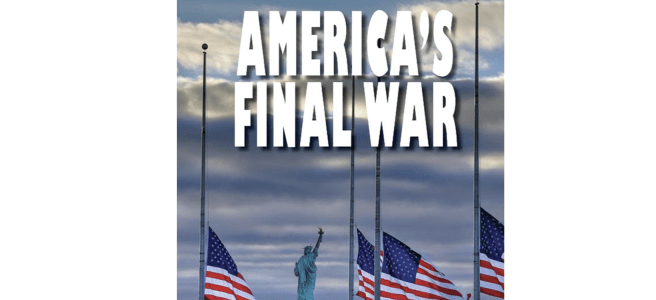
I recently read a challenging and surprising book that argues that indeed the end of an era is at hand. America’s Final War by Andrei Martynov (Clarity Press, 2024) argues that the US military is facing a failure in Ukraine that signals a profound shift in the balance of power and a certain descent into loss of power and influence by the American Empire. I thought that the failure to achieve quick victory in these two wars might indicate that American dominance is no longer what it once was. Martyanov goes further—the end is actually at hand. Is this possible?

Continue reading “Where is American Warism Headed?”

More critical thoughts on America’s proxy war [American politics #7]

Ted Grimsrud—October 5, 2023

[Early in 2022, after Russia greatly accelerated its military engagement with Ukraine, I wrote  several blog posts and then some shorter posts on Facebook  with my reflections. After many months, I decided to re-engage these issues as the war continues unabated. I posted several times recently on Facebook and consolidated those into a blog post, “And they call it democracy…. Critical thoughts on America’s proxy war.” Here are a couple more posts.]

History may not repeat itself but at times it sure rhymes (9.22.23)

I recently read a book from the late 1970s, The Washington Connection and Third World Fascism, by Noam Chomsky and Edward Herman. It is a detailed report on the carnage visited on various countries around the world (e.g., Indonesia, Thailand, the Dominican Republic, and—especially—Vietnam) by the American Empire in the 1960s and 1970s. The section on Vietnam especially caught my attention as I thought of America’s involvement in the current Russia/Ukraine war.

On the surface, the differences between the Vietnam War back then and the current war in Ukraine are obvious and significant. Back then, it was the US invading Vietnam with hundreds of thousands of our troops; now, we are mainly only offering military aid (no troops) to Ukraine as it is invaded by Russia.

However, I find it instructive to think of a few of the similarities. With the Vietnam War, the US military planners well knew by 1965 that it was a war they could not win. From that point on until the final withdrawal ten years later, the US pursued extraordinarily destructive military operations for purposes entirely separate from actually defeating their Vietnamese enemies. It was clear during that entire time that eventually the war would end with a US defeat. So, why did they continue? It had to do with broader American “strategic interests” in the world and with American “prestige.”

Is the same kind of dynamic present in our current conflict? The much-heralded Ukrainian “counteroffensive” seems not only to have failed; it seems quite likely that the US/NATO leaders who pushed for that effort knew it would fail from the beginning. Why would they do this? It is hard to imagine an alternative to the reality that it’s about “strategic interests” and “prestige” that have absolutely nothing to do with the wellbeing of the Ukrainian people.

Continue reading “More critical thoughts on America’s proxy war [American politics #7]”

A Christian pacifist in the American Empire, part 3: The American Empire without blinders

Ted Grimsrud—September 15, 2023

In the first post in this three-part Theological Memoir, “Embedded Theology,” I gave an account of my first two decades of life with a focus on how my “embedded theology” led me to accept the “blank check” regarding my loyalty to the American Empire, even to the point of being (reluctantly) willing to go to war if called. This acceptance of the blank check was, if anything, strengthened when I became a Christian and was taught that the “gospel” included an embrace of American patriotism.

The second post, “Jesus’s gospel of peace,” describes the circumstances around the transformation of my perspective due my encounter with Jesus—an embrace of Christian pacifism and a rejection of the blank check that involved a deeply critical disposition toward the American Empire. I also briefly sketch the Bible-oriented theology that undergirds that critical disposition.

My encounter with the gospel of peace has defined the rest of my life. Right away in 1976, I sought to bring together the two main elements of this new exciting vision for life and faith: First, an embrace of Jesus’s gracious and humane call that love of God and neighbor are the core meaning of life. Second, an ever-widening analysis in our social and political context of the vicious, expansionist, profoundly violent American Empire. From the very start, for me, these were two sides of a single coin. The call to love illuminated the realities of the Empire and the realities of the Empire continually challenged me to understand the practical and embodied character of the call to love. The more I studied the Bible, the more convinced I became of the radical nature of this story of God’s call of a people to bless all the families of the earth with their message of shalom. In this post I will outline my critique of the American Empire.

Continue reading “A Christian pacifist in the American Empire, part 3: The American Empire without blinders”

A Christian pacifist in the American Empire, Part 1: Embedded theology

Ted Grimsrud—September 13, 2023

At this stage in my life, retired but still trying to be productive with my research and writing, I find myself wanting to narrow my interests. I hope to find a level of focus that will enable me to reduce distractions and zero in on doing what I have left to do. The big theme that has my attention is trying better to understand why our world and, especially, the nation I live in are in such dire straits. I know that no matter how focused I might be enabled to be, this theme will be beyond me. But I hope that by putting my best energy into such a project I might be able to make at least a little progress.

So, I was happy to be invited to make a presentation on September 11, 2023, to the monthly meeting of the Anabaptist Center for Religion and Society at Eastern Mennonite University. I decided to share what I call a “theological memoir” that, I think, sets a personal context for my “Why is America in such dire straits?” project. By “theological memoir,” I mean reflections on what I believe are some of my important theological convictions in the context of the elements of my life that brought them forth.

I have divided the reflections I shared into three posts. This one is the first, and I will call it “Embedded theology.” It has to do with the context in which I grew up, both my family and my homeland in rural America, and what I inherited theologically. By “theology” I have in mind a sense of what matters the most, what rests at the top of our hierarchy of values. Certainly, our sense of “God” is theological, but even if we don’t self-consciously affirm God’s existence, we still have some kind of theology. All of us have a hierarchy of values, convictions about what matters the most, about what core beliefs shape our lives.

The second, “Jesus’s gospel of peace,” has to do with the transformation that happened in my theology in the mid-1970s. This was when some of the key elements of my embedded theology became crystalized, and I embraced them as a consequence of my encounter with Jesus and peace theology. I at that point came to an understanding of “peace” that I still have: Peace as having to do with the wholeness, with the health, with the wellbeing of the global community. This wholeness means the health and wellbeing of all creatures within the global community and of each sub-community. Such a sense of wholeness requires being attentive especially to the vulnerable and marginalized members of the community. It also requires a recognition that a peaceful outcome requires peaceful means at all stages—that is, violence, especially warfare, is not compatible with health and wholeness. The inspiration for my understanding of peace comes from the Bible, especially the biblical concept of “shalom.”

Then, third, I will touch on my political journey as a pastor and theology professor. I call that post, “The American Empire without blinders.” By the term “empire,” I have in mind a general sense of the United States as a superpower whose influence and engagement encompass a great deal of the world. I am not using “empire” in a particularly technical sense, but more in an everyday, general sensibility kind of way. By “American Empire,” I mainly mean, “America’s role as a dominant power far outside of its own boundaries.”

Continue reading “A Christian pacifist in the American Empire, Part 1: Embedded theology”

And they call it democracy…. Critical thoughts on America’s proxy war

Ted Grimsrud—August 24, 2023

[Early in 2022, after Russia greatly accelerated its military engagement with Ukraine, I wrote several blog posts and then some shorter posts on Facebook with my reflections. After all these months, I decided to re-engage these issues as the war continues unabated. Here are several recent Facebook posts.]

War, what is it good for? Absolutely nothing! (August 3, 2023)

War almost always ends up way worse than those who initiate it expect. Classic examples are the American Civil War and World War I, in both cases famously entered into by all sides with the expectation the war would be quick and victorious. What followed were the two worst bloodbaths in human history up to the time with indecisive results. American history in the past 75 years is full of case after case of this dynamic (e.g., Korea, Vietnam, Iraq, Afghanistan).

Almost certainly, Russia expected its direct military intervention in the Ukrainian civil war to end quickly back a year and a half ago. There is a chance it might have had the negotiations of the Spring of 2022 managed to reach a conclusion. However, Ukraine pulled back, and the current devastating war of attrition accelerated with no happy ending in sight.

More controversially, some observers are suggesting that the US/NATO side of this conflict was also a miscalculation that is leading to profoundly negative unanticipated consequences for that side. One of these observers is the American political scientist John Mearsheimer, a professor at the University of Chicago. Mearsheimer is often categorized as a “realist” who, it could be said, believes in the American Empire but believes many of the past and current actions of the empire are ill-considered and self-defeating.

In a recent interview, he reemphasizes his perception that the Ukrainian counteroffensive against Russian forces in eastern Ukraine right now is essentially a hopeless operation and has been from the start. The West pushed Ukraine into this operation, but to Mearsheimer, it was “like encouraging them to launch a suicidal offensive that is completely counterproductive.” Why the push? “The West is very fearful that time is running out, that if the Ukrainians don’t show some significant success on the battlefield in the year 2023, public support for the war will dry up and the Ukrainians will lose—and the West will lose.”

Continue reading “And they call it democracy…. Critical thoughts on America’s proxy war”

Why do so many Christians support warism? [Questioning Faith #20]

Ted Grimsrud—April 13, 2023

One of the aspects of Christianity that has long troubled me and has played an increasingly significant role in my sense of my own faith has been how Christianity has for so long and so decisively been comfortable with “warism” (by which I mean to believe in war, to have a generally uncritical and positive disposition toward preparing for, threatening, promoting, and ultimately fighting in war). I grew up in my family with a mild warism and a vague Christian sensibility and had no sense that there could be a tension between the two. After my conversion at age 17, my religious convictions became much stronger as did my warism (in church, I was presented a very favorable view of America’s wars).

However, a few years later, I embraced Christian pacifism and became convicted that warism and Christian faith should be mutually exclusive. The contradiction became apparent once I began to see Jesus’s message as politically normative for Christians. Very quickly, I also came to see warism as deeply problematic on its own terms even when not judged in light of Jesus’s message. Mainly, though, my convictions about Jesus showed me the inherent problems with warism. As John Prine sang back in those days, “Jesus don’t like killing, no matter what the reason for.” I faced a crucial historical question. What changed? If Jesus was about peace, how did his followers become so warist?

Christianity’s turn from Jesus’s way

From the time of my embrace of Christian pacifism, I have wanted to understand better why the large majority of Christians have tended not to do likewise. I learned that the history of Christianity from New Testament times to the fourth century is ambiguous on questions of war and peace. Hence, analyses tend to be contested. I feel comfortable saying, though, that earliest Christianity did (with few exceptions) apply Jesus’s teachings in a way that led to pacifism. We have no record of a Christian leader supporting participation in warfare until the 4th century.

The evolution of Christianity during its first few centuries did move in the direction of the acceptance of war even though not in overt and direct ways. The big picture political situation changed early in the 4th century when Emperor Constantine formally established a rapprochement with Christianity following generations of intense and at times deadly persecution. Christians, it seems, accepted that connection immediately and without debate and in short order became soldiers and supporters of the Empire’s wars—to the point that less than a century after the initial rapprochement, only Christians were allowed in the Roman military.

Shockingly (at least from the point of view of Christian pacifism), the history of Christianity since the 4th century is, essentially, a history of the largely uncritical acceptance of war in almost all Christian communities. This is shocking because this warism seems so drastically contrary to what Jesus advocated. It is also shocking because we have virtually no record of debate or disagreement with the turn toward war among Christian leaders. And it is shocking as well that Jesus’s life and teaching essentially disappeared from the main accounts of Christian theology and ethics (this is apparent early on in the authoritative creeds and confessions of the churches that, typically, if they mention Jesus’s life at all, jump from his virgin birth to his crucifixion).

Continue reading “Why do so many Christians support warism? [Questioning Faith #20]”