Jesus the Lamb challenges empire

Ted Grimsrud—October 17, 2025

The Bible has a reputation of being pretty pro-violence. Some Christians want the Bible to approve of violence—that helps them justify the violence they currently support. I decided back when I first embraced pacifism that I wanted to try to read the Bible as pro-peace as much as I could. I still do. An early test for me came with trying to understand the book of Revelation. Is it truly about visions of future God-approved warfare and violent judgment?

I had heard because God wants wars in Revelation, God may also want wars in our time. I decided to study Revelation to see what it actually says. I soon discerned Revelation may be read as a book of peace. I also realized that Revelation is not about predicting the future; it is about applying Jesus’s message of peace and healing in our present. A key concern in Revelation has to do with following Jesus while living in the idolatrous Roman Empire. Thus, Revelation becomes for us an essential text for reflection of the relation between Christian faith and empire.

Revelation as part of Jesus’s peace agenda

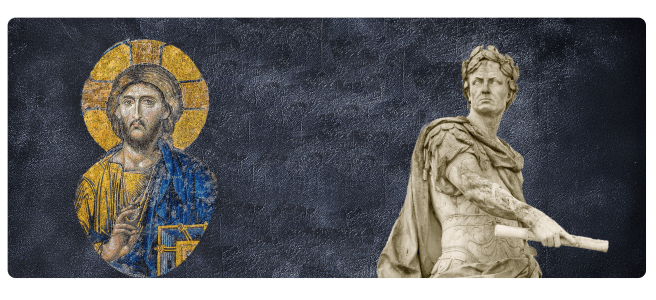
For Jesus, to resist the Empire means: Love our neighbors, say no to idolatry, give our loyalty to the God of mercy, and recognize the empire as the enemy of God, not God’s servant. Early Christians faced constant temptation to conform to Rome. It could be costly to resist. Many also found the imperial claims to be seductive. This struggle with conformity to the empire had a tragic ending for Christianity; we will see in our next post that it became an empire religion. In the early years, though, the struggle led to a sharp critique of the Empire—see Revelation.

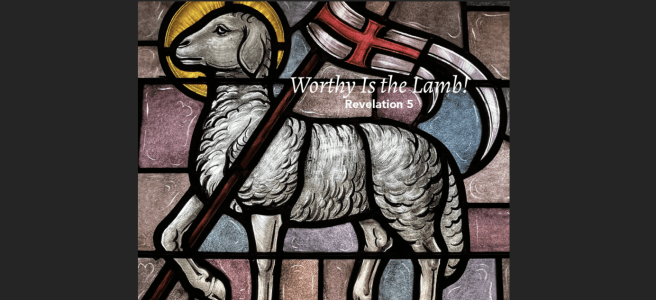
Revelation does not collect predictions about “End Times” but describes the dynamics of imperial seduction. It describes the deep conflict between the ways of empire and the ways of the gospel. This “war of the Lamb” can only be successfully waged in one way. Wage this war with what the New Testament letter to the Ephesians described as the “whole armor of God”: The belt of truth, the breastplate of justice, the gospel of peace, the shield of faith, the helmet of salvation, and sword of the Spirit (which is the word of God) (Eph 6:13-17).

Continue reading “Jesus the Lamb challenges empire”

Jesus’s political alternative

Ted Grimsrud—October 14, 2025

Christian pacifism challenges mainstream Christianity by arguing that Jesus’s life and teaching actually do provide direct guidance for politics. Jesus, like the rest of the Bible, offers a direct alternative to the politics of empire and domination. Christians have misrepresented the Bible insofar as they have embraced uncritical nationalism. My realization that Jesus does give us a realistic peaceable direction caused me to turn away from my nationalistic embedded theology and never look back. In this post I will offer a summary of that peaceable direction.

Jesus affirmed that Torah and the prophets reveal God’s will for the world. When he taught with authority, showed love with his healing, and called together a community to embody the justice of God in the world, he fulfilled the Old Testament. Jesus’s life incurred the deadly wrath of the religious and political leaders. God raising Jesus from the dead in defiance of the leaders’ verdict of condemnation vindicated Jesus’s message. Jesus culminates the political message of the Old Testament when he critiques empire, rejects territorial kingdom as the channel for God’s promise to bless all the families of the earth, and the embodies Torah as the alternative to the ways of the nations. Like Torah and the prophets, Jesus practices power as service, offers compassion and justice for the vulnerable, and resists the powers of domination.

Politics and the gospels

The gospels present Jesus as a king. The gospel of Matthew begins with “an account of the genealogy of Jesus the Christ, the son of David, the son of Abraham” (Matthew 1:1). Christians tend to think of “Christ” as a religious term having to do with the divine identity of Jesus Christ, the savior. However, it literally means “king,” a political leader. The descriptor of Jesus that follows in Matthew 1:1, “son of David” confirms the political sense of “Messiah.” David stands as the paradigmatic king in ancient Israel, a kind of ideal king.

The rejection of the OT territorial kingdom points ahead to an alternative way to imagine the peoplehood. God never revoked Abraham’s vocation to bless all the families of the earth. If not as a territorial kingdom, then how will the promise be embodied? Jesus will be in continuity with David’s role in carrying on the promise (a great leader for the peoplehood). However, he will be in discontinuity in that his political path will not be to lead a territorial kingdom like David. The gospels provide an account for this alternative political path.

Continue reading “Jesus’s political alternative”

Jesus’s upside-down empire. The Bible’s radical politics (part three)

Ted Grimsrud—June 12, 2025

As a Christian, I read the Bible with two assumptions. (1) The Old Testament has its own integrity and tells its own story. It is not simply, or mainly, or even at all relevant only in relation to events far in the future of the story being told. (2) Jesus is the center of the Bible when read as a whole. He embraced the Old Testament as scripture and affirmed the messages of Torah and the prophets as revealing God’s will for the world.

Jesus as the center of the Bible means his story clarifies and reinforces the basic message of the Old Testament. These two parts of the Big Story complement each other. Jesus embodies the political message of the Old Testament: critique of empire, rejection of territorial kingdom as the channel for God’s promise to bless all the families of the earth, and the embodiment of Torah as the alternative to the ways of the nations—including power as service, compassion and justice for the vulnerable and exploited, and resistance to the powers of domination. [This is the third in a series the Bible’s radical politics. Part one is “Ancient Israel among the great powers” and part two is “Ancient Israel as a failed state.”]

Politics and the gospels

One of the key terms in the gospels that signals their political agenda comes at the beginning: Matthew’s gospel tells “of Jesus the Messiah, the son of David, the son of Abraham” (1:1). “Messiah” equals “Christ.” Its literal meaning is “king,” a political leader.

Continue reading “Jesus’s upside-down empire. The Bible’s radical politics (part three)”

The death of Jesus and the weakness of God [Peace and the Bible #14]

Ted Grimsrud—March 15, 2024

Christianity has focused a great deal of its theology on the death of Jesus and its purported cosmic significance. This emphasis has not had an altogether positive result. To mention just one of the problematic outcomes, viewing Jesus’s death as the necessary sacrifice that somehow enables God to offer salvation to sinful human beings has placed an act of terrible violence at the heart of Christian faith—thereby greatly weakening the peaceable impact of Jesus’s life and teaching. When some sort of punitive “justice” that needs to be “satisfied” by Jesus’s violent death is seen to be part of the essence of God’s character, it greatly increases the likelihood that Christians will also see themselves and their institutions as agents of such “justice”—that is, as agents of divinely approved violence. The long legacy in the “Christian” West of the state as the wielder of such violence in warfare and in criminal justice bears witness to the dark legacy of theological interpretations of Jesus’s death.

I suspect that part of the appeal for seeing Jesus’s death as salvific for Christian theology has been a large emotional investment in the notion of God being victorious and in control. If Jesus is God Incarnate and the Savior, how can it make sense that he would die such an ignominious death? How can it make sense that God would face such a defeat? How can it be that God’s control could be breached by such a horrendous and blasphemous act as executing the Christ? One way to understand traditional Christian atonement theology that makes Jesus’s death into such an efficacious act is to recognize it as a way to turn defeat into victory, to turn weakness into overwhelming power. But what if such a move actually has led to many problematic consequences—turning a peaceable story on its head and making it into a story that has underwritten a great deal of violence? And what if such a move actually misconstrues the story of Jesus’s death itself—and in doing so misses the main points of that story that would indeed have major peacemaking consequences? Perhaps it is no surprise that the truly peaceable and transformative message we find in Jesus’s life and teaching has been so seldom evident in the long history of Christianity these past 2,000 years.

Continue reading “The death of Jesus and the weakness of God [Peace and the Bible #14]”

What did Jesus mean by the “Kingdom of God”? [Peace and the Bible #13]

Ted Grimsrud—February 5, 2024

I believe that one important indicator that Jesus had a “political” agenda (as I have discussed in my previous two blog posts, “Peaceable politics and the story of Jesus” and “Did Jesus have a political philosophy?”) is simply his prominent use of the term “kingdom of God” (or its equivalent in Matthew’s gospel, “kingdom of heaven”). This seems actually to be a complicated metaphor—it’s not obvious exactly what Jesus meant. But that “kingdom” has political connotations cannot be questioned. As a simple definition of “kingdom,” we may say it is a stable community of people that is led by a queen- or king-like ruler. In whatever sense Jesus had in mind of “community” and “ruler,” he did have in mind some sort of political entity.

I have long been ambivalent about our using the “kingdom of God” metaphor today. It seems hopelessly archaic, not to mention patriarchal. It breathes of a world of domination and hierarchies. Yet, Jesus—as I understand him—opposes patriarchy, domination and hierarchies. Is there a better way to understand his metaphor, then? I think so, though I am still not fully comfortable making the term a regular part of the faith language. But rather than simply dismissing the metaphor, I think we would be well served to try to figure out what Jesus himself meant by it. What was he trying to convey? May we affirm his intent even if we seek to find more contemporary language to articulate it? To work at answering these questions, let’s look at the biblical history of the notion of the “kingdom of God.”

The failed territorial kingdom of the Old Testament

The initial picture of the kingdom of God in the Old Testament is of Abraham’s descendants, a community of freed slaves who God led out of Egypt. After the exodus from slavery, God provides the people with a set of laws (Torah) that calls for a social order that in many ways would be an alternative type of politics in contrast to the domination-style politics of the Egyptian empire. The liberation was led by Moses, whose role was to be a kind of extemporaneous prophet, not a permanent king-like leader and not a military leader sitting atop a permanent war-making machine. God is presented as the true king of the people; that is what makes the community an expression of the “kingdom of God.”

Continue reading “What did Jesus mean by the “Kingdom of God”? [Peace and the Bible #13]”

Did Jesus have a political philosophy? (Peace and the Bible #12)

Ted Grimsrud—February 2, 2024

I am finally returning from an extended break to continue my “Peace and the Bible” blog series. My most recent post, December 18’s “Peaceable politics and the story of Jesus” was the first that dealt with the New Testament after a number of Old Testament posts. I have several more planned on Jesus and then will consider some issues regarding both Paul’s writings and the book of Revelation. Before returning to my planned outline, though, I want to linger in this post on some issues that came up with my last one.

Politics, philosophy, and pacifism

I started by noting that the “Peace and the Bible” theme helps us focus on just how political the concerns of the Bible are. For most Christians, I imagine that point seems clearer in relation to the Old Testament than the New Testament. I suggested, though, that the New Testament actually “presents a kind of political philosophy” that has at its core “a commitment to pacifism, a commitment based on the centrality of Jesus Christ to the Big Story the Bible tells.” In thinking about this assertion, I decided I should reflect a bit more on what I am trying to say.

I pointed out that “Christians have tended to miss the social implications of the New Testament part of the story because of assumptions about both politics and Jesus.” One way to further analyze the issues is to suggest, in very much a general sense, that we might recognize two types of thinking about how to understand the cluster of issues related to (1) “political philosophy,” (2) “pacifism,” (3) “biblical faith,” and (4) “Jesus-oriented discipleship.” One way is to perceive that those items #1 and #2 belong to a certain kind of thinking and that #3 and #4 belong to a very different kind of thinking. The other way would be to argue for understandings of those terms that recognize that they all may (and should!) be understood together in a way that leads to redefining them all.

Continue reading “Did Jesus have a political philosophy? (Peace and the Bible #12)”

Peaceable politics and the story of Jesus (Peace and the Bible #11)

Ted Grimsrud—December 18, 2023

In my blog series on “Peace and the Bible,” I am showing just how political the concerns of the Bible are. Most people I know find it easier to see that in the Old Testament than the New. In the second half the series, I will argue that the New Testament presents a kind of political philosophy. This philosophy has at its core a commitment to pacifism, a commitment based on the centrality of Jesus Christ to the Big Story the Bible tells. Christians have tended to miss the social implications of the New Testament part of the story because of assumptions about both politics and Jesus.

Politics have been seen as directly tied to running governments and the necessary use of violence. Jesus indeed did not talk about running governments or using violence. However, if we define politics more broadly as the way human beings order their lives together in social groups, perhaps Jesus and the rest of the New Testament were engaging in political behavior. Once we think of politics in this wider sense, we will be more open to recognizing that Jesus indeed was interested in politics—and, actually, very little else. When Jesus spoke of the “Kingdom of God,” perhaps what he had in mind was not some other-worldly existence but a reimagining of politics in this life—in line with the political dynamics in his Bible (what we call the Old Testament). The notion that Jesus spoke only of the personal sphere actually has little support in the texts.

If Jesus did indeed care about politics, then that Christians understand him to be the model human being and the definitive revelation of God would seem to require them to take seriously Jesus’s political witness. If we do take the story of Jesus seriously as an account of a peaceable way of ordering our social lives, our other question will be how relevant that account should be for our present-day political convictions and practices.

Who was Jesus?

At the very beginning of the story of Jesus in Luke’s gospel—the song of Mary in 1:46-55 upon her learning of the child she will bear—we learn that this child will address social reality. He will challenge the power elite of his world and lift up those at the bottom of the social ladder. This child, we are told, will bring succor to those who desire the “consolation of Israel.” Those who seek freedom from the cultural domination of one great empire after another that had been imposed upon Jesus’s people for six centuries will find comfort. From the beginning, the story presents this child in social and political terms.

Continue reading “Peaceable politics and the story of Jesus (Peace and the Bible #11)”

The key to a peaceable reading of the Bible: The single-story approach [Peace and the Bible #8]

Ted Grimsrud—December 7, 2023

I have what may seem like a counter-intuitive impression about how Christians tend to read the Bible. They make Jesus Christ too central to how they read scripture and as a consequence make the Bible less peaceable. That is, by making Jesus Christ too central in the way that they do, many Christians actually misinterpret his message. In a nutshell, I believe that the Bible as a whole is a book of peace. When it is not read as a somewhat coherent whole, even the seemingly peaceable parts may actually become less peaceable.

The typical Christian way of reading the Bible assumes a major turning point in the message that comes with Jesus’s entry into the story, a turning point that in practice turns the Bible into two stories. I believe that we are better off to think more in terms of a single story, what I call the “Big Story,” that encompasses both the Old Testament and the New Testament. This single-story approach allows us better to appreciate the peaceable elements of the Old Testament and the political elements of the New Testament. With the single-story approach, we do still have an important turning point. It comes sooner, though, and may be the key to a thoroughly peaceable reading of the whole. Let me explain.

Problems with the typical Christian reading

Christian approaches to the Bible tend to assume that something qualitatively new happens with Jesus. This new thing does not simply intensify what was already present in the Old Testament but is something categorically unprecedented. This newness, it is said, may be seen is in terms of salvation. Whatever was practiced before Jesus was not adequate to make salvation fully available. The main “new thing” is that Jesus’s death provides the definitive atoning sacrifice that was necessary for God to be able to offer salvation.

To read the Bible in light of this atonement theology results is what we could call a “two-story” understanding of the Bible. The Old Testament provides the first story, one that ultimately ends in failure because the means for salvation were not fully available. The second story, told in the New Testament, does depend upon the first story for establishing the problem for which Jesus’s sacrificial death provides the solution—hence, a two-story Bible. But the second story is the necessary and authoritative one.

Continue reading “The key to a peaceable reading of the Bible: The single-story approach [Peace and the Bible #8]”

The pattern of Jesus (Revelation, chapters 1–5)

Ted Grimsrud—August 8, 2023

[This is the second of a series of four posts on the book Revelation. The first is “Reading Revelation with an Anabaptist Sensibility.” The third is “Healing amidst the chaos (Revelation, chapters 6–16).]

If we take up the book of Revelation expecting it to present a case for the truthfulness of the peaceable way of Jesus, we will find plenty of evidence to confirm that expectation. The first five chapters introduce us to Jesus and his presence among Christian congregations of the late first century. These chapters make it clear that Jesus’s way stands in opposition to the domination system of the Roman Empire of the time—and all empires since.

The pattern of Jesus (1:1-6)

The first six verses of the book set the stage for what the book as a whole will be about. This is the “revelation of Jesus Christ.” That is, this is the Jesus of the gospels. We may accurately say this revelation comes from Jesus. More so, though, I think the meaning is that this book is about Jesus. And about interpreting life in light of Jesus. Once we look for it, we will see throughout the book allusions to the way of Jesus—or, as I want to say, “the pattern of Jesus.”

The word translated “revelation” is apocalypsis, may also be translated “apocalypse.” I think that latter translation may be misleading for us, though. It often has the connotation of future oriented, catastrophe oriented, kind of magical. Revelation is all too often seen as a different kind of writing than the rest of the Bible (“apocalyptic” literature). We should note that the word is not used again in Revelation. The book does not seem to want to make a point of being different. I think the best meaning is that this is a book of insight about Jesus and applying his message to life. This book is about our world, both the 1st century and the 21st century.

The statement, the “time is near” is not about predicting the future but rather urgency about the importance of the message of the book. To say “near” is a rhetorical flourish that has to do with the importance of choosing between Jesus and the Empire as the bases for one’s approach to life. We see an increased sense of urgency as we move through the three sets of plagues that come later in the book—going from 1/4 destruction to 1/3 to full, not to signify chronology but to say with increased intensity that this stuff really matters.

Continue reading “The pattern of Jesus (Revelation, chapters 1–5)”

How does Christian pacifism work? [Questioning faith #15]

Ted Grimsrud—January 29, 2023

My definition of pacifism starts with the conviction that no belief or commitment or loyalty matters more than loving all others. It follows from such a conviction that participating in or preparing for or supporting warfare would never be acceptable. A key element, then, of this kind of conviction is that it requires a break from the widely held assumption that we should allow our nation to decide for us when war is okay. This assumption I call the “blank check”—the willingness (generally simply assumed more than self-consciously chosen) to do what our nation calls upon us to do, to give it—in effect—a blank check.

I have studied the responses American citizens had to their nation’s all-in call for fighting World War II. Only a tiny handful refused to take up arms, and I would say that almost universally those “conscientious objectors” shared a sense of loyalty to some higher moral conviction than accepting the blank check—and those who weren’t COs did not share that loyalty. Those who went to war did accept that their highest loyalty was owed to their nation.

If I add the modifier “Christian” to the term pacifism, the basic definition remains the same, but it adds the source of the conviction about the centrality of love. “Christian pacifism,” I would say, is the conviction that loving others is our never to be subordinated moral commitment, and this is due to the message of Jesus. Christians who aspire to have love be their central moral conviction (that is, “Christian pacifists”) look especially to Jesus’s teaching that love of God and neighbor is the heart of God’s will for human beings.

Why self-consciousness about pacifism matters

The two main inter-related reasons for why it is so important actually to understand Christian pacifism are: (1) in the long history of Christianity, hardly any Christian groups have in fact been committed to pacifism despite it being so central to Jesus’s message and (2) in the long history of human civilization hardly any Christians seem to have seriously questioned the validity of giving the state a blank check when it comes to warfare despite war being so obviously a violation of Jesus’s core message.

Continue reading “How does Christian pacifism work? [Questioning faith #15]”