Guardians of God’s shalom: The Old Testament prophets (Peace and the Bible #10)

Ted Grimsrud—December 15, 2023

The Old Testament tells us that God provides salvation for God’s people as a gift—given out of God’s healing love, unearned, even unmerited by the people. The story presents two institutions linked with salvation, Torah and sacrifice. Both initially served as responses to the gift. First, the people received God’s acts of deliverance, then came gratitude. Such gratitude led to responses of obedience to God’s will for social life. These found expression in Torah and in ritualized expressions of commitment to God via sacrifice.

As the Hebrews’ political structures expanded and became centralized under the office of the king, their religious structures also became centralized around the Temple. With this, the original purposes of the Law and sacrifices were mostly forgotten. Torah originated as the framework for the Hebrews to concretize their liberation. Torah arranges for the economic viability of each household, resisting social stratification. Torah’s inheritance legislation, Sabbath year laws, and the ideal of the Year of Jubilee all pushed in the direction of widespread participation in economic wellbeing. The Law also placed special emphasis on the community tending to the welfare of vulnerable people—widows, orphans, and aliens (“for you too were aliens in Egypt before God delivered you,” Leviticus 19).

The idea of what we could call “God’s preferential option for the poor” in many ways defines what ancient Israel said about God. It arose as a core part of the understanding from the very beginning. The sacrificial practices, above all else, were intended to be linked with the faithful responses of the people, in gratitude, to God’s liberating work.

Problems with law and sacrifices

Torah meant neither the Law nor the sacrifices to be means to salvation but rather responses to the saving works of God. Torah meant for the Law and sacrifices to enhance justice in the community. Once they were established, though, the danger inevitably arose that either or both would be separated from their grounding in God’s merciful liberating works. As memory of the intent of the Law faded, the story tells of the community’s tendency to focus on external expressions, easily enforced and susceptible to becoming tools of people in power. These tendencies led to legalism and, eventually, in the prophets’ views, to removing the Law from its living heart of liberation from slavery and concern for the wellbeing of vulnerable people.

Continue reading “Guardians of God’s shalom: The Old Testament prophets (Peace and the Bible #10)”
The meaning of “no other gods before me” [Peace and the Bible #7]

Ted Grimsrud—December 4, 2023

The Christian Bible gives us quite a bit of material about what are human problems. It presents idolatry as perhaps the most fundamental human problem, the root of many other problems. But what is idolatry? I’m not sure the Bible is totally clear about that. But this is what I think: Idolatry is giving ultimate loyalty to things other than God. When things become idols, even if they are generally good things, they tend to become too important, too demanding, and too likely to push people to hurt other people and to hurt nature.

That leads to another question, though, what does it mean to be called to give loyalty to God above everything else? Is this call about believing in a certain doctrine? Belonging to a certain religion? Having some kind of mystical connection? Or is it something else? I will opt for the “something else” in this blog post by reflecting on one of the Ten Commandments: “You shall have no other gods before me” (Exodus 20:3). What might that command mean for us today?

What kind of God?

The first issue might be to reflect on what we have in mind when we say “God” as the object of our trust. Typically, Christians view God as a transcendent “person,” a being who exists outside of time and outside of our physical space. This God is understood to be the one and only God. However, these notions of God are not all that apparent in the Bible. They owe more to post-biblical creeds, confessions, and other doctrines.

Continue reading “The meaning of “no other gods before me” [Peace and the Bible #7]”

Arguments for a pacifist God [Peace and the Bible #6]

Ted Grimsrud—November 29, 2023

Ever since my “conversion” to pacifist convictions back in 1976, I have closely associated those convictions with my Christian faith. Early on I realized that pacifism was not a common conviction among Christians, but that never made me doubt what I had become convinced was true: The call to love our enemies and reject warfare should be something affirmed as a core and indispensable Christian commitment—for all Christians. I do accept that mine will almost certainly only ever be a viewpoint affirmed by just a tiny percentage of Christians. However, I still keep working at it—and hope for the best.

It took several years after my initial commitment to pacifism as a young adult to clarify the significance of that commitment for how I understood God. The faith community that I in time became a part of, the Mennonites, did not actually make belief in God as a pacifist a necessary part of its peace position. But I became convinced that for me it is. Let me explain why.

I will start with a simple definition for a complicated and contested term—pacifism. By “pacifism” I mean, in brief, the conviction that nothing matters as much as love for all human beings. And this love forbids using death-dealing violence (or supporting it) against anyone. To me, the term pacifism connotes a positive commitment to love, more than simply a tactical commitment to avoid violence. And, I believe, this commitment to love is grounded in a belief that God is love and that love is at the center of the meaning of the universe.

Argument #1: The biblical narrative

Certainly, the Bible gives us many images of God that are far from pacifist—angry, vengeful, even genocidal. However, it also gives us many peaceable images—merciful, forgiving, compassionate, deeply and universally loving. I think it is important to recognize that these various images are not all compatible. They cannot be harmonized. They have to be sorted through and weighed together. To me, the peaceable images are decisive. My first point, about the Bible, is that if we read it in light of its overarching narrative, what I call the Big Story, we will see that it presents God, ultimately, as pacifist.

Continue reading “Arguments for a pacifist God [Peace and the Bible #6]”

Is there a case for Christian pantheism? [Questioning faith #18]

Ted Grimsrud—April 4, 2023

When I first heard of pantheism some 50 years ago, I was taught that it was incompatible with Christianity. I was taught a pantheist believes the world is God; a Christian believes the world is separate from God. That was my view until recently when I started to wonder if my emerging convictions about God as reflected in this series of posts on “Questioning Faith” should make me rethink this sense of incompatibility. I will not argue in favor of pantheism here, but rather I will reflect on what it is that I am coming to believe about God and then ask the question if this belief is moving in a pantheist direction.

All God-talk is human talk

One of the first steps in my rethinking my understanding of God was to realize that all of our thinking about God is human thinking. We can talk about what we think God is like, however we can never describe God precisely as God is. Whatever we say is also based on our human perceptions and opinions and expressed in our human languages. I would say now that this insight means that “pantheism” and “Christian theism” are both labels we create as we think about God—useful and appropriate, but still limited since they are human constructs. So, we should recognize that they are at best approximations and not mistake them for simple descriptions of reality.

We, thus, consider what we think God is like based on the various factors that influence us—personal experience, religious teaching (including the Bible and our faith traditions), scientific evidence, and other factors. Ideally, we factor in the evidence carefully and in conversations with others. We hope that our convictions are as well-grounded, evidence based, and coherent as possible. We want our convictions to be truthful (recognizing that they will never be perfectly truthful because they are always going to be human constructs). I would add that I believe all of our theological convictions should also be as life-giving as possible; that is a major test for truthfulness.

So, what does God seem to be like?

Let me mention several of the other ways my thinking about God has changed over the years and then return to the question of pantheism. To signal where this will be going, though, let me state here that after taking inventory of my emerging convictions about God, I realize that once I stop and think about it, my views may be somewhat close to at least some of the elements of what is often considered pantheistic beliefs. To recognize that all of our labels need to be worn lightly and viewed as fallible ways to try to order our thoughts (not as exact statements about reality), may make affirming some pantheistic ideas less “heretical.”

Continue reading “Is there a case for Christian pantheism? [Questioning faith #18]”

Can we trust in a good God in a world full of evil? [Questioning faith #17]

Ted Grimsrud—March 31, 2023

I still remember the intensity of one of my college Philosophy of Religion class sessions from nearly 50 years ago. We were reading the novel, The Blood of the Lamb, by Peter DeVries. It tells of the impact of the tragic death of his daughter on the ex-Christian protagonist. It was an agonizing book and elicited some agonized questions from our professor. How can one believe in God in the midst of such suffering? I only learned many years later when I read his obituary, that our professor, a man named Arnulf Zweig, was a Holocaust survivor. As a child in the 1930s, he had escaped the Nazis, though almost all of his extended family had not. No wonder he was so intense in raising these issues.

I think of Professor Zweig’s agony now as I reflect on what we may call “the problem of evil.” How do we understand the reality of evil in our world—and how does this reality fit with our belief in God? These are not simply brain teasers; they are for many people matters at the very heart of human existence.

Good but weak God?

Rabbi Harold Kushner in his famous book, When Bad Things Happen to Good People, sets up the problem in this way: We have three possibilities—God is good, God is all-powerful, and evil is real (bad things do happen to good people). He suggests that only two of these three affirmations can be true. Logically, it could be any combination, but all three cannot be true. He goes on to say that based on the evidence of the world we live in; we can’t deny the reality of evil. So, we must choose between “God is good” and “God is all-powerful”. Kushner believes that we should choose the former. He believes that God is not all-powerful. To insist that God is all-powerful in a world where evil is real, would require us to believe that God is evil (or at least allows evil while also having the power to stop it). In other words, Kushner’s is a weak God.

As I have made clear in my earlier posts in my Questioning Faith series, I agree with Kushner. While I recognize the reality of evil in our world, I also affirm that we have a lot of good in the world as well. This kind of world, I think, is what we should expect in a world where God is love. Love is weak; it is non-controlling, non-coercive, and non-interventionist. But it is also powerful; it is creative, healing, and pervasive.

The idea of God as good but weak is not simply a concession to the logical difficulty of Kushner’s dilemma. Nor is it simply a desperate attempt to salvage some kind of (admittedly anemic) faith. I suggest it is the logical result of recognizing that God is love. If we start with a quite optimistic and positive sense of God’s reality in the world, we will see God at work all around us, God the go-between-God who empowers connections of love and creativity and beauty. We may find strong evidence to support such an optimistic and positive view. But let’s think through how this kind of God would be present in the world. If God loves everyone and love is non-controlling and non-coercive, would not that mean that God does not exert power-over in a controlling or coercive way toward anyone? That is to say, does it not seem that a God of love will by definition be a weak God (or should we say, “a weakly powerful God?” or “a powerfully weak God?”—or, if we don’t like the term “weak,” a “profoundly vulnerable God?”)?

Continue reading “Can we trust in a good God in a world full of evil? [Questioning faith #17]”

Is love weak? [Questioning faith #16]

Ted Grimsrud—March 28, 2023

[After a break from writing, I am returning to my blog post series on Questioning Faith. Over the next month or so, I hope to post a number of reflections on some of the questions I have had about Christian faith—picking up on the series from last winter. My general sensibility is that we need to feel free to be honest with all the questions we have, but with the expectation that such questioning will actually strengthen and deepen our faith, leading to a stronger and deeper “questioning faith.”]

In a recent conversation about some of the ideas I have written about in this blog series (see especially posts #2 and #6 in the series, “Why is the typical Christian understanding of ‘God’ such a Problem?” and “Is there a place for prayer in a world with a weak God?”), a friend asked me, “So, is love weak?” I realized that I have a hard time giving a straight answer to that question. It’s a good question, though, and one that directly follows from some claims I have made.

God is love

We may start with a relatively uncontroversial, seemingly simple assertion: “God is love.” This is biblical, widely stated, and a key conviction of Christian faith. Perhaps, more literally, most people mean “God is loving.” I assume that statement is acceptable for all Christians. We agree, I assume, that God does loving things or loves us and the rest of the world.

To say, “God is love,” though, may be a stronger and more complicated assertion than “God is loving.” This seems to be describing a fundamental aspect of God’s character—I would suggest, the fundamental aspect. Is that what we believe? Not all of us, surely. I think saying “God is love” is a different kind of understanding of God than to say, “God is mystery” or “God is perfect” or “God is all-powerful” or “God is Other” or, even, “God is just.”

To say “God is love” means, for me, that God desires the wellbeing of all people—and the rest of creation as well. There are certainly mysterious elements to how God’s love might be expressed and how it relates to so many elements of life that are broken and hurtful. But a God who is love is not mysterious in terms of what matters most in life and in terms of what God’s will might be for human beings. Such a God’s intentions are consistently in favor of the flourishing of life, not mysteriously life-enhancing at one point and life-denying at another point. Intentions that are not in favor of the flourishing of life often have been attributed to God. I would say, though, that if God is love (as I believe), those negative intentions are not actually God’s. A God who actually does intend violence or the infliction of brokenness at times may be loving (at other times), but I would say such a God is not love (all the time).

Continue reading “Is love weak? [Questioning faith #16]”

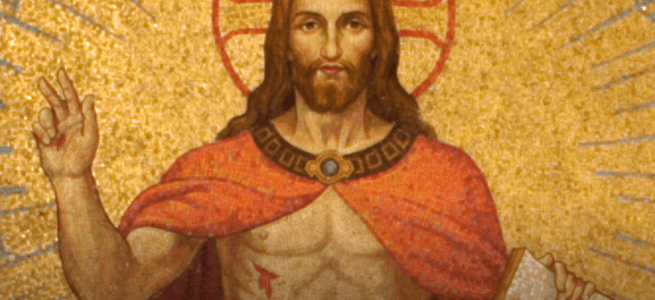
Is Jesus God? [Questioning faith #9]

Ted Grimsrud—December 8, 2022

Many years ago, I had a friend who was probably the most principled person I have ever known. As a young college professor, he was denied tenure in large part because he sided with a student in a dispute with one of the school’s high administrators. My friend and his family then moved to a new town on the other side of the country.

A few years later, he was offered a teaching job at another college. However, he didn’t take the job because he could not sign the school’s doctrinal statement. The school dean argued with my friend—“Nobody takes this statement seriously. Just sign it; we don’t care if you agree with it or not.” What was the issue? The divinity of Jesus Christ. The doctrinal statement said something to the effect that “we believe Jesus Christ is God Incarnate.”

Now, my friend was hardly a liberal. He was kind of a biblical literalist, and he didn’t think the Bible itself taught that Jesus is God. He didn’t give much weight to the later creeds and confessions that make that affirmation. At that point in my life, I hadn’t really questioned the standard “orthodox” view, but my friend’s costly commitment to his belief system impressed me. So, I started thinking about this question, “is Jesus God?” I still haven’t figured it all out, though.

What’s the question?

One of the difficulties I have is that I can’t quite figure out what the statement “Jesus is God” actually means. It seems a bit like saying that in the 4th quarter of a close basketball game, Steph Curry is a cold-blooded killer. You have a sense of what the statement means, but it’s a metaphor. A person playing basketball is not in any literal sense a killer. But Curry can be like a cold-blooded killer when he ignores the pressure and makes a crucial shot that leads to his opponent’s defeat.

Continue reading “Is Jesus God? [Questioning faith #9]”

Is there a place for prayer in a world with a weak God? [Questioning faith #6]

Ted Grimsrud—November 17, 2022

Prayer has never been something I have been comfortable with. For a number of years after my conversion when I was 17, I tried pretty hard to make it part of my life. I even bought a book considered to be a classic by fundamentalist preacher, John R. Rice, Prayer: Asking and Receiving. I read it eagerly, but it did not actually help me that much. It might be interesting to figure out why I couldn’t get into prayer, but I’ve never spent much time on that kind of reflection. I suspect it at least partly has to do with me being a pretty rational, concrete person. The idea of actually conversing with an unseen being never quite made sense—even when I believed in such a personal, all-powerful being.

On prayer: Live and let live

After those first few years following my conversion when I did feel like a failure because I wasn’t into prayer or (this would be a different story) personal evangelism, my non-praying approach to faith never bothered me much. I was generally comfortable when called upon for public prayer, but that was about the extent of my self-conscious attempts to speak to the almighty. Along the way, I would occasionally read something about prayer that was a lot less directive than John R. Rice had been—prayer more as thought (“please keep me in your thoughts”), meditation, or simply cultivating good will. At one point, I read an interesting bestselling book by a medical doctor, Larry Dossey, Healing Words.

I don’t remember Dossey’s book very well, it was probably nearly 30 years ago that I read it. As I remember, he was actually an agnostic religiously. He studied prayer as a phenomenon practiced by people across the spectrum of religious faith and found it to be an efficacious practice. People who prayed and people who were prayed for tended to have better outcomes as a whole. I found it to be an attractive argument—and still do. But it didn’t really change anything for me. In facing a few of life’s difficulties and grievous moments, I didn’t find myself any more likely to pray in any kind of self-conscious, overt way.

I can’t imagine taking the time to do so, but it would be kind of interesting to reread the Rice and Dossey books together to compare and contrast. Certainly, they couldn’t be farther apart in what they actually believe about God. Yet, they seem to share a similar idea—prayer actually works and can affect what happens in people’s lives.

Continue reading Is there a place for prayer in a world with a weak God? [Questioning faith #6]

What is the Holy Spirit? How does it work in the actual world we live in? [Questioning faith #5]

Ted Grimsrud—November 14, 2022

I’ve never known how to think about the Holy Spirit, “the third person of the Trinity.” As I remember, one of my first stirrings of resistance to doctrinal orthodoxy when I was in my early 20s had to do with questioning the idea that it was meaningful to call the Holy Spirit a “person,” to think of the Holy Spirit as part of God in the same sense as Jesus and “the Father.” But I can’t say that I have spent a lot of time thinking about it or researching it.

Problems with “Holy Spirit” doctrine

It was pointed out to me in a seminary class in 1981 that there is something a bit strange in the Apostles’ Creed—at least strange if one is expecting the Creed to give us a definition of the Trinity. It starts with clear, albeit brief and rather cryptic, statements about belief in “God the Father almighty” and in “Jesus Christ, his only Son.” But when we get to the “Third Person,” all we get is this, “I believe in the Holy Spirit.” This is then followed by five beliefs that are also only mentioned, not defined. So, what does it mean to “believe in the Holy Spirit”? The original Nicene Creed of 325 also simply says “we believe … in the Holy Spirit” without explanation.

We do get more in the revised Nicene Creed of 381 (also known as the “Nicene-Constantinople Creed”). “We believe … in the Holy Spirit, the Lord and Giver of life, who proceeds from the Father, who with the Father and Son together is worshiped and glorified, who spoke by the prophets.” This helps a little, especially the notion of the Holy Spirit as the “Giver of life.” That is one place that does seem to touch on what we learn from the Bible, especially Genesis 1–2 where we read of the Spirit moving over the waters at the moment of creation and of the Spirit being breathed into the dust of the earth at the creation of the first human being.

Part of my problem from early on was my sense that the idea of the Holy Spirit as a kind of doctrinal necessity (as if, for whatever reason, we need a threesome in our Christian doctrine of God to differentiate us from Judaism and Islam) did not ring true. It didn’t seem warranted from the Bible, and it was part of the making of God into a creature of dogma rather than the experience of love and relationality in life. What happened, though, was that I mainly lost interest in the Holy Spirit. It has always seemed kind of peripheral to faith, not something worth thinking about all that much.

Continue reading What is the Holy Spirit? How does it work in the actual world we live in? [Questioning faith #5]

Why is the typical Christian understanding of “God” such a problem? [Questioning Faith #2]

Ted Grimsrud—November 3, 2022

In my early teen years, I often engaged in conversations with my friends about God. As none of us were churchgoers, we didn’t simply repeat orthodoxies. We were all trying to figure things out for ourselves. We were pretty naïve, as near as I recall. I wish I could remember more about what we talked about. I do remember that at one point I decided I was an atheist—which of course meant that I was pretty preoccupied with the “God” I didn’t believe in. I would say now that I was only an atheist in relation to my conscious ideas about God, which were uninformed and basically had to do with some big, all-powerful person in the sky. It took me awhile to figure out that there was a different kind of God that I did believe in.

When I was 15, I attended my first funeral. It was an extra sad one, a popular guy in the community who died of cancer in his late 20s. During a prayer time during the service, I felt God’s presence and decided at that point that I did believe in God. I had little sense of what that meant, but I was eager to figure it out. I had a close friend who had recently joined the local Baptist church. In a careful, thoughtful way, he guided me in a process that culminated about two years later in my decision to accept Jesus as my personal savior. I then began a journey among the fundamentalists (defined as people who affirm that label for themselves).

A desire to believe in God

I think ever since, I have always sincerely wanted to believe in God and to live truthfully. At first that meant affirming the understandings of God that I received from the Baptists. Those were standard beliefs—God is a (male) person who is all-powerful, in control, and a jealous God. This God is just, angry at those who disobey him, and forced by the demands of justice to punish the disobedient. Accepting Jesus as your savior means that you will get to go to heaven to spend eternity with God. Jesus can save us and turn God’s anger to mercy because he died on the cross and took our place as the recipient of God’s punitive anger. God wants us to turn to him in prayer throughout each day, to read the Bible regularly, to share the gospel with others, and to worship with God’s people in church at every opportunity.

Continue reading Why is the typical Christian understanding of “God” such a problem? [Questioning Faith #2]