And they call it democracy…. Critical thoughts on America’s proxy war

Ted Grimsrud—August 24, 2023

[Early in 2022, after Russia greatly accelerated its military engagement with Ukraine, I wrote several blog posts and then some shorter posts on Facebook with my reflections. After all these months, I decided to re-engage these issues as the war continues unabated. Here are several recent Facebook posts.]

War, what is it good for? Absolutely nothing! (August 3, 2023)

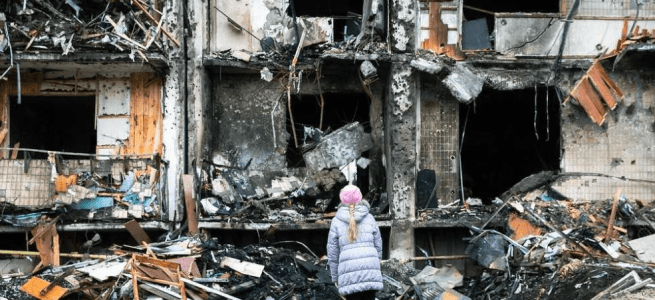
War almost always ends up way worse than those who initiate it expect. Classic examples are the American Civil War and World War I, in both cases famously entered into by all sides with the expectation the war would be quick and victorious. What followed were the two worst bloodbaths in human history up to the time with indecisive results. American history in the past 75 years is full of case after case of this dynamic (e.g., Korea, Vietnam, Iraq, Afghanistan).

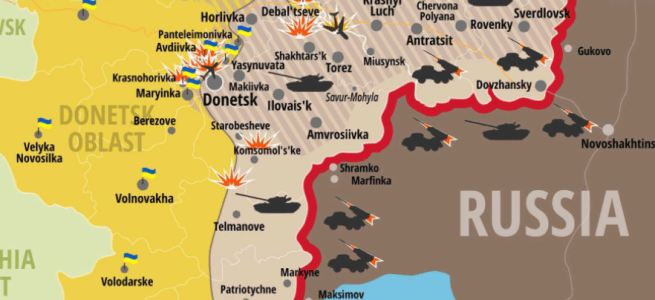
Almost certainly, Russia expected its direct military intervention in the Ukrainian civil war to end quickly back a year and a half ago. There is a chance it might have had the negotiations of the Spring of 2022 managed to reach a conclusion. However, Ukraine pulled back, and the current devastating war of attrition accelerated with no happy ending in sight.

More controversially, some observers are suggesting that the US/NATO side of this conflict was also a miscalculation that is leading to profoundly negative unanticipated consequences for that side. One of these observers is the American political scientist John Mearsheimer, a professor at the University of Chicago. Mearsheimer is often categorized as a “realist” who, it could be said, believes in the American Empire but believes many of the past and current actions of the empire are ill-considered and self-defeating.

In a recent interview, he reemphasizes his perception that the Ukrainian counteroffensive against Russian forces in eastern Ukraine right now is essentially a hopeless operation and has been from the start. The West pushed Ukraine into this operation, but to Mearsheimer, it was “like encouraging them to launch a suicidal offensive that is completely counterproductive.” Why the push? “The West is very fearful that time is running out, that if the Ukrainians don’t show some significant success on the battlefield in the year 2023, public support for the war will dry up and the Ukrainians will lose—and the West will lose.”

Continue reading “And they call it democracy…. Critical thoughts on America’s proxy war” →
The pattern of Jesus (Revelation, chapters 1–5)

Ted Grimsrud—August 8, 2023

[This is the second of a series of four posts on the book Revelation. The first is “Reading Revelation with an Anabaptist Sensibility.” The third is “Healing amidst the chaos (Revelation, chapters 6–16).]

If we take up the book of Revelation expecting it to present a case for the truthfulness of the peaceable way of Jesus, we will find plenty of evidence to confirm that expectation. The first five chapters introduce us to Jesus and his presence among Christian congregations of the late first century. These chapters make it clear that Jesus’s way stands in opposition to the domination system of the Roman Empire of the time—and all empires since.

The pattern of Jesus (1:1-6)

The first six verses of the book set the stage for what the book as a whole will be about. This is the “revelation of Jesus Christ.” That is, this is the Jesus of the gospels. We may accurately say this revelation comes from Jesus. More so, though, I think the meaning is that this book is about Jesus. And about interpreting life in light of Jesus. Once we look for it, we will see throughout the book allusions to the way of Jesus—or, as I want to say, “the pattern of Jesus.”

The word translated “revelation” is apocalypsis, may also be translated “apocalypse.” I think that latter translation may be misleading for us, though. It often has the connotation of future oriented, catastrophe oriented, kind of magical. Revelation is all too often seen as a different kind of writing than the rest of the Bible (“apocalyptic” literature). We should note that the word is not used again in Revelation. The book does not seem to want to make a point of being different. I think the best meaning is that this is a book of insight about Jesus and applying his message to life. This book is about our world, both the 1st century and the 21st century.

The statement, the “time is near” is not about predicting the future but rather urgency about the importance of the message of the book. To say “near” is a rhetorical flourish that has to do with the importance of choosing between Jesus and the Empire as the bases for one’s approach to life. We see an increased sense of urgency as we move through the three sets of plagues that come later in the book—going from 1/4 destruction to 1/3 to full, not to signify chronology but to say with increased intensity that this stuff really matters.

Continue reading “The pattern of Jesus (Revelation, chapters 1–5)” →

Why did Christianity move so far away from the message of Jesus? [Questioning faith #7]

Ted Grimsrud—November 21, 2022

From the time I made a commitment to Christian pacifism in the mid-1970s, I have believed that Jesus and the Bible as a whole support that commitment. In the years since, I have learned a lot more about how this “support” is complicated and at time ambiguous. However, I still believe that the general message of the Bible and more clearly the message of Jesus obviously point toward peace, compassion, care for the vulnerable, and what we now refer to as restorative justice—even if some may quibble about whether it explicitly teaches pacifism.

A few years after my turn toward peaceable Christianity, my wife Kathleen and I spent a year at the Anabaptist Mennonite Biblical Seminary. We gained a terrific foundation there of biblical peace theology, especially from Old Testament professor Millard Lind and New Testament professor Willard Swartley. I have preached through much of the Bible in the 40 years since attending AMBS, each year during my 20-year teaching career at Eastern Mennonite University I taught a class called “Biblical Theology of Peace and Justice,” and I have written several books on peace based on the Bible. I feel quite established in my sense that the Bible (especially, but not only, Jesus) gives us a strong message of peace.

The difference between the Bible and Christian practice

So, that leads to the obvious question. What happened to Christianity? The history of Christianity is a history full of wars and militarism, conquest and domination, crusades and the embrace of empire. One statistical piece of evidence comes from the United States. In 1940, after several years of intense lobbying by peace advocates, the legislation passed to begin a military draft included allowance for pacifists to be exempt from joining the military. So, this proved to be kind of a test case.

From my analysis, I would estimate that about one out of 1,000 American Christians chose the conscientious objector route. For the vast majority of the young men who were drafted, the option to be a CO—and the sense that Jesus would support such a stance—seemingly never even entered the realm of possibility. Not only have Christians around the world almost always supported their nations’ wars, even when they would be fighting other Christians, it actually seems to be the case at least in the United States that Christians are more likely than non-Christians to support wars and preparation for wars. It doesn’t seem farfetched to call Christianity a pro-war religion—the opposite of Jesus’s message.

So, again, the question: Why the transformation? This is a question that has interested me for a long time, but I have never devoted serious attention to it. I have come up with a preliminary list, though, of what seem to be key elements of the evolution away from Jesus’s teaching.

Continue reading “Why did Christianity move so far away from the message of Jesus? [Questioning faith #7]” →

More thoughts about Ukraine and the American Empire [Pacifism Today #8]

Ted Grimsrud—June 23, 2022

[In early March, as the conflict in Ukraine gained the world’s attention, I began to write about that conflict, especially in relation to the American Empire. I posted a blog entry, “Thinking as an American pacifist about the Russian invasion” on March 3. On April 10, I posted “Reflecting morally on the conflict in Ukraine,” a collection of four shorter Facebook posts from the previous month. This current post also collects Facebook posts and leaves them essentially unchanged.]

So, what’s going on with Russia/Ukraine? [5.10.22]

I have struggled with how best to understand the current conflict in Ukraine and, especially, the American role in it—especially in light of Jesus and his biases toward peace and against the power elite. These are some brief points about which I have developed some clear impressions (subject to revision):

1. The US has been seeking a unipolar world at least since 1945 (for example, note the size of the American military budget in relation to the rest of the world and its extensive set of military bases around the world). This quest for global dominance has led to the US relationship with the Soviet Union/Russia to be very adversarial. Russia has a long history of facing aggression from the West going back to Napoleon.

2. Ukraine was the site of armed conflict before the Russian invasion in early February 2022, with thousands dying since 2014. What happened in February was an acceleration of the conflict, not an initiating of it.

3. There are great profits for arms dealers (war profiteers) in the deepening of this conflict. These profits come on top of the great profits throughout the Cold War era and the resistance to a post-Cold War “peace dividend.” These profits have been a key factor driving American policies.

4. Our mainstream (corporate) media are mainly repeating what they are being fed by government. Note the lack of dissenting voices in relation to the militarized American response in the core national media (e.g., Times, Post, NPR, CNN, MSNBC, New Yorker, Atlantic).

Continue reading “More thoughts about Ukraine and the American Empire [Pacifism Today #8]” →

Reflecting morally about the conflict in Ukraine [Pacifism Today #6]

Ted Grimsrud—April 10, 2022

[In early March, as the conflict in Ukraine gained the world’s attention, I wrote a blog post, “Thinking as an American pacifist about the Russian invasion.” In the weeks since then, I have continued to think—and posted several shorter reflections on Facebook. I have gathered those pieces into this blog post essentially unchanged.]

Some different concerns in response to the Russian invasion [3.9.22]

Like most people I know, I am heartsick about the Russian invasion of Ukraine and the possibility of an expanding and continuing conflict. However, I don’t notice many other people voicing some of my main concerns.

It was almost 50 years ago that I first learned that my country’s leaders regularly, and to devastating effect, lied to justify engagement in unjust and disastrous military actions around the world. When I was in college, I learned to know numerous Vietnam War vets who told me stories that made my hair stand on end. To a man, they bitterly spoke of the lies we Americans were being told about that war.

Continue reading “Reflecting morally about the conflict in Ukraine [Pacifism Today #6]” →

How empires go bad: A peaceable reading of Romans (part 2; 1:16-32) [Peaceable Romans #9]

Ted Grimsrud—March 7, 2022

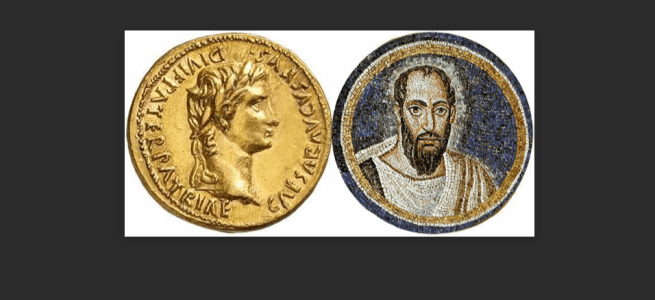
More than a treatise on doctrine or a discussion preoccupied with the Christian religion and the Jewish religion, the book of Romans is a presentation focused on faithful living. And for Paul, faithful living meant embodying the way of Jesus. As I discussed in the first of this long series of posts working through the teaching of Romans, Paul begins Romans by setting up a contrast between the gospel of God as presented by Jesus and what we could call the “gospel” of the Roman Empire.

In the second half of chapter 1 of the book of Romans, Paul provides an analysis of the domination dynamics of the great nations of the world, which are the dynamics of idolatry that refuses to express gratitude to the Creator but instead puts trust in human creations (including empires and emperors). In trusting in creatures rather than the Creator, human societies inevitably ground their priorities in exploitation rather than gratitude and evolve toward injustice and violence. Without stating it explicitly, Paul seems clearly to evoke the awareness his readers in Rome would have of the particular injustices and violence of their city’s leadership class.

The gospel of God vs. the gospel of Caesar

As we continue to the following chapters of Romans, we will see that Paul’s focus in the book as a whole is not on a critique of Empire but on developing his alternative gospel. If the Empire’s gospel is a one of death, what does a gospel of life look like? If the Empire’s way of life leads to injustice, what is an alternative way of life that leads to justice?

Continue reading “How empires go bad: A peaceable reading of Romans (part 2; 1:16-32) [Peaceable Romans #9]” →

Thinking as an American pacifist about the Russian invasion [Pacifism Today #5]

Ted Grimsrud—March 3, 2022

Times of war fever are always challenging for those who are disposed to oppose most if not all war. Tragically, we are in the midst of such a time now. So, it seems timely to reflect a bit on how an American pacifist might think about our current crises. By “think about,” I mainly have in mind thinking about the underlying core peace-oriented convictions and how they might shape how we see our current situation.

I have in mind a pretty general definition of “pacifism” here. I’m thinking of it as roughly equivalent to, say, being a humane person, a person who supports social and political self-determination for all the people, a person who affirms the United Nations Universal Declaration of Human Rights. The key points would be a belief that supporting war is antithetical to humane values, to the practice of self-determination, and to an affirmation of universal human rights.

A pacifist, in this sense, would be suspicious of all those who do support the practice of and preparation for warfare. This suspicion is especially strong toward those who profit from such preparation and practice. We would not, for example, assume that those leaders in our society who are positive about preparation for war are to be trusted as truthtellers. That is, we are distrustful toward our most powerful media outlets and the spokespeople for our military policies and military-oriented responses to crises. We also recognize we need to be self-conscious about the impact of the mass media in shaping people in our society to be positive about America’s military policies and practices and preparations. It takes an effort to resist that shaping.

In what follows, I will organize my thoughts in a series of brief reflections.

Continue reading “Thinking as an American pacifist about the Russian invasion [Pacifism Today #5]” →

Paul’s antidote to Empire: A peaceable reading of Romans (part 1; 1:1-17) [Peaceable Romans #8]

Ted Grimsrud—February 28, 2022

I have long believed that the Apostle Paul, and especially his letter to Jesus followers in Rome, is a friend to peacemakers, not a thorn in our flesh. And I have often argued with various friends over the years who don’t agree. The issue, in essence, has been whether Paul is a friend or enemy for peace-oriented Christians. I’d say “friend!”; they’d say “enemy!” And off we’d go.

Part of the problem for me has been that many of Paul’s biggest supporters have not been people I necessarily would want to be allied with—those who oppose welcoming gays into the church, those who support patriotic wars, those who teach a gospel of human depravity and the need for an individualistic kind of personal conversion (what I was taught years ago as the “Romans road to salvation”). Paul’s most famous piece of writing, his letter to the Romans, contains what are surely two of the most hurtful, destructive passages in all of the Bible. I’m thinking of the part of chapter one that seems to condemn gays and lesbians. These verses are almost always cited when Bible-believers speak against Christians taking a welcoming stance. And I’m thinking of the verses in chapter 13 that begin, “let every person be subject to the governing authorities.” I know from my research that Romans 13 is by far the most important part of the Bible for those who argue against pacifism and in favor of “necessary” war.

Paul’s antidote to Empire

Yet, still, I want to say, to paraphrase Paul’s own words: “I am not ashamed of the Apostle Paul and his letter to the Romans.” I want to explain why in a series of blog posts that will work through the letter. I will show that the typical uses of Romans to support hostility toward gays and to support going to war are misuses. More than refuting misuses of Romans, though, I want to show how Romans can be a powerful resource for peace in our broken world. I want to show how Paul gives us an “antidote to Empire.” Paul presents a story that is meant to subvert, counter, even overturn the story the Roman Empire told about what matters most in life. Sadly, we need this subversion, countering, and overturning of the story of Empire as much today as ever.

Continue reading “Paul’s antidote to Empire: A peaceable reading of Romans (part 1; 1:1-17) [Peaceable Romans #8]” →

Interim reflections on the 2020 election [American politics #7]

Ted Grimsrud—November 5, 2020

As I write this late in the morning on Thursday, November 5, the outcome of Tuesday’s election is still in doubt. Biden does seem likely to win the initial round based on the vote. We’ll have to see about what happens with the Trump-resisting-that-outcome round. Right now, it’s hard to see what grounds there could be to overturn the outcome—but we have little reason to have a lot of confidence in the fairness of the final decision-makers. The Senate looks likely to be 50-48 for the Republicans with two Republican-leaning seats in Georgia set for a run-off.

So, wow! This is not what I expected. It actually seems fairly disastrous. Here are a few interim thoughts.

The effectiveness of the Republican strategy

Clearly, the Republican efforts to repress the vote played a huge role—given that the vote was close. Florida, Texas, and Georgia would all likely have gone for Biden if the voting process had been like, say, Oregon’s where the state actually wants everyone to vote. Even if somehow enough of the remaining undecided states tip to Biden it is far from certain that all of the Republicans’ legal shenanigans won’t overturn such an outcome.

The key here, though, is that the vote had to be close for the Republican strategy to hope to succeed. If the election had gone as the polls seemed to indicate, I suspect Biden’s margin of victory would have been large enough that the Republican tactics could not have turned things around. That leads to a big question—how could this election have been that close?

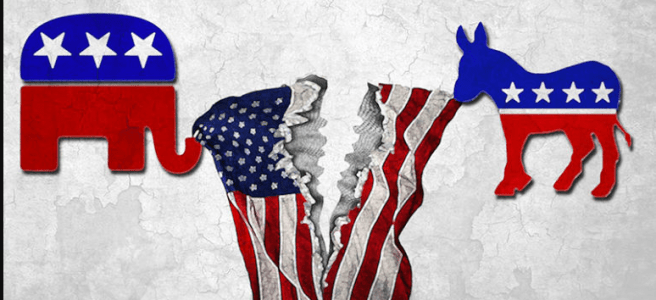
The hope I allowed myself to cultivate was that a Democrat in the White House and Democratic control of the Senate would have at least one potentially huge effect (pessimistic as I am about the corporate Dems in general). That is, that Congress would quickly pass and (following the Senate eliminating the filibuster) the President sign House Bill #1 from 2019 that would enact significant reforms in the US election processes and make it much more likely that Republican voter suppression would be curtailed and that we could hope for more honest elections. The idea was that Trump’s venal incompetence in face of COVID-19 would open the door for a genuine move toward democracy.

However, the Democrats failed to take advantage of the situation. The day after this election, the US topped 100,000 new COVID-19 infections for the first time. The Republican Party, led by its president, has utterly failed in its responsibility to the country in relation to this pandemic—and yet surpassed all expectations in electoral success. This is the biggest shocker of the election, I think. When satirist Andy Borowitz tweets: “If Trump cared as much about stopping COVID as he does about stopping voting, we’d still be able to spend Thanksgiving with our families,” I think of that truth as a condemnation of the Democrats. How could they allow Trump and his Party to get away with this?

Continue reading “Interim reflections on the 2020 election [American politics #7]” →

The Crisis in American Politics: A 2020 Campaign Diary [3]

Ted Grimsrud—May 15, 2020

[More than any other presidential campaign in my lifetime, I paid attention to and cared about the 2020 campaign. Beginning in January, I wrote a number of short posts on my Facebook page. There will be many more twists and turns before November, I am sure, but virtually all my hopefulness has drained away. I fear the people of the United States and the world are heading into a time of even deeper darkness. This post captures a bit of the up and down of my sense of hope. These are excerpts from the Facebook posts. Here’s Part I: Sanders Ascendent and Part II: Biden Takes Control.]

Part III: Taking stock

April 14, 2020

How did Trump get elected? [The first of three sections]

I don’t think it’s an exaggeration to say that this year’s presidential election is the most crisis-surrounded one since 1932. No one knew then what kind of president Franklin Roosevelt would be. He was far from perfect, but he rose to the occasion and helped make things better. I have no hope for such an outcome this year. How should we think about this? Let’s start with the 2016 election.

Barack Obama won the 2012 election fairly comfortably, and most expected Hillary Clinton to follow suite. She did win the popular vote by about 2% but lost in the electoral college. My sense is that two key parts of the electorate that had supported Obama did not give Clinton the same support: (1) some white working class people who voted for Obama and then voted for Trump and (2) some younger people who voted for Obama and then didn’t vote for president in 2016 (e.g., supposedly in Michigan the number of people who voted but left the line for president blank was four times higher than Trump’s margin of victory). The numbers didn’t have to be huge, just enough to make a difference. It appears that Trump did not out-perform Mitt Romney (46.1% of the vote compared to Romney’s 47.2%); the difference was that Clinton under-performed Obama, especially among those two groups.

Clinton, it seems, ran a campaign focused more on putting Trump down than on offering a strong, positive vision that would give undecided people a reason to vote for her. She barely campaigned in the key rust belt states that turned the election. She showed inadequate interest in and empathy toward working people (white and black) who had been hurt by the economic crises of 2008-9. She did little to build bridges to Bernie Sanders’s constituencies. Her tone was that “everything is great” in America, something that may have felt tone-deaf to people who struggled to get by. Continue reading “The Crisis in American Politics: A 2020 Campaign Diary [3]” →