The tragic American Empire story in light of the gospel

Ted Grimsrud—October 24, 2025

I recognize my upbringing as a proud citizen in the world’s most powerful empire to be part of my identity. As I described previously, I experienced an eventful meeting between two world-defining stories—the American Empire met Jesus’s gospel of peace. American Christians tend to see faith and nation as fully compatible, even mutually reinforcing. In contrast, for me their meeting was a collision that forced me to make a choice. It had to be one story or the other.

I chose the Jesus story to be my defining story—and chose against the American Empire. That choice led me to affirm Christian pacifism and turn from the uncritical nationalism central the Empire story. I started to interpret the story of the American Empire without blinders. At the same time, I found the Bible to be a key source for a peace-oriented, anti-empire defining story. My fundamentalist Christian teachers had asserted a high view of the Bible as direct revelation from God. However, such an assertion had not protected them from uncritical nationalism. Rather than rejecting the Bible when I rejected fundamentalism, I started reading the Bible in a different way. I no longer ignored Jesus’s peace teaching as I had been taught; I made it central.

The basis for stepping away from uncritical nationalism

When I began to read the Bible for peace, I noticed its critique of uncritical nationalism. I noticed the Bible did not teach the submit-to-the-government message as Americans assumed. If the Bible be central, I would choose Jesus’s gospel of peace instead of uncritical nationalism. The Old Testament provides a template, in Torah, that critiques all human territorial kingdoms. Torah pointed to a new kind of kingdom committed to justice and the wellbeing of all its people. The Old Testament kingdom, though, in practice evolved ever more toward injustice, militarism, economic stratification, and corruption. The brokenness grew to a point where the prophets saw the kingdom’s leaders not as agents of God but as enemies of the original vision of a just society.

Eventually, those who retained a commitment to Torah made sustaining those convictions more important than remaining loyal to any kind of territorial kingdom. The story continues with Jesus’s ministry. He announced the presence of God’s kingdom as a non-territorial communal expression of the ways of Torah. Echoing Genesis 12, Jesus’s kingdom message meant to bless all the families of the earth. This blessing would not come through a close connection with territorial kingdoms (or nation-states). Rather, the blessing would come through the witness of countercultural communities that put convictions about the ways of Torah at the center.

Does this story have relevance for our contemporary world? Let me identify four biblical themes that speak to life amidst the world’s empires. (1) The practice of justice should define the aspirations of societies that seek to be healthy. This justice will center on care for the vulnerable of the community since a society cannot be healthy without the good health of those most easily exploited and discarded. (2) People in power should always be treated with skepticism. Power tends to corrupt. People in power tend to be deluded by their commitments to sustain that power at all costs. Such people should be pushed to guide the society toward justice with an expectation that they will likely tend toward serving their own interests and not those of the vulnerable in society. (3) The “horses and chariots” problem tends to define territorial kingdoms and leads to the proclivity to prepare for and engage in warfare (warism). The accumulation of weapons of war favors society’s wealthy and powerful and leads to devastating conflicts. (4) Throughout human history (and in the Bible’s stories), territorial kingdoms and nation-states have provided some of the central rivals to God as the objects of human trust. This type of idolatry, as Israel’s prophets show, leads directly to injustice.

Continue reading “The tragic American Empire story in light of the gospel”

On voting for warmongers—or not [American Politics #11]

Ted Grimsrud—September 26, 2024

I still haven’t figured out what to do with my ballot for the 2024 presidential election. Our mail-in ballots arrived the other day and are sitting on our dining room table. There are some things I am certain about—I won’t simply throw the ballot away. I will vote (though not enthusiastically) for the Democratic Party candidates for the House and the Senate. I will not vote for Donald Trump.

However, I don’t know if I will vote for Kamala Harris. Unlike in the past, I will probably not vote for a third-party candidate. But I might leave that line blank. Or, a slight possibility, I might decide at the last minute to go ahead and vote for Cornel West (kind of for old times’ sake, I have greatly appreciated his speeches and writings over the years).

Almost exactly twelve years ago, I wrote a blog post: “Should a pacifist vote for a warmonger?” (plus, two follow-ups: “More thoughts about voting [or not] for a warmonger” and “Faith and politics [including voting]”). My answer, in relation to the re-election campaign of Barack Obama, was a carefully reasoned “yes.” That assertion elicited a truly enjoyable and lengthy conversation in the comments section of my post from a diversity of friends and other readers. Some agreed with me, and some did not. Those who disagreed were generally of a mind that not voting for president was a valid principled stance for Christian pacifists. Some who agreed with my decision to vote for Obama did not agree with my characterization of him as a “warmonger,” but were happy I was not sitting the election out.

What’s different compared to 2012?

Now, though, I am saying that I’m not yet persuaded to vote for Harris. What is different this time around? That is a challenging question for me. Before I looked at my 2012 post, I was not thinking about what I had decided back then. Now I realize that I am changing my argument. Why? Do I think I was wrong back then?

Continue reading “On voting for warmongers—or not [American Politics #11]”

Twilight of the American Empire: A Time for Despair? [American politics #8]

Ted Grimsrud—March 12, 2024

The more I learn about the history of the United States, the more I question whether this country has ever had an actually functioning democracy. In the mid-19th century, abolitionist leaders Frederick Douglass and William Lloyd Garrison argued with each other about whether the problems with the then oppressive American slavery-embracing nation-state were due to roots found in the Constitution or more in spite of the Constitution. About 100 years later, a similar debate emerged between Martin Luther King, Jr., and Malcolm X. I find myself inching in the direction of Garrison and Malcolm and their views that the Constitution is a much bigger part of the problem than the solution.

Regardless of what we think about the original intentions of the Constitution, though, the facts seem to be that it has failed to prevent the emergence and growing reality of an American oligopoly characterized by the rule of a wealthy (and ruthless) elite at the expense of the wellbeing of the mass of the nation’s population—in defiance of the actual will of the people. I suspect that the US has always by and large been an oligopoly and that the myth of popular self-rule has always been mostly untrue. Nonetheless, things seem to be getting worse, and we currently face an extraordinary crisis with no hint of a creative way out of it.

Continue reading “Twilight of the American Empire: A Time for Despair? [American politics #8]”

The Toxic Sludge in America’s Soul: The Tragedy of Systemic Racism (Civil War #8)

Ted Grimsrud—November 6, 2020

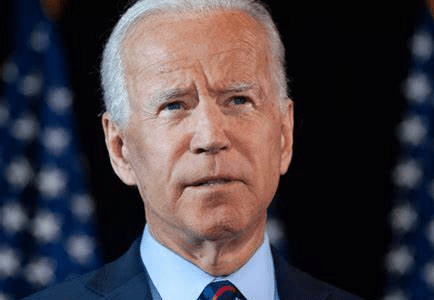
As I write this, Joe Biden nears the number of electoral votes needed to become President of the US.  Donald Trump is fighting all out to prevent that outcome, but at this point seems most likely to fall short. However, enough people did vote for Trump—millions more than in 2016—that the contest is close enough that the possibility of Trump’s success can’t be ignored. Something that troubles me deeply is the question of how the election could have been this close.

I suspect that to answer that question will require, among other things, a deepened awareness of American history. How is it that we have an electorate that would offer so much support for a vicious, incompetent, narcissistic individual whose most remarkable feature might be his utter lack of redeemable characteristics? There is literally nothing to like about Trump—no compassion, no empathy, no sense of humor, no insightfulness, no loyalty, no sincerity, no generosity, and nothing else that is attractive on a human level. Trump gained and sustained power by appealing to the worst aspects of this country’s character and ruthlessly exploiting the many weaknesses of its political system.

The Civil War, white supremacy, and their toxic legacy

As I have been studying the American Civil War and the “peculiar institution” (slavery) that triggered it—and the on-going legacy of both that war and its context of white supremacy—I have been impressed with a sense of this large chunk of the nation that has been resolutely opposed to recognizing the humanity of the people forcibly enslaved and exploited and their descendants. The persistence of that opposition is breathtaking once one notices it—and may in significant ways help explain our country’s current political brokenness.

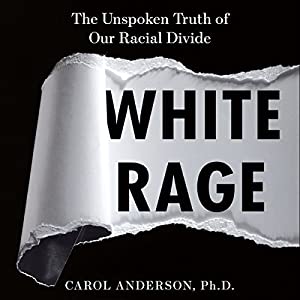
I gained some insights from a book I recently read by Carol Anderson, a historian at Emory University, called White Rage: The Unspoken Truth of Our Political Divide. I don’t particularly like the title, but there is very little else about the book that I am critical of. It’s a concise, highly readable, and actually quite level-toned summary of the persistent and largely successful ways that the United States as a society has refused to give more than a few inches to the efforts of many over the years to create a more just society. It tells the story of how the US has refused to implement the promise of a nation with liberty and justice for all.

As I read this book, I thought of our current situation where about 48% of voting Americans supported our current president, seemingly regardless of how cruel, destructive, and inept his leadership might be. The reading I have been doing lately related to 19th century America, especially focused on the lead-up to the Civil War, the war itself, and its aftermath, leaves me with a strong sense of a deep-seated intractability of white supremacy regardless of how cruel and destructive it might be. Anderson’s book provides a kind of bridge account, showing how the toxic sludge of 19th century Slave Power never went away.

Continue reading “The Toxic Sludge in America’s Soul: The Tragedy of Systemic Racism (Civil War #8)”

Interim reflections on the 2020 election [American politics #7]

Ted Grimsrud—November 5, 2020

As I write this late in the morning on Thursday, November 5, the outcome of Tuesday’s election is still in doubt. Biden does seem likely to win the initial round based on the vote. We’ll have to see about what happens with the Trump-resisting-that-outcome round. Right now, it’s hard to see what grounds there could be to overturn the outcome—but we have little reason to have a lot of confidence in the fairness of the final decision-makers. The Senate looks likely to be 50-48 for the Republicans with two Republican-leaning seats in Georgia set for a run-off.

So, wow! This is not what I expected. It actually seems fairly disastrous. Here are a few interim thoughts.

The effectiveness of the Republican strategy

Clearly, the Republican efforts to repress the vote played a huge role—given that the vote was close. Florida, Texas, and Georgia would all likely have gone for Biden if the voting process had been like, say, Oregon’s where the state actually wants everyone to vote. Even if somehow enough of the remaining undecided states tip to Biden it is far from certain that all of the Republicans’ legal shenanigans won’t overturn such an outcome.

The key here, though, is that the vote had to be close for the Republican strategy to hope to succeed. If the election had gone as the polls seemed to indicate, I suspect Biden’s margin of victory would have been large enough that the Republican tactics could not have turned things around. That leads to a big question—how could this election have been that close?

The hope I allowed myself to cultivate was that a Democrat in the White House and Democratic control of the Senate would have at least one potentially huge effect (pessimistic as I am about the corporate Dems in general). That is, that Congress would quickly pass and (following the Senate eliminating the filibuster) the President sign House Bill #1 from 2019 that would enact significant reforms in the US election processes and make it much more likely that Republican voter suppression would be curtailed and that we could hope for more honest elections. The idea was that Trump’s venal incompetence in face of COVID-19 would open the door for a genuine move toward democracy.

However, the Democrats failed to take advantage of the situation. The day after this election, the US topped 100,000 new COVID-19 infections for the first time. The Republican Party, led by its president, has utterly failed in its responsibility to the country in relation to this pandemic—and yet surpassed all expectations in electoral success. This is the biggest shocker of the election, I think. When satirist Andy Borowitz tweets: “If Trump cared as much about stopping COVID as he does about stopping voting, we’d still be able to spend Thanksgiving with our families,” I think of that truth as a condemnation of the Democrats. How could they allow Trump and his Party to get away with this?

Continue reading “Interim reflections on the 2020 election [American politics #7]”

The Crisis in American Politics: A 2020 Campaign Diary [3]

Ted Grimsrud—May 15, 2020

[More than any other presidential campaign in my lifetime, I paid attention to and cared about the 2020 campaign. Beginning in January, I wrote a number of short posts on my Facebook page. There will be many more twists and turns before November, I am sure, but virtually all my hopefulness has drained away. I fear the people of the United States and the world are heading into a time of even deeper darkness. This post captures a bit of the up and down of my sense of hope. These are excerpts from the Facebook posts. Here’s Part I: Sanders Ascendent and Part II: Biden Takes Control.]

Part III: Taking stock

April 14, 2020

How did Trump get elected? [The first of three sections]

I don’t think it’s an exaggeration to say that this year’s presidential election is the most crisis-surrounded one since 1932. No one knew then what kind of president Franklin Roosevelt would be. He was far from perfect, but he rose to the occasion and helped make things better. I have no hope for such an outcome this year. How should we think about this? Let’s start with the 2016 election.

Barack Obama won the 2012 election fairly comfortably, and most expected Hillary Clinton to follow suite. She did win the popular vote by about 2% but lost in the electoral college. My sense is that two key parts of the electorate that had supported Obama did not give Clinton the same support: (1) some white working class people who voted for Obama and then voted for Trump and (2) some younger people who voted for Obama and then didn’t vote for president in 2016 (e.g., supposedly in Michigan the number of people who voted but left the line for president blank was four times higher than Trump’s margin of victory). The numbers didn’t have to be huge, just enough to make a difference. It appears that Trump did not out-perform Mitt Romney (46.1% of the vote compared to Romney’s 47.2%); the difference was that Clinton under-performed Obama, especially among those two groups.

Clinton, it seems, ran a campaign focused more on putting Trump down than on offering a strong, positive vision that would give undecided people a reason to vote for her. She barely campaigned in the key rust belt states that turned the election. She showed inadequate interest in and empathy toward working people (white and black) who had been hurt by the economic crises of 2008-9. She did little to build bridges to Bernie Sanders’s constituencies. Her tone was that “everything is great” in America, something that may have felt tone-deaf to people who struggled to get by. Continue reading “The Crisis in American Politics: A 2020 Campaign Diary [3]”

The Crisis in American Politics: A 2020 Campaign Diary [Part 2]

Ted Grimsrud—May 2, 2020

[More than any other presidential campaign in my lifetime, I paid attention to and cared about the 2020 campaign. Beginning in January, I wrote a number of short posts on my Facebook page. There will be many more twists and turns before November, I am sure, but virtually all my hopefulness has drained away. I fear the people of the United States and the world are heading into a time of even deeper darkness. This post captures a bit of the ups and downs of my sense of hope. These are excerpts from the Facebook posts. [Here’s Part I: Sanders ascendant]

Part II: Biden takes control

March 11, 2020

The Democratic Party’s presidential primaries have taken a dizzying turn these past couple of weeks. It’s been amazing, really.

One of the stunning aspects is how Biden has all of sudden become the presumptive nominee without actually doing anything to earn that status. He has scarcely campaigned and remains the same tepid candidate who was given up for dead just a short time ago.

My sense is that the most powerful factor among Democratic Party voters has been terror at the idea of another Trump term. That extreme fearfulness has been skillfully exploited by the corporate interests. They turned the fearfulness into an anti-Sanders fear (this has included, for months, an endless drumbeat of hostility toward Sanders in the corporate media), so when all the other “moderates” dropped out and left Biden as the only alternative to Sanders, fearful voters turned to him.

The end result, of course, is a terrific victory for the corporate interests—they have their boy in place (though it is a bit unsettling to have the sense that they were close to completely abandoning Biden just weeks ago until it became clear that none of the other candidates had much of a chance; they also seemed to be recognizing his weakness as a candidate). So we are left with a choice—vicious corporatocracy vs. a somewhat kinder, gentler corporatocracy. Of course, this has almost always been our only choice—but for a moment it seemed that this year might be different. Continue reading “The Crisis in American Politics: A 2020 Campaign Diary [Part 2]”

The Crisis in American Politics: A 2020 Campaign Diary [Part 1]

Ted Grimsrud—May 1, 2020

[More than any other presidential campaign in my lifetime, I paid attention to and cared about the 2020 campaign. Beginning in January, I wrote a number of short posts on my Facebook page. There will be many more twists and turns before November, I am sure, but virtually all my hopefulness has drained away. I fear the people of the United States and the world are heading into a time of even deeper darkness. This post captures a bit of the ups and downs of my sense of hope. These are excerpts from the Facebook posts.]

PART I: Sanders ascendant

January 20, 2020 notes for an unpublished post

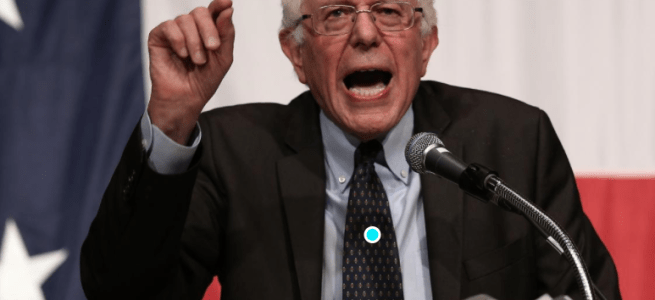
I have appreciated Bernie Sanders ever since he was first elected mayor of Burlington, VT, in the 1980s. If I think of him as a presidential candidate in relation to my ideal of what a candidate would be like, I’d rate him only fair to good. But if I think of him in relation to all the serious candidates for president I know anything about in American history, I would rate him exceptionally good. Right now, it is looking as if he has a genuine shot to win both the nomination and the general election. For the first time ever since I began voting, I feel as if we have one candidate that I can support both in terms of my ideals and the pragmatic likelihood of actually being elected.

As a voter, I tend to place a higher priority on the candidate’s fit with my political values than a sense of who would be most electable. With Sanders, though, I don’t feel as if I have to make a choice between these two approaches.

Sanders is not an extremist. Most of his values correspond with what most American people want when they are polled. At the center is universal healthcare, what Sanders calls “Medicare for All.” He also advocates what he’s calling a “Green New Deal” that will thoroughly address that climate crisis and other environmental problems. I appreciate his critique of the domination of big corporations and billionaires that corrupts our political system. He’s less of an imperialist and warist than any of the other Democratic Party candidates.

He energizes young voters, as well as other generally marginalized groups such as Latinos and Muslims. He cares deeply about the needs of black Americans, other working people, and others at the bottom of the economic hierarchy. He’s critical of the retributivist criminal justice system, he supports unions, is more positive toward Palestinians than the other candidates. He is pushing for an increased minimum wage and for much greater access to higher education and assistance for those who have accumulated major debts from their schooling.

I am optimistic that Sanders actually has a greater potential for defeating Trump than the other candidates. He understands that the Democrats need to expand the electorate and provide reasons for many of the scandalously large number of non-voters (especially young people and people of color) to enter the electoral process. At the same time, because of his critiques of free trade and other policies that alienated working people from corporate-friendly Democrats such as Hillary Clinton, he might also be able to attract some of the “Obama/Trump” voters who might have become less positive about our current president. Continue reading “The Crisis in American Politics: A 2020 Campaign Diary [Part 1]”

Socialism and capitalism: Two exhausted labels (Looking West #4)

Ted Grimsrud—February 19, 2016

When I was trying to find some glimmers of hope after the 2016 election, I wrote in a blog post that one of my thoughts was that hopefully we would see the renewed interest in progressive politics stirred by the Bernie Sanders campaign expanded. It does seem that that has happened. We certainly are getting more conversations about “socialism,” a word earlier in my lifetime generally only heard on the public airwaves as a cussword.

A lack of clear meaning

I welcome these conversations. Just yesterday, Kathleen and I listened to a couple of podcasts with interviewees talking about socialism in a positive way—one the renowned Harvard historian Jill Lepore and the other Washington Post columnist Elizabeth Breunig. But I was actually troubled by something. I never truly got a sense of what the word “socialism” means these days—or, for that matter, what “capitalism” means. Lepore even said that “socialism” doesn’t really mean anything, but then proceeded to use the term as if it did mean something.

I believe that something real is being advocated by politicians such as Bernie Sanders and Alexandria Ocasio Cortez. But I’m not sure it should be called “socialism”—though I get why they might want to use that term to indicate that they are seeking something different than the standard corporate liberalism of mainstream Democrats. Still, the term does not seem to me to be helpful. When Bernie and AOC advocate for “socialism” and Trump uses his State of the Union address to insist that “we will never have socialism” in the US, it seems all we are getting is fuel for our polarizations.

And maybe it is even worse when someone such as Lepore uses the word “capitalism” seemingly as an accurate term for our current economic system that is characterized mainly by unrestrained corporate oligopolies and monopolies. Such use ignores differences between our current system and the actual practice of competitive, free market oriented economics. Continue reading “Socialism and capitalism: Two exhausted labels (Looking West #4)”