Resistance to the American Empire

Ted Grimsrud—September 16, 2025

As the US embarked on a quest for world dominance after World War II, leaders’ quest for “full spectrum dominance” did not meet with total support from Americans. Opposition to newly expansive US warism received little media attention, though. It rarely effected policy makers. I knew nothing of the dissenters as a youth in my little corner of the world. For the story I tell in this series of posts, though, we should note the small pockets of dissent—both to indicate that American warism was not unanimous (people did dissent) and to recognize that the peace efforts that did shape my convictions beginning in the mid-1970s had important antecedents. 

Antiwar voices

In the late 1930s, many spoke in opposition to the US joining the War. Congress, which would not support a war declaration proposal from the president, did pass legislation for a draft in 1940, but only narrowly. Large movements of anti-war sentiment arose both from the right (the America First movement of traditional American isolationism) and the left (the popular antiwar movement that had arisen in the early 1930s after disillusionment with World War I). However, this war opposition almost immediately evaporated after the Pearl Harbor attack by the Japanese on December 7, 1941. With the Japanese attack the “America first” conservatives quickly jumped onboard in favor of what was widely perceived to be a war of national defense.

During negotiations in Congress on the draft, representatives from the various peace churches (led by the Quakers) managed to get alternative service for conscientious objectors included. With the popularity of the war and the government’s prowar propaganda, though, only a tiny fraction of draftees took the CO option. Most of the 12,000 draftees who performed alternative service were traditional, somewhat apolitical pacifists. Only a few thousand would have been opposed politically to the war effort. In addition to the legal COs, about 6,000 war opponents went to prison as draft resisters—though the large majority of those were Jehovah’s Witnesses whose refusal to cooperate with the draft had to do with the government refusing them ministerial exemptions, not their political opposition to the war effort.

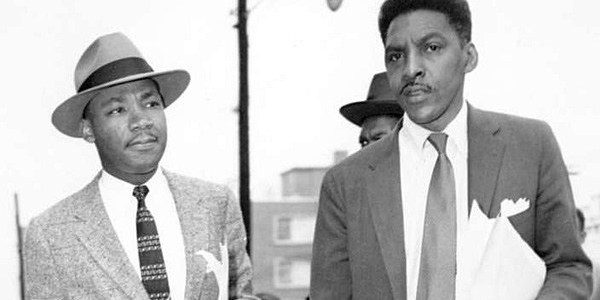
Out of the tiny handful of COs that we could understand to be anti-empire did come important leadership for the resistance that found expression in years following. Imprisoned COs such as Dave Dellinger and Bayard Rustin developed their ideas about war resistance and nonviolent social change while spending the war years in prison and emerged afterwards as important peace movement leaders. It was also the case that the experience of many of the COs during the War had a significant formative impact. For example, numerous Mennonite COs shaped educational, service, and antiwar efforts among Mennonites and in the wider society in postwar years. Mennonite pacifism tried more to influence the wider world toward peacemaking.
Continue reading “Resistance to the American Empire”

Is violence necessary to win freedom? The resistance to American slavery [Civil War #6]

Ted Grimsrud—September 4, 2019

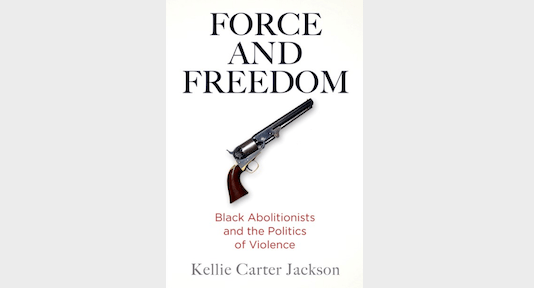
A new book challenges many of my assumptions about the role of violence and nonviolence in resistance to white supremacy and enslavement in American history. Kellie Carter Jackson, a historian who teaches at Wellesley College, in Force and Freedom: Black Abolitionists and the Politics of Violence (University of Pennsylvania Press, 2019) argues for the centrality of necessary violence in the work of resisting and ending slavery. Though she alludes only briefly to the more recent Civil Rights Movement, she seems to believe that violence was a necessary part of the positive gains made in the 1950s and 1960s as well.

An interesting book

I found this book quite interesting—which, unfortunately, is a comment I make only partly as a compliment. One of Carter Jackson’s achievements that I fully affirm is how she draws attention to the numerous black advocates for abolition in the several decades prior to the Civil War. All too often, the story of the abolitionist movement has focused almost exclusively on the white leaders with the addition of Frederick Douglass. Carter Jackson helps us see how vital and widespread the movement among black activists in the North actually was.

As well, Carter Jackson provides an insightful account of the evolution of the abolitionist movement in face of the extraordinary intransigence of white supremacists in the South and the North. At the beginning of the William Lloyd Garrison-led “formal” abolitionist movement in the early 1830s, the emphasis was on “moral suasion” that was self-consciously opposed to the use of violence to effect liberation for the enslaved. Over the following several decades, as the regime of enslavement became more entrenched—with the deep-seated collaboration of Congress, various pro-slavery presidents, and the Supreme Court—those committed to its eradication became increasingly impatient with the emphasis only on “suasion.” Belief in the necessity of violence for the liberation of the enslaved became increasingly widespread.

However, I do not believe that Carter Jackson has successfully made the case for her more wide-ranging claims (albeit usually only implicitly stated) that violence was indeed necessary, then and ever since, for achieving both liberation from slavery and social equality. In her epilogue she tellingly quotes Cynthia Washington of the Student Nonviolent Coordinating Committee from the 1960s, “I was never a true believer in nonviolence.” Washington “carried a handgun in her bag. And though she never fired it, she made it clear that she was willing to do so” (p. 160). Carter Jackson clearly sees Washington’s views on nonviolence as reflecting her own—that is, she doesn’t really give nonviolence a chance. Continue reading “Is violence necessary to win freedom? The resistance to American slavery [Civil War #6]”

Pacifism in America, part four: Pacifism in the Civil Rights Movement

Ted Grimsrud—June 7, 2019

The 20th century has accurately been called the century of total war. The massive death and destruction visited upon the people of the world especially in the first half of that century (with the constant threat of exponentially more death and destruction with the possibility of nuclear war) obliterated the basic human belief in the preciousness of life. One of the pillars of authentic human civilization is organizing society in light of the belief in the preciousness of life. That is why we put so many resources into, for example, healthcare, education, sanitation, and agriculture. We seek to make it possible for human life to thrive.

Powerfully countering all this momentum toward enhancing life, war and the preparation for war treats human life as shockingly expendable. The best and most creative resources of western civilization are focused on killing, not on enhancing life. Yet we still face profound injustices. One of the major justifications for war is the assertion that war is necessary as a means to resist evil. Are there alternative ways to resist evil without relying on violence?

As historian Joseph Kip Kosek wrote, “the problem of the twentieth century was the problem of violence. It was not, as such, Fascism, Communism, economic inequality, or the color line, though all of these were deeply implicated. It was, above all, the fact of human beings killing one another with extraordinary ferocity and effectiveness”(Joseph Kip Kosek, Acts of Conscience: Christian Nonviolence and Modern American Democracy, 5).

The massive resources the United States devoted to resisting fascism and communism in World War II did in fact not result in enhanced human wellbeing. Those efforts did not recognize as fundamental the profound problem of violence. By using violence to counter those twin ideologies over the past seventy years, the U.S. found itself on a rapid descent toward militaristic self-destruction. We do have one example, though, of significant progress in overcoming injustice without extreme violence.

The Civil Rights Movement

The American Civil Rights movement of the 1950s and 1960s, in important respects, reflected an attempt to keep the problem of violence at the forefront and to challenge a devastating social problem in light of the centrality of the problem of violence. By refusing to subordinate the problem of violence to some other problem, for a brief but extraordinarily fruitful moment, the American Civil Rights movement actually made enormous progress in genuine social transformation. Continue reading “Pacifism in America, part four: Pacifism in the Civil Rights Movement”

Pacifism and the Civil Rights Movement

Ted Grimsrud—March 13, 2011

Many say that a pillar of human civilization is organizing society in light of the belief in the preciousness of life—hence, we put efforts into health care, education, sanitation, and agriculture. Powerfully countering this momentum toward enhancing life, warfare has treated human life as expendable, as do continually expanding efforts to enhance war-making capabilities. The best and most creative resources of western civilization have focused on killing not on enhancing life.

In the words of historian Joseph Kip Kosek in his book, Acts of Conscience: Christian Nonviolence and Modern American Democracy: “the problem of the twentieth century was the problem of violence. It was not, as such, Fascism, Communism, economic inequality, or the color line, though all of these were deeply implicated. It was, above all, the fact of human beings killing one another with extraordinary ferocity and effectiveness.”

The extraordinary resources that the United States devoted to resisting fascism and communism did not yield commensurate human well-being. Those efforts did not recognize the problem of violence as fundamental. By using violence to counter these ideologies, the U.S. itself descended toward self-destruction—a descent now continuing apace in our response to “terrorism.”

One issue Kosek mentions, “the color line,” provides a counter-example. The American Civil Rights Movement of the 1950s and 1960s, in important respects, did keep the problem of violence at the forefront and challenged a devastating social problem in light of that problem. By refusing to subordinate the problem of violence to some other problem, for a brief but extraordinarily fruitful moment, the Civil Rights Movement made enormous progress in genuine social transformation.

Continue reading “Pacifism and the Civil Rights Movement”