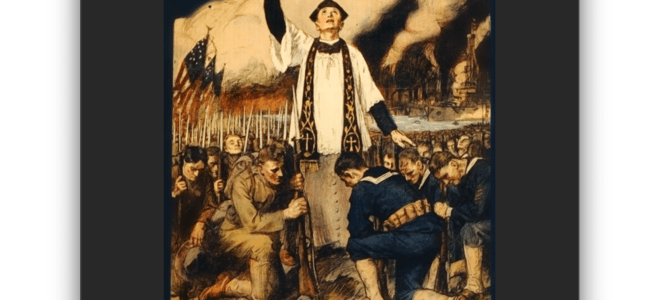
A Christian pacifist in the American Empire, Part 1: Embedded theology

Ted Grimsrud—September 13, 2023

At this stage in my life, retired but still trying to be productive with my research and writing, I find myself wanting to narrow my interests. I hope to find a level of focus that will enable me to reduce distractions and zero in on doing what I have left to do. The big theme that has my attention is trying better to understand why our world and, especially, the nation I live in are in such dire straits. I know that no matter how focused I might be enabled to be, this theme will be beyond me. But I hope that by putting my best energy into such a project I might be able to make at least a little progress.

So, I was happy to be invited to make a presentation on September 11, 2023, to the monthly meeting of the Anabaptist Center for Religion and Society at Eastern Mennonite University. I decided to share what I call a “theological memoir” that, I think, sets a personal context for my “Why is America in such dire straits?” project. By “theological memoir,” I mean reflections on what I believe are some of my important theological convictions in the context of the elements of my life that brought them forth.

I have divided the reflections I shared into three posts. This one is the first, and I will call it “Embedded theology.” It has to do with the context in which I grew up, both my family and my homeland in rural America, and what I inherited theologically. By “theology” I have in mind a sense of what matters the most, what rests at the top of our hierarchy of values. Certainly, our sense of “God” is theological, but even if we don’t self-consciously affirm God’s existence, we still have some kind of theology. All of us have a hierarchy of values, convictions about what matters the most, about what core beliefs shape our lives.

The second, “Jesus’s gospel of peace,” has to do with the transformation that happened in my theology in the mid-1970s. This was when some of the key elements of my embedded theology became crystalized, and I embraced them as a consequence of my encounter with Jesus and peace theology. I at that point came to an understanding of “peace” that I still have: Peace as having to do with the wholeness, with the health, with the wellbeing of the global community. This wholeness means the health and wellbeing of all creatures within the global community and of each sub-community. Such a sense of wholeness requires being attentive especially to the vulnerable and marginalized members of the community. It also requires a recognition that a peaceful outcome requires peaceful means at all stages—that is, violence, especially warfare, is not compatible with health and wholeness. The inspiration for my understanding of peace comes from the Bible, especially the biblical concept of “shalom.”

Then, third, I will touch on my political journey as a pastor and theology professor. I call that post, “The American Empire without blinders.” By the term “empire,” I have in mind a general sense of the United States as a superpower whose influence and engagement encompass a great deal of the world. I am not using “empire” in a particularly technical sense, but more in an everyday, general sensibility kind of way. By “American Empire,” I mainly mean, “America’s role as a dominant power far outside of its own boundaries.”

Continue reading “A Christian pacifist in the American Empire, Part 1: Embedded theology”
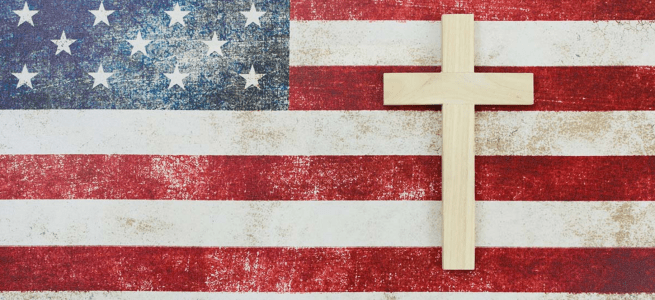
Why do so many Christians support warism? [Questioning Faith #20]

Ted Grimsrud—April 13, 2023

One of the aspects of Christianity that has long troubled me and has played an increasingly significant role in my sense of my own faith has been how Christianity has for so long and so decisively been comfortable with “warism” (by which I mean to believe in war, to have a generally uncritical and positive disposition toward preparing for, threatening, promoting, and ultimately fighting in war). I grew up in my family with a mild warism and a vague Christian sensibility and had no sense that there could be a tension between the two. After my conversion at age 17, my religious convictions became much stronger as did my warism (in church, I was presented a very favorable view of America’s wars).

However, a few years later, I embraced Christian pacifism and became convicted that warism and Christian faith should be mutually exclusive. The contradiction became apparent once I began to see Jesus’s message as politically normative for Christians. Very quickly, I also came to see warism as deeply problematic on its own terms even when not judged in light of Jesus’s message. Mainly, though, my convictions about Jesus showed me the inherent problems with warism. As John Prine sang back in those days, “Jesus don’t like killing, no matter what the reason for.” I faced a crucial historical question. What changed? If Jesus was about peace, how did his followers become so warist?

Christianity’s turn from Jesus’s way

From the time of my embrace of Christian pacifism, I have wanted to understand better why the large majority of Christians have tended not to do likewise. I learned that the history of Christianity from New Testament times to the fourth century is ambiguous on questions of war and peace. Hence, analyses tend to be contested. I feel comfortable saying, though, that earliest Christianity did (with few exceptions) apply Jesus’s teachings in a way that led to pacifism. We have no record of a Christian leader supporting participation in warfare until the 4th century.

The evolution of Christianity during its first few centuries did move in the direction of the acceptance of war even though not in overt and direct ways. The big picture political situation changed early in the 4th century when Emperor Constantine formally established a rapprochement with Christianity following generations of intense and at times deadly persecution. Christians, it seems, accepted that connection immediately and without debate and in short order became soldiers and supporters of the Empire’s wars—to the point that less than a century after the initial rapprochement, only Christians were allowed in the Roman military.

Shockingly (at least from the point of view of Christian pacifism), the history of Christianity since the 4th century is, essentially, a history of the largely uncritical acceptance of war in almost all Christian communities. This is shocking because this warism seems so drastically contrary to what Jesus advocated. It is also shocking because we have virtually no record of debate or disagreement with the turn toward war among Christian leaders. And it is shocking as well that Jesus’s life and teaching essentially disappeared from the main accounts of Christian theology and ethics (this is apparent early on in the authoritative creeds and confessions of the churches that, typically, if they mention Jesus’s life at all, jump from his virgin birth to his crucifixion).

Continue reading “Why do so many Christians support warism? [Questioning Faith #20]”

How does Christian pacifism work? [Questioning faith #15]

Ted Grimsrud—January 29, 2023

My definition of pacifism starts with the conviction that no belief or commitment or loyalty matters more than loving all others. It follows from such a conviction that participating in or preparing for or supporting warfare would never be acceptable. A key element, then, of this kind of conviction is that it requires a break from the widely held assumption that we should allow our nation to decide for us when war is okay. This assumption I call the “blank check”—the willingness (generally simply assumed more than self-consciously chosen) to do what our nation calls upon us to do, to give it—in effect—a blank check.

I have studied the responses American citizens had to their nation’s all-in call for fighting World War II. Only a tiny handful refused to take up arms, and I would say that almost universally those “conscientious objectors” shared a sense of loyalty to some higher moral conviction than accepting the blank check—and those who weren’t COs did not share that loyalty. Those who went to war did accept that their highest loyalty was owed to their nation.

If I add the modifier “Christian” to the term pacifism, the basic definition remains the same, but it adds the source of the conviction about the centrality of love. “Christian pacifism,” I would say, is the conviction that loving others is our never to be subordinated moral commitment, and this is due to the message of Jesus. Christians who aspire to have love be their central moral conviction (that is, “Christian pacifists”) look especially to Jesus’s teaching that love of God and neighbor is the heart of God’s will for human beings.

Why self-consciousness about pacifism matters

The two main inter-related reasons for why it is so important actually to understand Christian pacifism are: (1) in the long history of Christianity, hardly any Christian groups have in fact been committed to pacifism despite it being so central to Jesus’s message and (2) in the long history of human civilization hardly any Christians seem to have seriously questioned the validity of giving the state a blank check when it comes to warfare despite war being so obviously a violation of Jesus’s core message.

Continue reading “How does Christian pacifism work? [Questioning faith #15]”

Is Christian theology war theology? [Question faith #14]

Ted Grimsrud—January 9, 2023

The kind of theology I believe in is what I call “peace theology.” By “peace theology” I mean the conviction that love of God and of all neighbors are the center of faith. No other conviction or commitment is as important as love. As a result of this conviction, violence, warfare, injustice, and domination are all rejected as acceptable behaviors—that is, I believe we are called to a pacifistic way of life. One of the main emphases of peace theology is to seek to understand all of our key convictions in light of this core conviction of love.

I also recognize that the Christian tradition has not affirmed peace theology. The vast majority of Christian teaching and Christian practice has found war and other forms of violence to be acceptable for most of its history. However, I believe that peace theology is the original Christian theology—it follows directly from the life and teaching of Jesus. So, for me, one of the key questions that arises in relation to Christianity is: Why did things change (see my earlier blog post, “Why did Christianity move so far away from the message of Jesus?”)?

The social context for thinking about peace theology

The question that just now has intrigued me is this: In recognizing that Christian theology (defined here in terms of what most Christians believe) is no longer peace theology, does that mean that Christian theology is “war theology”? In this post, I want to reflect on that question. I will start with an assumption that not everyone will share. I suspect it is impossible to be neutral about war in our current world, at least in the United States. That is, the momentum in our society it towards war. Public spending, policy decisions, and the message of popular culture all are prowar, pro-preparation for war, pro-military response to conflicts. Peace theologian Walter Wink used the term “myth of redemptive violence” to describe the general disposition of American culture (and most other cultures). Americans believe that violence works to solve problems, that often it is the only thing that works. So, we are drawn to orient ourselves toward violence and warfare. Another coined term fits in describing our general disposition in the US: “warism.” By “warism” I have in mind the belief in war, a belief that leads to the acceptance of making preparation for war-making the most important focus of our society (as measured, say, by public expenditures).

In a warist world that is shaped by the myth of redemptive violence, theological neutrality is impossible. To say nothing and to ignore the dominant mythology in our society is actually to offer implicit support and affirmation. To say nothing also seems to be blind to the ways that warism shapes everything about how we perceive the world—including our theology. I tend to think we either self-consciously notice and oppose warism or we, at least implicitly, affirm it. We can’t avoid it.

Continue reading “Is Christian theology war theology? [Question faith #14]”