Why isn’t Protestantism’s Bible peaceable? [Peace and the Bible #2]

Ted Grimsrud—November 20, 2023

A big question arises for people who believe that the Bible is a book of peace, especially with how it tells the story of Jesus. The question is this: What about Christianity, which for most of its history in most of its manifestations has scarcely been a religion of peace? This is a complicated question and any possible answer will be contested (as, of course, are my assertions that the Bible is a book of peace, and that Christianity is not a religion of peace). In this post, all I will offer is a sketchy set of over-generalizations! I want to test a few thoughts.

The turns toward doctrine and toward Empire

One obvious place to look is at the changes among the Christian churches in the 4th and 5th centuries after Jesus. In a general sense, the early years of Christianity have been seen by many as an era of Christian pacifism (in the sense of non-participation in war). That was drastically transformed in the 4th and 5th centuries into an era where Christianity became the official religion of the decidedly non-pacifist Roman Empire. While Christianity’s status as an official state-religion has come and largely gone, the general sensibility where Christians with few dissenters support their own country’s wars seems as strong as ever.

At roughly the same time that Christianity became pro-Empire, it also established authoritative creeds and confessions as the core definers of the faith—bases for determining formal membership in Christian churches. Not coincidentally, these creeds and confessions easily lent themselves to non-pacifist interpretations and essentially sidelined the gospel stories about Jesus’s life and teaching (notoriously, for example, summarizing the story of Jesus as “born of a virgin” and “crucified under Pontius Pilate” without a word about his message in between).

The roughly one thousand years after the establishment of creedal Christianity could be characterized as a long period of churches paying little attention to the peace message of the Bible—or to the Bible at all. We may note the continual emergence of small dissenting Christian groups that did place the story of Jesus at the center (for example, the Waldensians, the Franciscans, and the Hussites and Czech Brethren). However, these groups were often treated as heretics and viciously persecuted—or absorbed into the Catholic Church as monastic orders with little impact on the broader church. This dynamic of marginalizing the Bible did change, though, with the Protestant Reformation in the 16th century. Why, then, didn’t the new churches, as a rule, embrace the peace message of the Bible?

Continue reading “Why isn’t Protestantism’s Bible peaceable? [Peace and the Bible #2]”

Reading Revelation with an Anabaptist sensibility

Ted Grimsrud—August 7, 2023

[This is the first in a series of four blog posts on the book of Revelation. This one will introduce a peaceable-Revelation reading strategy for the book. The following three will offer an interpretation of Revelation based on that reading strategy./

Is there a way to read the book of Revelation as a peace book? To read it as a Jesus-centered book? To read it as source of encouragement and hope? What happens when we read Revelation with an Anabaptist sensibility? In a series of posts, I will show that indeed Revelation can be read as a peace book. In this first one, I will sketch what I mean by reading with an Anabaptist sensibility or, one could say, with an Anabaptist reading strategy. In the three posts to follow I will run through the main themes of Revelation and its peace theology to show the fruit of such a way of reading Revelation—a fruitful approach for non-Anabaptists too!

In a nutshell, I read Revelation like I read the rest of the New Testament, maybe most similarly to, say, the book of Romans. I read it as an Anabaptist. Actually, what happened when I started to make a list of the important assumptions I make about Revelation, I realized I was making an Anabaptist list—and that I probably would say that these are the assumptions I have about the entire Bible. I won’t argue that this is a list that is drawn directly from the 16th century Anabaptists so much as that this reflects an Anabaptist sensibility, an Anabaptistic way of reading the Bible. I’m not trying to reproduce the way certain Anabaptists read Revelation in the 16th century so much as present a reading based on a theological perspective in the 21st century that is informed by what I understand to be Anabaptist convictions.

So often, people treat Revelation as if it is something different, something unique to the Bible with different assumptions—maybe most obviously that Revelation is predicting the future rather than speaking to the people of the first century. But I think we should read it in its own context—I would call it a “historic-symbolic” rather than, say, “future-prophetic” approach. Let me share my list—first, I will name the assumptions and then I will briefly explain what I mean by each one: I read Revelation as (1) Jesus-focused, (2) present-oriented, (3) blood-drenched, (4) Empire-resisting, and (5) discipleship-directed. I’ll explain:

Continue reading “Reading Revelation with an Anabaptist sensibility”

The “Anabaptist sensibility” and Mennonite signifier [Theological memoir #10]

Ted Grimsrud—February 2, 2021

I first learned about Mennonites back in the late 1970s. I had two points of entry—pacifism and Christian community. In the summer of 1976, right after I graduated from college, I met my first Mennonites when I visited a Christian community called Reba Place Fellowship in the Chicago area. At the about the same time, a close friend of mine was taking a summer school class at Regent College in British Columbia on Christian pacifism from Mennonite theologian John Howard Yoder.

Finding connections with Mennonites

Over the next four years, I tried to learn more and more about Mennonites. One of the things I learned was that Mennonite origins went back to the Anabaptist movement in the 16th century Protestant Reformation. In the Fall of 1980, my wife Kathleen and I took things up a notch and enrolled at the Associated Mennonite Biblical Seminaries (now called, interestingly in the context of what is follow in this post, Anabaptist Mennonite Biblical Seminary).

It was our first deep immersion in a Mennonite community. We talked a lot with our many new friends about the relationship between the original radical 16th century Anabaptists and contemporary Mennonite communities. In retrospect, it feels only somewhat facetious to say that we experienced a bait-and-switch operation. We loved AMBS and through it were drawn into the Mennonite world. Then, when we experienced more of that Mennonite world, we saw an entirely different—and much less attractive—face of Mennonitism. Of course, no one was actually trying to mislead us, but the contrast between our first and our later impressions became pretty painful.

Still euphoric from our time at AMBS, we did become Mennonites in 1981. That is, we joined a Mennonite congregation and committed ourselves to working in the Mennonite world. We embarked on parallel careers that led both Kathleen and I to become pastors in Mennonite congregations and professors at a Mennonite college. We still belong to a Mennonite congregation, but by now our feelings about Mennonites are very complicated. Most of the time, we would say we don’t feel like we ever did truly “become Mennonites,” try as we might.

The question of the relationship between “Anabaptistness” and “Mennoniteness” has remained a vexing one for us during all these past 40 years. I’d say that a big part of my complicated relationship with Mennonites has been my desire to influence Mennonites to draw more heavily on our Anabaptist heritage. My perspective now that my career as a paid professional Mennonite religionist has ended is possibly a bit jaded and even cynical. I’m still interested in the questions (hence this essay), but my sense of urgency is greatly diminished. I’m no longer seeking the embodiment of the “Anabaptist vision” so much as wanting to ease into an “Anabaptist sensibility.”

Continue reading “The “Anabaptist sensibility” and Mennonite signifier [Theological memoir #10]”

A social gospel for the 21st century: Drew Hart’s creative synthesis

Ted Grimsrud—September 3, 2020

In his new book, Who Will Be a Witness? Igniting Activism for God’s Justice, Love, and Deliverance (Herald Press), Messiah College theology professor Drew Hart has given us a much-needed theological resource for embodying the way of Jesus in our troubled times.

A theology for Christian social engagement

The most attractive aspect of this engagingly written book is how Hart synthesizes three streams of Christian theology: (1) a Jesus-centered biblical radicalism that has a visionary suspicion of the mainstream Christian tradition, (2) a socially-engaged sensibility shaped by the black experience in America (a legacy Hart calls “the black prophetic tradition”), and (3) an Anabaptistic orientation that emphasizes the call to transformative nonviolence.

While Hart writes explicitly as a black theologian, what he provides is not a narrowly focused “contextual theology.” His first book, the well-received Trouble I’ve Seen: Changing the Way the Church Views Racism, focuses on the African American context. This new book, Who Will Be a Witness?, may in turn more accurately be understood as a much broader Christian theology of social engagement that Hart constructs through the lens of the black Christian tradition.

Thus, Hart’s book may be seen as a contemporary expression of what theological historian Gary Dorrien presents as “the black social gospel” in his recent magisterial two-volume history of that tradition in the United States. Dorrien argues that the black social gospel has been a perspective that speaks to all Christians with a profound awareness of the concrete relevance of the Christian gospel for life in this world. Like the great practitioners of the black social gospel such as Howard Thurman and Martin Luther King, Jr., Hart gives us a powerful challenge for all Christians to understand that at the very core of our faith lies a call to be an active presence in the world witnessing to God’s work of justice and healing. Continue reading “A social gospel for the 21st century: Drew Hart’s creative synthesis”

“Anabaptist” but not “Christian” (or “Mennonite”)? A Thought Experiment [Part two]

Ted Grimsrud—April 10, 2019

The purpose of this “thought experiment,” as I see it, is to reflect on how “Anabaptist” might work better than “Christian” or “Mennonite” as a descriptor of the radical faith that offers the best possibilities for responding creatively to the challenges of life in North America in the early 21st century. In Part One I described why I have problems with the “Christian” and the “Mennonite” ways of interpreting the Bible and our world and our faith. In what follows, I will describe more what I mean by “Anabaptist” as an alternative way of interpreting.

A way to think about Anabaptism

I believe that in approaching the topic of “Anabaptism” we should be straightforward about the kinds of questions we have in mind in approaching it as well as recognizing the need to be as accurate as possible in discussing the 16th century phenomena themselves. My questions have most of all to do with what resources might we find in the story of the original Anabaptists that might inform our lives today. I also wonder whether we might discern an Anabaptist approach to faith that could serve as a corrective to the interpretive angles we find in what I call the “Christian” and the “Mennonite” approaches.

A key theme for me in taking up this project of discernment is how these various angles relate to how we read the Bible. A central criterion for me is how helpful, accurate, and authentic the angles are to the message of the Bible. In fact, though the 16th century is of great interest in evaluating the Anabaptist take on faith, what matters even more is the first-century in that the truly normative “vision” that followers of Jesus should be concerned with is the one presented in the New Testament (and the Old Testament read in relation to the New). Is it possible that the Anabaptist angle gets us closer to Jesus’s take on things than the “Christian” and the “Mennonite” angles?

I have taken a cue from studies of Jesus for how I want to approach the Anabaptists—and seek for a sense of coherence among the diverse expressions of radical Christianity in the 16th century. It is common among historians of the Jesus movement to suggest that maybe the central question to ask for understanding what happened back then is this: Why was Jesus executed by the Romans? This is the version I ask of the Anabaptists: Why did they get into trouble? One thing that seems clear is that in their various iterations, just about all the Anabaptists got into trouble, and in their various locations they died by the thousands.

I suggest that we do find a sense of commonality when we ask this question. I think we may see four broad themes that were key reasons the large majority of them got into trouble—most of these themes are present in most of the Anabaptist communities, diverse as they might otherwise be. Continue reading ““Anabaptist” but not “Christian” (or “Mennonite”)? A Thought Experiment [Part two]”

“Anabaptist” but not “Christian” (or “Mennonite”)? A Thought Experiment [Part one]

Ted Grimsrud—April 9, 2019

I have a good friend who is, shall I say, a little more conservative theologically than I am. We have some great conversations. Recently, he brought up the possibility of the two of us having a public conversation on the current state of Anabaptist theology. As we are both Americans, we recognize that we would be talking about Anabaptist theology in our context, acknowledging that there are many Anabaptist-oriented communities around the world with their own takes on Anabaptist theology.

My initial response was somewhat negative. Not that I would not enjoy having a friendly public “disputation” with my colleague, but I haven’t been thinking much about “Anabaptist theology” in any direct way for some time. However, after our talk I kept considering his suggestion. I doubt that we will have a public conversation (though it’s possible), but I have started thinking about Anabaptist theology again.

I realized that I am still interested in thinking about Anabaptism, though I look at it now from a bit of a different angle from when I wrote a book called Embodying the Way of Jesus: Anabaptist Convictions for the 21stCentury back in 2007. To frame it, as I do in the title of this blog post, as a question“Anabaptist” but not “Christian” (or “Mennonite”)?is to be intentionally provocative and a little facetious. However, carefully stated this is a genuine question for me.

So, I want to do a little thought experiment here, not make a profound pronouncement. Let’s reflect on hermeneutics—comparing an “Anabaptist” way of interpreting things, especially the Bible, with a “Christian” way and with a “Mennonite” way. When I pose them as alternatives (which they are not, literally, of course), I am asking about a basic way of interpretation that can be seen to contrast with other ways. What are the basic biases we wantto be a part of how we interpret?

Why “Not Christian”?

Before I explain what “Anabaptist” means in this conversation, I will say a little about why I would say “not Christian” and “not Mennonite.” By “Christian” here (noting that in trying to be a bit provocative I will make some big generalizations) I have in mind the mainstream Christian theological tradition dating back to the fourth century. This is the tradition that I would call “doctrine-oriented” (see my essay, “Practice-oriented vs. doctrine-oriented theology: An Anabaptist proposal”) in the sense that it places creeds, confessions, and formal doctrines at the heart of its construal of Christian faith. Continue reading ““Anabaptist” but not “Christian” (or “Mennonite”)? A Thought Experiment [Part one]”

An authentic witness: Remembering Norman Kraus

Ted Grimsrud—April 29, 2018

As I appreciatively joined in the memorial service yesterday (April 28) for my friend Norman Kraus, who died on April 6 at the age of 94, I reflected on my first encounter with his writing. Back in the Spring of 1976, if I had imagined that 42 years later I would be sitting in a Mennonite church in Virginia grieving the loss of the author of The Community of the Spirit as one who had been my good friend for over 20 years I would have been pretty shocked.

My final term attending the University of Oregon, Spring 1976, was when I decided not to pursue journalism as a career. I went ahead and graduated that term, but with no intent to stay with journalism. I had gotten intensely involved in a small evangelical congregation, gotten bitten by the theology bug, and read with great attention writings by Dietrich Bonhoeffer and Jacques Ellul among others.

I took to browsing the shelves at Northwest Christian College, next door to the UO, looking for books to help me deepen my theological understanding. I happened upon a small volume written by a man named C. Norman Kraus who was identified as a Mennonite professor at a college in Indiana. Not only did the name Goshen College mean nothing to me, the term Mennonite also meant nothing to me.

However, when I started looking at the book, I quickly was hooked. Kraus spoke a language I understood—”discipleship,” “community,” “the gospel of peace.” I read the book thoroughly a couple of times and began to look for other Mennonite writings. That lead to Guy Hershberger, John Howard Yoder, and Millard Lind. It also led us to going to hear Myron Augsburger when my wife Kathleen and I visited her family in Arizona. One thing led to another, we visited the Mennonite congregation in Eugene, headed for Elkhart, Indiana, to attend the Associated Mennonite Biblical Seminaries, and by 1981 we joined the Mennonite church and embarked on a long surprisingly fraught journey.

The writings of Norman Kraus were the starting point for all this. For better or worse, he played a foundational role in my life as a Mennonite. I personally would say absolutely for the “better.” I am deeply grateful for the role Norman played in my theological development, and in more recent years in my remaining in good standing as a college professor and pastor in the Mennonite world. Some who do not appreciate his theological journey (or mine) might say for the “worse.” Continue reading “An authentic witness: Remembering Norman Kraus”

Dreher’s “Benedict Option”: Part 4—A Believers’ Church Alternative

Ted Grimsrud

In reflecting on Rod Dreher’s book, The Benedict Option, I have: (1) Summarized things I appreciate in his discussion, maybe most centrally his assertion that Christians need to take very seriously how our faith should shape our lives in a deeply problematic contemporary North American culture. (2) Offered a fairly sharp critique of his proposals, suggesting that at its heart, Dreher’s Benedict Option does not make the message of Jesus and his embodied love central enough. And, (3) I lingered a bit on the issue of same-sex marriage that Dreher seems to see as the paradigmatic expression of the anti-Christian dynamics in our society today. I believe that judgment is incorrect and profoundly hurtful. I conclude that third blog post by pointing to the possibility of a “Believers’ Church option” that more successfully embody core Christian convictions in countercultural witness. I’ll complete the series with some thoughts about this “option.”

It’s a measure of my appreciation for Dreher’s contribution that I point to it as inspiration for suggesting a “Believers’ Church Option” that perhaps in some ways complements Dreher’s Benedict Option, also perhaps stands over against it as a quite different kind of Christian approach.

The Believers’ Church Tradition

One way to think of Christian traditions is to make a distinction between “magisterial churches” and “believers’ churches.”

Magisterial churches are those traditions with a history of being, in some sense, state churches that are closely linked with magistrates (or governmental leaders). These include most of the larger Christian groups (Roman Catholic, Eastern Orthodox, and many Protestant groups such as Lutherans, Presbyterians, Reformed, and Anglican).

Alongside these state-connected groups, though, numerous independent Christian fellowships have arisen, especially with the break in western Christendom between Catholics and Protestants in the 16th century Reformation. These Believers’ Churches (e.g., Mennonites, Baptists, Church of the Brethren, Churches of Christ, Disciples of Christ, Pentecostals) have typically practiced believers’ baptism and been free from direct linkage with the state, more Bible-centered and less creedal, and non-hierarchical.

Dreher’s Benedict Option seems more closely related to magisterial church traditions (his own connections are mainly Catholic and Orthodox). That legacy may partly explain why Dreher seems unfamiliar with the idea of Christians being content with having a minority status in a given society—and being comfortable with that status. Continue reading “Dreher’s “Benedict Option”: Part 4—A Believers’ Church Alternative”

What kind of Christian politics? Some beginning thoughts

Ted Grimsrud—April 5, 2017

We are living in interesting times. I can remember in the late 1990s having several conversations with progressive friends about the future of Christianity in the United States. Some of my friends thought we were heading into a time of diminishing interest in Christianity and diminishing influence of Christians on the wider society (it is interesting that today, it is more likely to be Christians on the right who worry about Christianity being marginalized in the United States).

Then George Bush got elected and proceeded to help bring the Christian Right closer to the seats of power than ever before. In the years since, for better or worse, Christian politics has remained a significant presence. And then, of course, with the recent election of Donald Trump to the presidency and the strengthening of Republican power in most of the states in our nation, evangelical Christians seemingly heightened their stature and may well now be on the cusp of achieving some of their long sought policy goals—not least the repeal of Roe v. Wade and a return to the criminalization of abortion.

There are other Christians who have strongly opposed the close ties between the Republican Party and American Christianity—including, actually, a growing number of evangelicals. It is even possible to imagine that this moment of seeming unprecedented influence for the Christian Right might in time be seen as a turning point in weakening the broader connection between evangelicals and Republicans. Donald Trump stands for so many values that seem antithetical to traditional evangelical morality that it is difficult to imagine that he will be able to retain the support of all that many.

An interesting book

I just read a book about Christianity and politics that has stimulated more thinking for me. Keith Giles, currently pastor of an outside-the-box congregation in southern California, recently published Jesus Untangled: Crucifying Our Politics to Pledge Allegiance to the Lamb (Quior, 2017). I recommend this book if one if interested in seeing how the evangelical consensus favoring blind support for the Republican agenda is being questioned.

Giles is a birthright evangelical, and this book clearly emerges out his disillusionment with the Christian Right. In a nutshell, he poses “the pursuit of politics” in the contemporary United States as contradictory with a pursuit of the genuine gospel. His agenda is to encourage those who seek to follow Jesus to turn away from a quest for political power. He sees the quest for a “Christian America” as terribly misguided.

Authentic Christianity, as Giles understands it, does indeed hope to contribute to social transformation. But it is not a transformation effected by top-down, state-oriented power but by conversion to Jesus as savior. “Presidents and politicians have much less power than the average Christian when it comes to transformation…. The Gospel of Jesus is still the most effective weapon against evil, corruption, violence, hate, fear, and every other sin known to mankind…. Let everyone know that Jesus is the best Leader anyone could ever have” (p. 185).

There is much that is attractive in Giles’s argument. Certainly, his critique of the Christian Right and its embrace of the American Empire is helpful. I sincerely hope that many evangelical Christians read this book. I can’t help but think it would be better for American Christianity and the country in general if Giles’s position gained many adherents—even if I don’t actually agree completely with his constructive agenda.

Reading Giles stimulated me to think more about the different ways Christians approach politics in the United States. Feeling a bit playful, I decided to create a chart that maps various approaches that Christians have taken in recent years. This is a serious exercise, but not one to be taken too seriously. The “map” is only a quick (and superficial) sketch. But perhaps it has potential to serve as an aid for understanding.

Continue reading “What kind of Christian politics? Some beginning thoughts”

The “essence” of Anabaptism

Ted Grimsrud—July 22, 2014

[On the evening of July 20, I spoke as part of a panel of four on theme of the meaning of Anabaptism, at Morning View Mennonite Church. I was assigned two general questions and given first five minutes and then ten minutes to speak. It was a great experience. It was challenging because it was a rural, quite conservative congregation (having split from Virginia Mennonite Conference because the conference was too “liberal” about the same time my congregation split from Virginia Conference because it was too “conservative”). I focused on finding common ground with other panelists—I was the only one who is now part of Mennonite Church USA. It’s a good exercise, I think, to reflect on our core identity.]

What are the core elements that define historic Anabaptism?

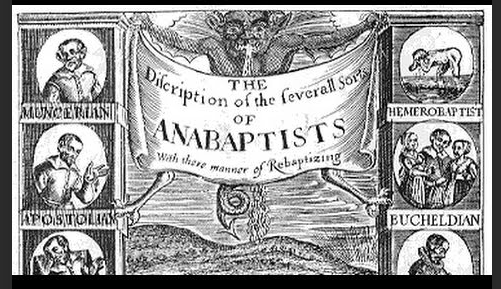
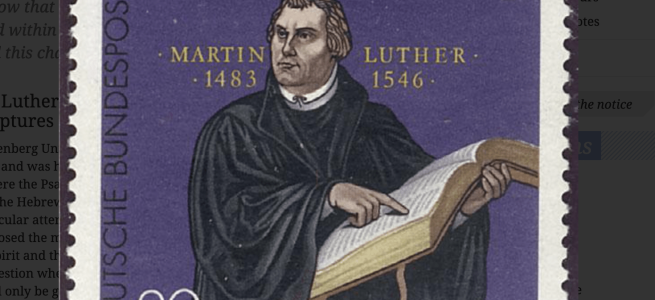
The Anabaptist movement emerged in the 1520s as part of the Protestant Reformation and, because of its radical call to return to the gospels, came to be known as the Radical Reformation. Anabaptists built on the work of mainline reformers such as Martin Luther who taught a direct appropriation of biblical teaching over church tradition. They took things a step further, though, and zeroed in on the message of Jesus. They affirmed following that message for all Christians—no matter what the cost. So, the core of the core in naming the essence of Anabaptism, I would say, is recovering Jesus’s way as the heart of Christian faith.

To say more than that gets complicated. There were many early expressions of the Anabaptist movement—some branched off the first group in Zurich, Switzerland. Some sprang up spontaneously—a revolution in the understanding of Christian faith was in the air. The Anabaptist movement was decentralized. When we talk about historic Anabaptism, we should acknowledge quite a bit of diversity. But I believe, in contrast to the recent generation of academic historians, that we may still affirm a sense of coherence in the movement—even if it didn’t take the form of a centralized organization or official creeds and dogmas.

Anabaptists believed Jesus to be more central than church tradition, the nation-state, institutional hierarchies, or top-down operated rituals. Because of this, Anabaptists got into trouble—to the point that thousands were killed for embodying their convictions. So I suggest if we want to flesh out our sense of the essence of Anabaptism in the 16th century—and of a usable Anabaptist vision—we should look at why all these diverse Anabaptists got into trouble (recognizing of course, that each group had its own distinctive way of embodying these core convictions). Continue reading “The “essence” of Anabaptism”