So, what happened? [American Politics #13]

November 6, 2024

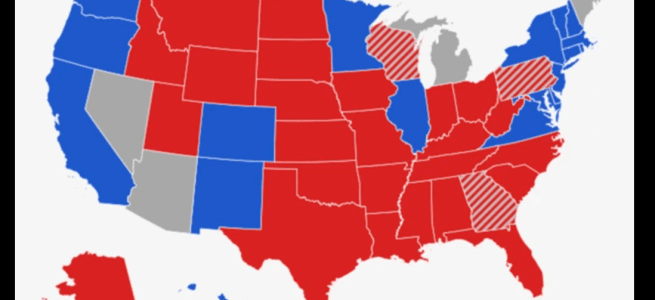
I have spent a few hours this morning reading analyses of the election. Hardly anything seems insightful to me. I am discouraged that some commentators I have appreciated for their critiques of American interventions in Ukraine and Israel/Palestine are happy about Trump’s win and seem to think Trump might move things in a different, more peaceful direction—I think there is exactly zero chance of that, though it is also hard to see how he can make things worse in that realm than they have been these past four years. I doubt anyone who was positive about Biden/Harris could hope to have much insightful analysis now—though I will keep looking.

I did find one piece that rang true to me. It is written by someone named Arun Gupta, previously unknown to me.

***********************************

From Arun Gupta, “Harris lost because of Gas, Groceries, and Gaza. But the underlying reason was Ukraine”:

Under Biden-Harris, staggering sums have been spent on the war. Congress has officially approved $175 billion, but I suspect it’s significantly higher given all sorts of other aid and weapons transfers not included in these bills. There are also huge amounts of aid to Taiwan and Israel.

The wars and overseas aid hurt Harris in many different ways, and she avoided them because she is the candidate of war and Wall Street.

Continue reading “So, what happened? [American Politics #13]”
Where is American Warism Headed?

Ted Grimsrud—October 22, 2024

We live in a time of great uncertainty. I find it difficult not to be quite discouraged about the direction the world seems to be going. What kind of future do we have? The presidential election in the United States that we are in the middle of (I mailed in my ballot the other day) is considered by many to be one of the most important we have ever faced.

No matter the outcome, warism will win the election

One of the outcomes of this election, though, that does seem fairly certain is that the American military and American militarism in general will remain engaged and expansive regardless of who is elected. We all know that Trump is all for militarism even if his (empty) rhetoric at times may seem to claim otherwise. Likewise, the Harris campaign has made it clear that she will be committed to continue on the warist path followed by the Biden administration in both Ukraine and Western Asia. So, with regard to what I believe is the most important issue facing our country—our involvement in global wars and preparations for war—this election will change nothing no matter how it turns out.

The two big wars we currently are fighting—in Ukraine and in Israel/Palestine—have not been going all that well for our side. In both cases, we see that American might seems to count for much less than what has been assumed. Simply the fact that both continue to be unresolved in itself tells us a great deal about the ineffectiveness of our weapons and leadership. Could it be that we are nearing the end of the post-World War II era of American military domination? Has the US quest for global dominance finally failed? If so, what will be the consequences?

Is American dominance coming to an end?

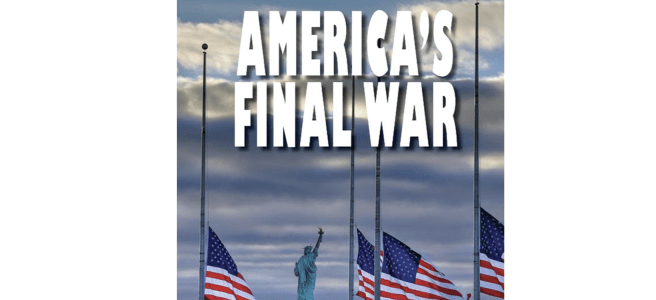
I recently read a challenging and surprising book that argues that indeed the end of an era is at hand. America’s Final War by Andrei Martynov (Clarity Press, 2024) argues that the US military is facing a failure in Ukraine that signals a profound shift in the balance of power and a certain descent into loss of power and influence by the American Empire. I thought that the failure to achieve quick victory in these two wars might indicate that American dominance is no longer what it once was. Martyanov goes further—the end is actually at hand. Is this possible?

Continue reading “Where is American Warism Headed?”

On voting for warmongers—or not [American Politics #11]

Ted Grimsrud—September 26, 2024

I still haven’t figured out what to do with my ballot for the 2024 presidential election. Our mail-in ballots arrived the other day and are sitting on our dining room table. There are some things I am certain about—I won’t simply throw the ballot away. I will vote (though not enthusiastically) for the Democratic Party candidates for the House and the Senate. I will not vote for Donald Trump.

However, I don’t know if I will vote for Kamala Harris. Unlike in the past, I will probably not vote for a third-party candidate. But I might leave that line blank. Or, a slight possibility, I might decide at the last minute to go ahead and vote for Cornel West (kind of for old times’ sake, I have greatly appreciated his speeches and writings over the years).

Almost exactly twelve years ago, I wrote a blog post: “Should a pacifist vote for a warmonger?” (plus, two follow-ups: “More thoughts about voting [or not] for a warmonger” and “Faith and politics [including voting]”). My answer, in relation to the re-election campaign of Barack Obama, was a carefully reasoned “yes.” That assertion elicited a truly enjoyable and lengthy conversation in the comments section of my post from a diversity of friends and other readers. Some agreed with me, and some did not. Those who disagreed were generally of a mind that not voting for president was a valid principled stance for Christian pacifists. Some who agreed with my decision to vote for Obama did not agree with my characterization of him as a “warmonger,” but were happy I was not sitting the election out.

What’s different compared to 2012?

Now, though, I am saying that I’m not yet persuaded to vote for Harris. What is different this time around? That is a challenging question for me. Before I looked at my 2012 post, I was not thinking about what I had decided back then. Now I realize that I am changing my argument. Why? Do I think I was wrong back then?

Continue reading “On voting for warmongers—or not [American Politics #11]”

The most important election? [American Politics #10]

Ted Grimsrud—September 16, 2024

I have always been interested in American politics and presidential elections. One of my oldest political memories is a dinner time conversation with my best friend’s family sixty years ago when we were lamenting that it looked like Barry Goldwater was going to win the Republican nomination over our more moderate favorites Nelson Rockefeller or William Scranton. I was ten years old. That was only the first of many disappointments for me about presidential politics.

Still, I feel like this current election is the worst in my lifetime. On the one hand, we have Donald Trump. Even with a long list of morally corrupt and warist predecessors, Trump seems to me to stand clearly as the worst person and worst leader ever to be president of this country. Yet, on the other hand we who cannot support Trump are given the major party alternative of a candidate who is up to her elbows in the administration of an overt and on-going genocide in Gaza and a US-initiated proxy war in Ukraine that is edging ever closer to a nuclear End Game.

The terrible irony for a peace-oriented citizen is that while we are being taught by the media that we live in a hyper-partisan age with extreme polarities between blue and red politics, on the issues that matter the most we face an implacable wall of bipartisan agreement. We don’t have the option of voting for peace. Both sides are all war, all the time. Probably the most disillusioning element of the consequences of Joe Biden’s 2020 victory over Trump has been the almost utter silencing of any kind of anti-war sentiment in the Democratic Party—certainly in relation to the proxy war in Ukraine and also largely in relation to the genocide in Gaza. The Democrats couldn’t even bring themselves to allow a short, innocuous, fully vetted speech from a pro-Palestinian speaker at their recent nominating convention.

Continue reading “The most important election? [American Politics #10]”