The war that changed everything

Ted Grimsrud—October 31, 2025

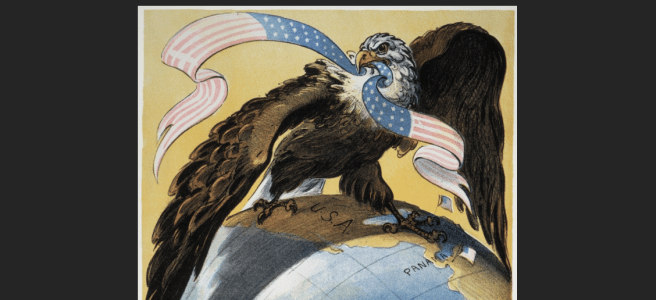
The American embrace of World War II as the “Good War” played a major role in the shaping of my embedded theology and its uncritical nationalism. This embrace hid from me the realities of that war and its impact. Due to World War II, the American Empire embraced a vocation of world dominance. The US government established three pillars of domination during the war—the Pentagon, the Central Intelligence Agency, and the nuclear weapons regime. These pillars played a central role in the transformation of America into a national security state—with disastrous consequences.

Early in the 20th century, the US moved to the brink of being a world power. However, the final step proved to be difficult. It would take some major world-shattering events before the country crossed that brink. In World War I, the Americans played a secondary role. They remained reluctant to get “entangled” in global affairs after the war ended. They refrained from joining the League of Nations. American momentum toward colonial expansion at the end of the 19th century slowed a great deal.

When global tensions intensified in the 1930s, the US remained mostly on the sidelines. The tensions did finally reach a breaking point. Japan’s violence towards China led to a full-on war. Germany invaded Poland on September 1, 1939, followed by declaration of war by Great Britain and France. President Franklin Roosevelt made clear that the US sided with Britain and China but still insisted that the US would not participate beyond providing military and economic support. Finally, the US did join the war full-on—and that war changed everything.

Preparing for engagement

The Americans greatly accelerated their arms production and in other ways readied to go to war during the two years after the European war’s start. During that time, Roosevelt sought to persuade the country to move toward full engagement. As part of that effort, he articulated what were, in effect, purpose statements for America’s entry into the war. Roosevelt’s Four Freedoms speech in January 1941 was followed by the Atlantic Charter a few months later.

In Roosevelt’s January 1941 State of the Union address, he spoke of plans to ask Congress to approve weapons for Britain. He introduced the “the four essential human freedoms” he sought to further: freedom of speech, of religion, from want, and from fear. These ideals, widely expressed, soon became a shorthand for America’s war aims and remained central in pro-war propaganda. As Roosevelt discussed each “freedom,” he claimed to seek their realization everywhere in the world. This idealistic aspiration mobilized popular support for the nation’s engagement in the wars against Germany and Japan. It then animated calls US leaders made for continued military preparations and interventions in the years after World War II.

In August, Roosevelt and British leader Winston Churchill created the Atlantic Charter that outlined the Allies’ war aims. It shaped what the Allies said about their purposes for fighting and shaped the postwar world. The Charter’s key points included to eschew territorial aggrandizement and to affirm “the right of all peoples to choose the form of government under which they will live” and equal terms of trade to all nations. Together, the Four Freedoms and the Atlantic Charter state the ideals that American leaders would claim to seek to fulfill.

Entering the war

As Japan became more aggressive in China in the early 1930s, the US increased its support for the Chinese military. A couple of key moments closer to the Pearl Harbor attack in 1941 pushed the tensions to a breaking point. The US imposed an economic embargo on Japan that led Japanese leaders to panic regarding their access to vital materials. Roosevelt also ordered the American Pacific Fleet greatly to expand its presence in the Pearl Harbor base located in the American colony of Hawaii—an expansion perceived by the Japanese as highly provocative.

Though looking for opportunities to escalate the conflict, Roosevelt likely did not anticipate that the American fleet would be devastated by a sudden attack on December 7. Japan’s aggression led to a transformation of American opinion. Congress approved Roosevelt’s request for a declaration of war on Japan on December 8. For a brief moment, uncertainty remained about war with Germany. Adolf Hitler, though, ended the question whether Congress would declare war on Germany when he declared war on the US on December 11.

With the Pearl Harbor setback, the US only slowly responded militarily. In time, given their significant advantages in resources and their resolve to retaliate, American forces inexorably moved toward Japan. By the summer of 1945, the Americans had all but won their victory as Japan’s military was in shambles and its air defenses non-existent.

Hitler’s declaration of war had surprised American leaders. They were not prepared for an immediate military response. In fact, not until June 1944 did US troops land on European shores at Normandy despite Joseph Stalin’s pleas for a sooner engagement. In the meantime, the main theaters for the European wars were on the eastern front following Germany’s surprise attack on Russia in June 1941. Eventually, though, the Soviets managed to slow and then repel the attack. By the time of Normandy, it had become clear that the Allies would defeat Germany.
Continue reading “The war that changed everything”

Empire as a way of life: The colonial era to World War II

Ted Grimsrud—October 28, 2025

In the posts that remain in this series, I want briefly to flesh out what we see when we describe without blinders the American Empire as it has emerged and functioned over the past 500 years. I consider this story with a critical perspective shaped by the biblical politics I have summarized above. I am especially concerned with how this Empire has embodied oppressive and violent sensibilities typically characteristic of the great empires of the world. A clear-eyed look at the American Empire may well lead one to recognize that it is not worthy of the kind of blank check loyalty it asks for.

The reasons that Europeans first moved to settle in North America varied greatly. Their impact, though, was to extend the newly emerging European empires with powerfully devasting effects on the inhabitants of the “new world.” Some Europeans stayed only temporarily, mainly having interest in profiting from their time away from home before they would return from the adventures and resettle in Europe. Many, though, intended the trip from the start to be one-way. Those who meant to stay in North America may be called “settler colonists.” Since they intended to stay, they needed to displace those already living on the land. Settler colonialism depended on violence. It reflected the basic assumptions of empire: The people not part of the core colonial community will be seen as “Others” who may be exploited, displaced, even eradicated.

Settler colonialism and Manifest Destiny

Imperialistic ideology had been central in the settling of North America and remained central to the identity of the newly established United States. The new nation continually expanded West, dominating and displacing the indigenous nations without pause. The land taken from the natives came to be worked by massive numbers of forcibly imported enslaved Africans.

The term “Manifest Destiny” was not coined until 1845. However, its basic meaning that God willed the expansion of the US to the Pacific Ocean characterizes the intentions of the new settlers from early on. Throughout the colonial era and beyond, Americans simply assumed that God had called their nation into existence, a sense of divine calling that lent an air of inevitability to the expansionist efforts. God supported displacing the “heathen” indigenous populations and exploiting the “heathen” enslaved Africans. Once the drive to expand the US Empire across the continent took hold, it would not stop when the “frontier ended” in North America by the end of the 19th century. At that point, the empire was only getting started.

Continue reading “Empire as a way of life: The colonial era to World War II”

The tragic American Empire story in light of the gospel

Ted Grimsrud—October 24, 2025

I recognize my upbringing as a proud citizen in the world’s most powerful empire to be part of my identity. As I described previously, I experienced an eventful meeting between two world-defining stories—the American Empire met Jesus’s gospel of peace. American Christians tend to see faith and nation as fully compatible, even mutually reinforcing. In contrast, for me their meeting was a collision that forced me to make a choice. It had to be one story or the other.

I chose the Jesus story to be my defining story—and chose against the American Empire. That choice led me to affirm Christian pacifism and turn from the uncritical nationalism central the Empire story. I started to interpret the story of the American Empire without blinders. At the same time, I found the Bible to be a key source for a peace-oriented, anti-empire defining story. My fundamentalist Christian teachers had asserted a high view of the Bible as direct revelation from God. However, such an assertion had not protected them from uncritical nationalism. Rather than rejecting the Bible when I rejected fundamentalism, I started reading the Bible in a different way. I no longer ignored Jesus’s peace teaching as I had been taught; I made it central.

The basis for stepping away from uncritical nationalism

When I began to read the Bible for peace, I noticed its critique of uncritical nationalism. I noticed the Bible did not teach the submit-to-the-government message as Americans assumed. If the Bible be central, I would choose Jesus’s gospel of peace instead of uncritical nationalism. The Old Testament provides a template, in Torah, that critiques all human territorial kingdoms. Torah pointed to a new kind of kingdom committed to justice and the wellbeing of all its people. The Old Testament kingdom, though, in practice evolved ever more toward injustice, militarism, economic stratification, and corruption. The brokenness grew to a point where the prophets saw the kingdom’s leaders not as agents of God but as enemies of the original vision of a just society.

Eventually, those who retained a commitment to Torah made sustaining those convictions more important than remaining loyal to any kind of territorial kingdom. The story continues with Jesus’s ministry. He announced the presence of God’s kingdom as a non-territorial communal expression of the ways of Torah. Echoing Genesis 12, Jesus’s kingdom message meant to bless all the families of the earth. This blessing would not come through a close connection with territorial kingdoms (or nation-states). Rather, the blessing would come through the witness of countercultural communities that put convictions about the ways of Torah at the center.

Does this story have relevance for our contemporary world? Let me identify four biblical themes that speak to life amidst the world’s empires. (1) The practice of justice should define the aspirations of societies that seek to be healthy. This justice will center on care for the vulnerable of the community since a society cannot be healthy without the good health of those most easily exploited and discarded. (2) People in power should always be treated with skepticism. Power tends to corrupt. People in power tend to be deluded by their commitments to sustain that power at all costs. Such people should be pushed to guide the society toward justice with an expectation that they will likely tend toward serving their own interests and not those of the vulnerable in society. (3) The “horses and chariots” problem tends to define territorial kingdoms and leads to the proclivity to prepare for and engage in warfare (warism). The accumulation of weapons of war favors society’s wealthy and powerful and leads to devastating conflicts. (4) Throughout human history (and in the Bible’s stories), territorial kingdoms and nation-states have provided some of the central rivals to God as the objects of human trust. This type of idolatry, as Israel’s prophets show, leads directly to injustice.

Continue reading “The tragic American Empire story in light of the gospel”

Christianity’s accommodation to empire

Ted Grimsrud—October 21, 2025

Amidst its diversity, we may discern in the Bible a specific political sensibility. God has called into being a community to know God’s love and to embody that love so as to bless all the families of the earth. Torah provides a social framework for this blessing that includes mutual aid, welcome to the vulnerable, justice for all in the community, no social stratification, and a recognition that God’s blessings can be resisted and will be revoked when the community turns from the core teachings of Torah. Jesus then reinforces this Torah-based framework.

So, what happened to Christianity? My Christianity in the early 1970s little resembled the ideals of the Bible. Christians have tended more to be complicit with empire than oppose it. How did this happen that Christianity accommodated to empire? We have two reasons to repudiate such accommodation. First, to make it easier to recover the truths of the biblical story. Second, to help us find ways to break uncritical nationalism and American warism. We need self-awareness about the problematic of Christianity and empire in order to discern a new healing path.

Struggles with Rome

Early Christians did to some extent embody the way of Jesus, but always with difficulty. The picture presented in the seven messages to congregations in Asia in Revelation 2–3 applies to the first several generations of the Christian movement. In Revelation we meet a few churches that adhered closely to Jesus’s teaching and example and faced persecution. These tended to be small and poor. Others found more prosperity and comfort—but too easily collaborated with the surrounding culture. They risked losing their connection with Jesus and his message.

The Bible does not tell of a golden age when the community got everything right but of an ongoing struggle that continues to characterize Christianity. Those who embody Torah’s and Jesus’s message will always be at odds with their wider culture and tempted to compromise that message. The earliest Christians come from the margins of society. In time, the communities attract more people of higher social status and their antipathy toward the Empire lessens. Persecution of Christians continued as empire elites found that to scapegoat this fringe religious minority helped strengthen their hold on power. By the end of the third century CE, however, many in the churches looked for more accommodation with the Empire.

Continue reading “Christianity’s accommodation to empire”

Jesus the Lamb challenges empire

Ted Grimsrud—October 17, 2025

The Bible has a reputation of being pretty pro-violence. Some Christians want the Bible to approve of violence—that helps them justify the violence they currently support. I decided back when I first embraced pacifism that I wanted to try to read the Bible as pro-peace as much as I could. I still do. An early test for me came with trying to understand the book of Revelation. Is it truly about visions of future God-approved warfare and violent judgment?

I had heard because God wants wars in Revelation, God may also want wars in our time. I decided to study Revelation to see what it actually says. I soon discerned Revelation may be read as a book of peace. I also realized that Revelation is not about predicting the future; it is about applying Jesus’s message of peace and healing in our present. A key concern in Revelation has to do with following Jesus while living in the idolatrous Roman Empire. Thus, Revelation becomes for us an essential text for reflection of the relation between Christian faith and empire.

Revelation as part of Jesus’s peace agenda

For Jesus, to resist the Empire means: Love our neighbors, say no to idolatry, give our loyalty to the God of mercy, and recognize the empire as the enemy of God, not God’s servant. Early Christians faced constant temptation to conform to Rome. It could be costly to resist. Many also found the imperial claims to be seductive. This struggle with conformity to the empire had a tragic ending for Christianity; we will see in our next post that it became an empire religion. In the early years, though, the struggle led to a sharp critique of the Empire—see Revelation.

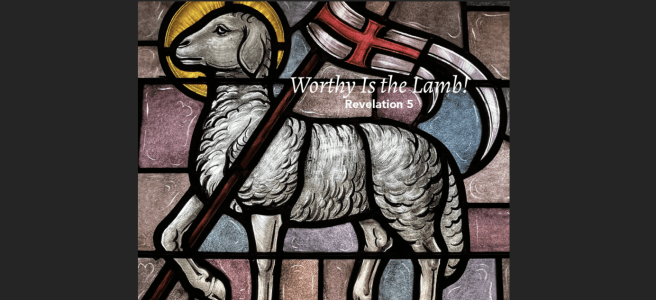
Revelation does not collect predictions about “End Times” but describes the dynamics of imperial seduction. It describes the deep conflict between the ways of empire and the ways of the gospel. This “war of the Lamb” can only be successfully waged in one way. Wage this war with what the New Testament letter to the Ephesians described as the “whole armor of God”: The belt of truth, the breastplate of justice, the gospel of peace, the shield of faith, the helmet of salvation, and sword of the Spirit (which is the word of God) (Eph 6:13-17).

Continue reading “Jesus the Lamb challenges empire”

Jesus’s political alternative

Ted Grimsrud—October 14, 2025

Christian pacifism challenges mainstream Christianity by arguing that Jesus’s life and teaching actually do provide direct guidance for politics. Jesus, like the rest of the Bible, offers a direct alternative to the politics of empire and domination. Christians have misrepresented the Bible insofar as they have embraced uncritical nationalism. My realization that Jesus does give us a realistic peaceable direction caused me to turn away from my nationalistic embedded theology and never look back. In this post I will offer a summary of that peaceable direction.

Jesus affirmed that Torah and the prophets reveal God’s will for the world. When he taught with authority, showed love with his healing, and called together a community to embody the justice of God in the world, he fulfilled the Old Testament. Jesus’s life incurred the deadly wrath of the religious and political leaders. God raising Jesus from the dead in defiance of the leaders’ verdict of condemnation vindicated Jesus’s message. Jesus culminates the political message of the Old Testament when he critiques empire, rejects territorial kingdom as the channel for God’s promise to bless all the families of the earth, and the embodies Torah as the alternative to the ways of the nations. Like Torah and the prophets, Jesus practices power as service, offers compassion and justice for the vulnerable, and resists the powers of domination.

Politics and the gospels

The gospels present Jesus as a king. The gospel of Matthew begins with “an account of the genealogy of Jesus the Christ, the son of David, the son of Abraham” (Matthew 1:1). Christians tend to think of “Christ” as a religious term having to do with the divine identity of Jesus Christ, the savior. However, it literally means “king,” a political leader. The descriptor of Jesus that follows in Matthew 1:1, “son of David” confirms the political sense of “Messiah.” David stands as the paradigmatic king in ancient Israel, a kind of ideal king.

The rejection of the OT territorial kingdom points ahead to an alternative way to imagine the peoplehood. God never revoked Abraham’s vocation to bless all the families of the earth. If not as a territorial kingdom, then how will the promise be embodied? Jesus will be in continuity with David’s role in carrying on the promise (a great leader for the peoplehood). However, he will be in discontinuity in that his political path will not be to lead a territorial kingdom like David. The gospels provide an account for this alternative political path.

Continue reading “Jesus’s political alternative”

Breaking the hold of territorial kingdoms

Ted Grimsrud—October 10, 2025

Peace theology centers on Jesus’s life and teaching. Jesus’s life and teaching, though, make the most sense in relation to the bigger story of the Bible. In two posts, I will emphasize a few elements of the story. First, in my previous post, we note the Bible’s strong antipathy toward the big empires. Those empires powerfully challenged the Bible’s faith community—due both to the empires’ violence directed at the community and to the empires’ demands (often met) for loyalty and even idolatrous trust. The Bible offers a counter-empire vision for human life in the teaching of Torah and Jesus. These teachings explicitly offer alternatives to empire ideologies.

Second, Torah politics differ from state politics. Territorial kingdoms and nation states imitate the empires. They use coercion, exploit the vulnerable, protect boundaries, and demand absolute loyalty. The Bible’s faith community, called to bless all the earth’s families, sought to carry out that vocation as a territorial kingdom. The story shows the eventual incompatibility between the vocation to bless and identifying too closely with a territorial kingdom.

Abraham and Sarah and a new intervention from God

Genesis 12 tells of God calling Abraham and his spouse Sarah to parent this community. God gave them a child even though Sarah thought herself too old to bear children. The story that follows in the rest of the Bible presents the community in both success and failure. It offers guidance for the faithful practice of a politics of blessing. The continuation of the promise will be risky and tenuous. The human actors always risk derailing the process by their injustice, violence, and turning toward other gods. The channels for the blessing will always be imperfect human beings. The process will often be surprising. Key actors consistently will not be the people we would expect to be heroes. God’s hand in the dynamics is often difficult to discern, but somehow the promise and the blessing remain alive.

At the end of Genesis, the family of the promise moves to Egypt in order to survive a terrible famine. Then, in the book of Exodus, we learn the family does survive and multiplies, but in a condition of enslavement in the Egyptian Empire. These suffering, enslaved people cry out in their pain. God remembers the promises to Abraham and resolves to intervene. God will guide them into a recovery of faith and a new resolve to embody the promise to be a blessing.

Continue reading “Breaking the hold of territorial kingdoms”

The Bible’s suspicion of the empires

Ted Grimsrud—October 7, 2025

In the years from 1987 through 1996, I preached several hundred sermons. Almost all had to do with biblical bases for peace theology. Then I began college teaching and most of my classes were relevant for how Christian pacifist convictions could inform living in the American Empire. In what follows, I will present the message of the Bible that relates to peace theology. This message provides the grounding for an unblinkered look at the American Empire from the perspective of Christian pacifism—something I offer in the series’ final posts. The story I have told in my previous posts describes how I got to my commitment to peace theology. Now, I will turn to the story of where that commitment has led me, first theologically and then politically.

Holding the Bible loosely, but with respect

I view the Bible as a conversation partner. The big picture that comes from all its stories read together gives me a perspective from which to engage the world. To me, it is not a source of normative, explicit commands nor a miraculously accurate source of information about the past of God’s people. Yet, it is not simply ancient writings from a distant time. I see it as a fascinating collection of various kinds of literature. It reflects various human perspectives that hang together, loosely, to guide and inspire. The authors’ moral commitments give the Bible its coherence.

When read in light of Jesus’s message that centers on the call to love neighbors, the Bible serves that call. It presents a worldview shaped by love. Jesus does not originate this worldview but echoes and reinforces the Old Testament message of Torah and the prophets. The Bible tells a “Big Story” where all its parts hang together and convey a vision for life shaped by God’s love.

I discovered the Bible’s Big Story through my struggle with American warism. I found a way out of my embedded warist view of the world through an encounter with the story of Jesus. That encounter shaped how I have read the Bible ever since. In asking questions of the Bible about war, justice, and social transformation, I discovered that the Bible truly cares about politics and social transformation. It provides a powerful framework for interpreting the world.

Continue reading “The Bible’s suspicion of the empires”

Trying to figure out peace theology

Ted Grimsrud—October 4, 2025

In the Fall of 1980, Kathleen and I looked forward to our year at Associated Mennonite Biblical Seminaries with little idea what to expect. We hoped for inspiration and to understand better our Christian pacifist convictions. We learned more than we imagined we could. And by the end of the school year, I had a new goal I had not imagined before—to study for a PhD in peace theology. When we returned home to Oregon, we began a fifteen-year period that would include more education for both of us, culminating in my doctorate from the Graduate Theological Union in Berkeley, California. I would also spend about ten years as a pastor in three settings. This period culminated when I became a college professor in peace theology. Those fifteen years proved to be a time of learning what peace theology would mean to me.

Taking the first steps

In 1981, I could imagine three different directions. I could focus on the intellectual arena and become a professor, teaching and writing. Or I could turn toward direct action and be a full-time peace activist. I found both options attractive but unlikely to be possible. A third option seemed a more realistic way to combine intellectual and on-the-ground work—to serve as a pastor. We planned for Kathleen to return to college for a couple of years. I would complete my work for a masters degree in peace studies from AMBS.

As it turned out, a couple of unexpected developments caused us to adapt our plans. An unplanned, and joyful, pregnancy meant Kathleen would have her hands full with her college classes and becoming a new mother. Also, I was offered an interim pastorate when the Eugene Mennonite Church pastor took a sabbatical. So, my hands were full, too, with my coursework, the arrival of our son Johan, and serving as a half-time pastor. This left little time for peace activism work, so it fell to the side.

Kathleen loved her studies. Each class gave her an opportunity to learn new things and to work on integrating her peace convictions, philosophical inclinations, and her rapidly evolving faith convictions. Johan arrived midway through the first of Kathleen’s two years as a full-time student. We struggled to find time and energy for everything. The baby’s presence required numerous choices of priorities that meant our lives did not unfold quite like we had expected. However, we generally successfully managed to juggle all the elements of our lives.

Continue reading “Trying to figure out peace theology”